The single biggest fix for nutrition for men juggling gym, office, and family life isn’t a supplement or a diet plan — it’s a protein-forward breakfast within an hour of waking, meals spaced every 3-4 hours, and alcohol treated as a calorie line item you actually track. Most men don’t fail at nutrition from lack of knowledge. They fail because their day has no structure, so decisions get made by whichever food is closest at 9 PM. Fix the structure and the food choices largely take care of themselves.
This guide skips the physiology (covered in our male-nutrition deep-dive) and the gram-by-gram RDA tables (see daily nutrition requirement for male). What follows is the lifestyle playbook: how to actually eat well with a 9-to-7 job, a commute, and maybe a gym slot squeezed in somewhere.
Why do so many working men eat badly despite knowing better?
It usually isn’t ignorance — it’s logistics. A typical working day looks like: rushed or skipped breakfast, a heavy carb-only lunch, a 4 PM crash fixed with tea and biscuits, then a late, oversized dinner because it’s the first relaxed meal of the day. This pattern — skip, underfeed, overcompensate — is reactive eating, and it’s the root cause behind most “I eat okay but still feel sluggish” complaints.
The fix isn’t willpower, it’s sequencing. Eating protein and fiber early blunts the hunger spike that drives the 9 PM binge. A structured plan, even a loose one, beats a mental list of rules you’re supposed to remember under stress — the principle behind proper meal planning in nutrition: deciding what you’ll eat before you’re hungry, not after.
How should you time meals around gym and office hours?
If you train in the morning, have a small carb-protein snack 30-45 minutes before (a banana with a boiled egg, or milk with a handful of nuts) and get a full protein-rich meal in within an hour post-workout, when muscles are most receptive to repair. If you train in the evening after office, don’t walk into the gym on an empty stomach from a 2 PM lunch — a small snack around 5-6 PM prevents the low-energy session that makes people skip workouts altogether.
A workable template for a 9-to-7 job with evening gym:
- 7:00-8:00 AM: Protein-forward breakfast
- 11:00 AM: Fruit or nuts if lunch is over 4 hours away
- 1:00-2:00 PM: Balanced lunch — protein, carbs, vegetables
- 5:00-5:30 PM: Pre-gym snack
- 7:30-8:30 PM (post-gym): Protein-heavy dinner
The exact clock times matter less than the principle: no gap longer than 4-5 hours while awake, and protein at every sitting. If you’re training for muscle gain specifically, pair this timing with the targets in our bodybuilding nutrition guide.

What are good protein-forward breakfast options in India?
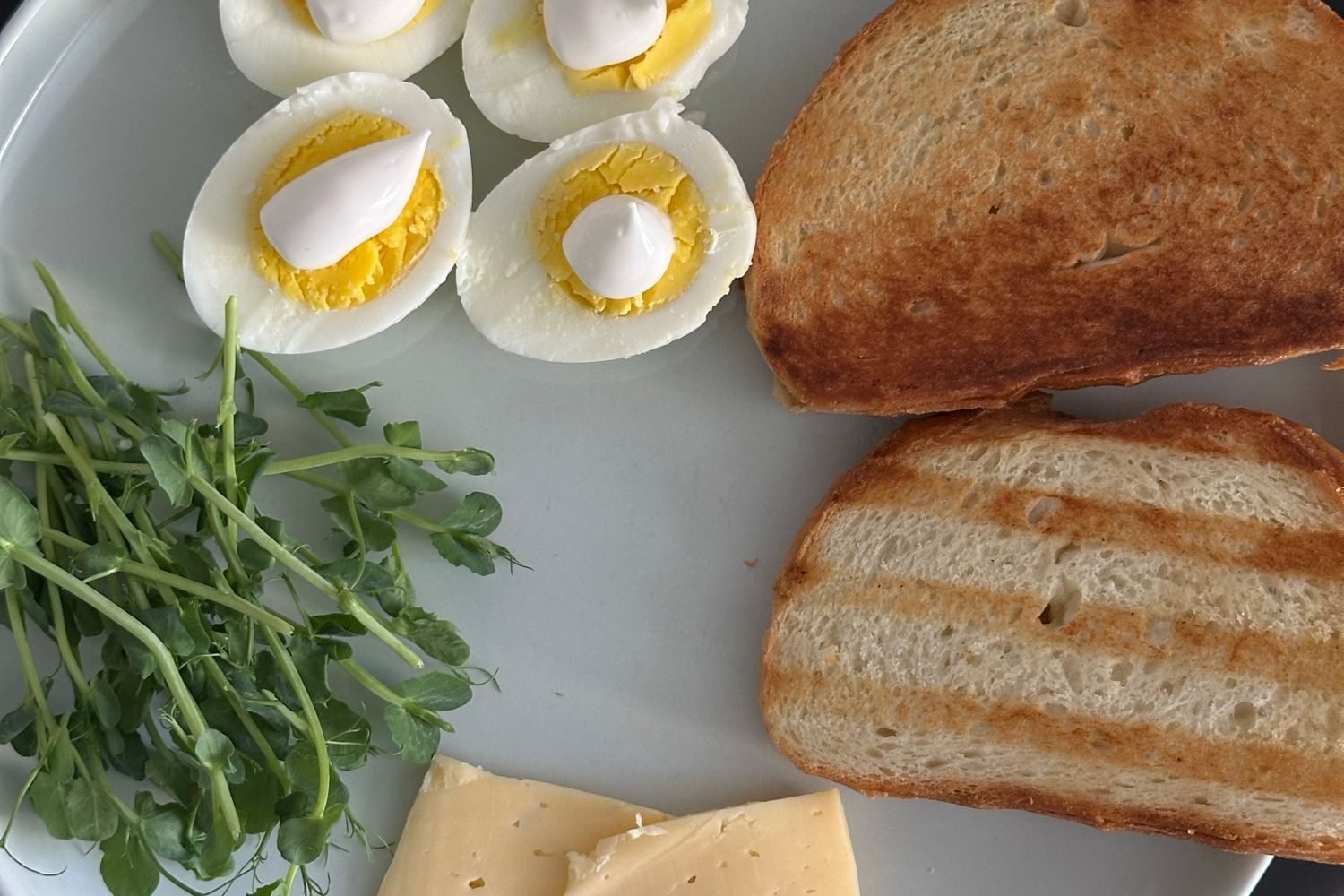
Most Indian breakfasts — poha, plain idli, toast — are carb-heavy and protein-light, which is exactly why energy dips by 11 AM. The goal is 20-30 grams of protein at breakfast, achievable with foods already in most Indian kitchens:
- Moong dal or besan chilla with a side of curd — quick, naturally protein-rich, and can include vegetables for fiber
- Egg bhurji or a 3-egg omelette with whole wheat toast — ready in under 10 minutes
- Paneer bhurji or paneer stir-fry — good for vegetarians wanting a low-carb, high-protein start
- Sprouted moong salad with roasted peanuts — no cooking required, works at your desk
- Adai or pesarattu (lentil-based dosas) — packs noticeably more protein per 100g than a regular rice dosa when made with sprouted moong
- Curd with a scoop of roasted chana — the fastest zero-cooking option for rushed mornings
Pick two or three of these and rotate — the point is removing the “what do I even make” decision at 7 AM when you’re already running late.
How do you eat healthy when you’re out for lunch or relying on a tiffin?
Eating out or ordering in doesn’t have to derail the day if you apply a few rules consistently rather than trying to eat “clean” every meal.
- Build your own plate mentally: half vegetables/salad, a quarter protein (dal, paneer, chicken, fish, egg), a quarter carbs. Restaurant thalis skew heavy on carbs and oil — ask for extra dal or curd to rebalance.
- Using a tiffin service? Request one extra protein item (egg, extra dal, sprouts) 2-3 times a week rather than switching services entirely.
- Watch the oil, not just the calories. Tiffin food is often fine on ingredients but heavy on tempering oil. Asking for “kam tel” (less oil) is a simple, realistic ask.
- Carry a backup snack (nuts, roasted chana, a protein bar) so a delayed lunch meeting doesn’t become a vending-machine decision.
- Don’t skip the vegetable side dish — it’s usually the only fiber source in an office lunch, and fiber is what keeps you full until the next meal.
None of this requires cooking daily — it requires making the same order slightly smarter, consistently. For a fuller framework on structuring an entire week around a work schedule, see our meal planning guide.
How much does alcohol actually cost you, nutritionally?
More than most men realize, and not just in calories. Alcohol provides 7 calories per gram — nearly as dense as fat (9 cal/gram) — but with zero nutritional value, which is why nutritionists call them “empty calories.” A 30 ml shot of whisky runs about 70 calories, a 150 ml glass of wine around 120-125, and a regular 330 ml beer can match a can of Coke at roughly 140-150. Three to four drinks in an evening can add 400-600 calories — an entire extra meal — before the fried snacks that usually come with drinking.
The bigger issue is what alcohol does beyond calories. Research on intestinal nutrient absorption shows regular or heavy drinking reduces the digestive enzymes your pancreas secretes and can damage the cells lining your stomach and intestines, impairing absorption of B-vitamins (thiamine, riboflavin, folate), vitamin C, zinc, and iron (NCBI review on alcohol and intestinal nutrient absorption). It also increases urinary excretion of zinc and calcium — both relevant to muscle recovery and bone health. None of this requires quitting entirely; it means treating drinks as part of your calorie and nutrient budget, not something separate from “diet.”
A practical middle ground: cap it at 2 standard drinks on nights you drink, eat a real protein-containing meal beforehand (this slows alcohol absorption and curbs the urge to overeat afterward), and treat drinking nights as a reason to be more deliberate — not less — about protein and vegetables earlier in the day.

What are the most common nutrition mistakes busy men make?
A few patterns show up again and again in men trying to improve their eating around a demanding schedule:
- Skipping breakfast or lunch “to save calories,” then overeating at night. Undereating during the day sets up a hunger spike that makes portion control at dinner nearly impossible, regardless of willpower.
- Treating protein as a gym-day-only concern. Muscle repair and daily satiety both depend on consistent intake, not just training days.
- Relying on tea and biscuits as a meal replacement during the 4 PM slump — this delays hunger without fixing it, and is usually followed by a bigger, less controlled dinner.
- Confusing “high protein” with “healthy.” A protein shake doesn’t offset a day with zero vegetables or fiber — both matter for digestion and long-term health.
- Not planning for a bad day. Zero backup options (nuts at the desk, a protein bar in the bag) means an unexpectedly busy day defaults to whatever’s nearest — usually fried and carb-heavy.
If your broader goal is fat loss rather than just “eating better,” these same mistakes are usually the actual blockers, not a lack of discipline. Our nutrition and fat loss guide covers the calorie math once this meal structure is in place.
How do you build a realistic weekly eating routine around work?
Consistency beats perfection. Aim for the pattern to hold on 5-6 out of 7 days:
- One weekly prep slot: Boil a dozen eggs, soak/sprout a batch of moong or chana, and portion nuts into small bags — three steps that cover breakfast and snacks for most of the week.
- Weekday lunch: Default to your usual tiffin/canteen option, just apply the “extra protein, less oil” rule rather than switching routines entirely.
- Post-work: Keep the gym-snack-dinner sequence fixed regardless of how the day went — routines survive bad days better than intentions do.
- One flexible day: A day where eating out or a heavier meal isn’t tracked to the gram. Sustainable eating isn’t zero deviation — it’s a default solid enough that occasional deviations don’t undo the week.
Frequently Asked Questions
How much protein does a working man actually need per day?
A reasonable target is roughly 1.2-1.6 grams per kilogram of bodyweight for men who exercise regularly, though this varies by age, goal, and activity level. For a full breakdown by weight and activity category, see our daily nutrition requirement for male guide.
Is it okay to skip breakfast if I’m not hungry in the morning?
Occasionally, yes — but as a daily habit it usually shifts hunger later and increases the odds of overeating at night. Try a small protein snack first and see if appetite develops within an hour; if mornings are rushed, curd with roasted chana takes under two minutes.
How many drinks per week is considered moderate for men?
Guidelines commonly cited internationally suggest up to 14 standard drink-equivalent units per week, spread out rather than consumed in one sitting, though lower is generally better for calorie and nutrient impact. Binge sessions (4+ drinks at once) carry disproportionately higher risk than the same total spread across the week.
Can I build muscle on a vegetarian Indian diet?
Yes — paneer, dal, moong, chana, curd, and soy all contribute meaningful protein, and combining grains with legumes (dal-rice, chana-roti) gives a fuller amino acid profile. It takes more deliberate meal planning than a non-vegetarian diet, but isn’t a limiting factor for muscle gain on its own.
What’s a realistic first change if my current eating habits are a mess?
Start with breakfast. Adding 20-25 grams of protein to your first meal is a single, low-effort change that tends to improve energy, reduce the 4 PM crash, and lower evening overeating — without overhauling lunch, dinner, or snacking all at once.
The bottom line
Good nutrition for men working full-time jobs isn’t about finding an hour a day for meal prep or cutting out every indulgence — it’s about fixing the two or three points in the day where structure is missing: a protein-light breakfast, a long unplanned gap before lunch, and an evening where alcohol or a late dinner absorbs the day’s unmet hunger. Get those anchors right most days of the week, and the rest of your eating tends to fall into place with far less effort than it currently takes.
If you want a plan built around your actual work hours, gym schedule, and food preferences rather than a generic template, an online nutritionist consultation can help you turn these principles into a routine that fits your week.