The people who keep weight off long-term almost all do the same handful of things: they weigh themselves regularly, move for roughly 200 to 300 minutes a week, eat a consistent breakfast, watch less TV than average, and act fast the moment the scale creeps up by a few pounds. This isn’t a theory — it’s what the National Weight Control Registry (NWCR), which has tracked more than 10,000 people who lost significant weight and kept it off for at least a year, has found across two decades of published research. Maintenance isn’t a mystery. It’s a set of unglamorous habits, repeated consistently, plus one recalculation most people skip: eating enough to match a body that no longer needs a deficit.
What does the research actually say about people who keep weight off?
The NWCR is the largest and longest-running study of successful weight-loss maintainers, about as close to a gold standard as this field has. To qualify, a person has to have lost at least 30 pounds and kept it off for a minimum of one year — most members kept it off far longer, and follow-up data shows the majority maintain the bulk of their loss even after 10 years.
The behaviors that show up again and again are not extreme. They’re boring, repeatable, and almost entirely about consistency rather than intensity — good news, since maintenance is less about willpower and more about a small number of durable routines. If you’ve watched weight slowly return after a diet before, read this less as a plan and more as an operating manual, covered in more depth in how to stop yo-yo dieting.
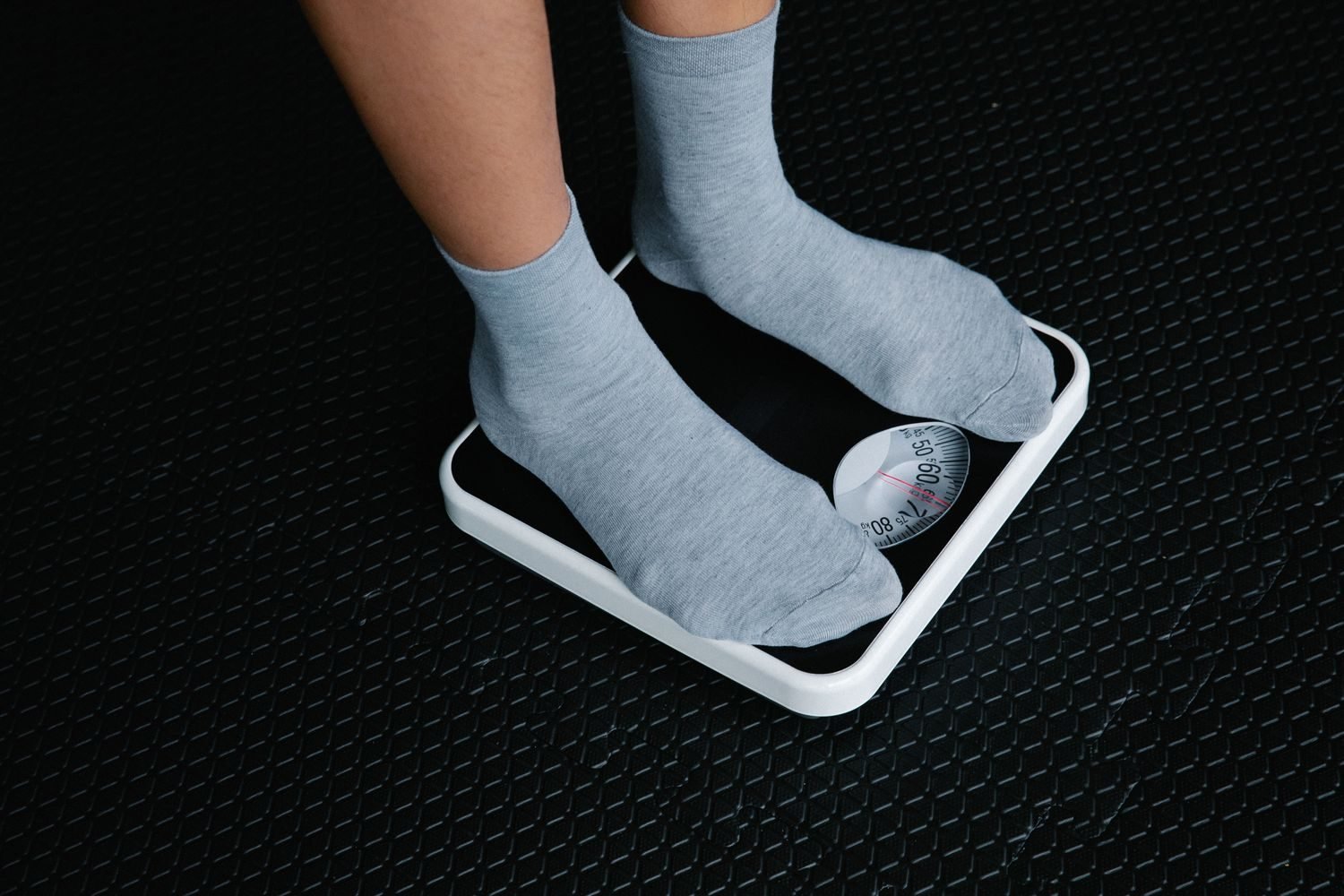
How often should you weigh yourself during maintenance?
More often than feels comfortable to most people. NWCR data shows nearly 75% of successful maintainers weigh themselves at least once a week, and a large share check in daily. That frequency matters less for the number itself and more for what it triggers: a large cohort study of over 10,000 smart-scale users found that decreasing how often you weigh yourself is independently associated with greater weight regain. Regular weigh-ins turn a vague feeling (“my jeans feel snug”) into an actionable data point before it becomes a real problem.
- Weigh yourself at the same time of day, ideally first thing in the morning, to reduce noise from water and food weight.
- Track the weekly trend, not any single day’s number — daily weight can swing 2 to 4 pounds from water alone.
- If a scale triggers anxiety, a consistent alternative like waist measurement or how a pair of pants fits serves the same function.
The point isn’t obsession, it’s early detection — a theme running through nearly every maintenance behavior in this research.
How much exercise do successful maintainers actually do?
A lot, and consistently. NWCR members report averaging around 41.5 minutes per day of sustained moderate-to-vigorous activity — roughly 290 minutes a week. About 69% log more than 150 minutes weekly (the standard public health minimum), and close to a third exceed 300 minutes. Successful maintainers exercise well above what’s typically recommended for general health — 200 to 300 minutes a week is the maintenance-specific target, not the lower disease-prevention bar.
Losing weight can often be done through diet changes alone; keeping it off leans more heavily on activity, partly because movement offsets the metabolic slowdown that follows weight loss (more on that below), and partly because it supports daily energy balance in a way eating adjustments alone can’t. If your routine tops out at two or three short workouts a week, this is the piece most likely to need scaling up — walking, cycling, or anything you’ll repeat counts. See nutrition and fat loss for more on how activity and eating interact during a fat-loss phase.
Why does eating breakfast show up in the research so consistently?
It’s one of the more replicated findings in the NWCR data: the large majority of successful maintainers eat breakfast almost every day, and published NWCR research has specifically linked it to better long-term maintenance. The mechanism isn’t magic — breakfast eaters tend to have more structured eating patterns overall, reducing the late-day overeating that often follows under-eating or skipped meals.
This points to a broader theme: consistency of eating pattern matters as much as what’s on the plate. A regular meal rhythm — similar wake-up time, similar meal timing, not wildly different patterns on weekdays versus weekends — shows up repeatedly among long-term maintainers. If your meals are unpredictable, meal planning in nutrition covers how to build simple structure without it becoming another rigid diet.
Why does the scale creep back up even when you feel like you’re eating the same as before?
Because you’re probably not eating the same as before — your body changed. Weight loss drops resting metabolic rate more than predicted from lost body mass alone. This is called adaptive thermogenesis, and NIH-affiliated research has found the slowdown can persist well beyond the active loss phase, even a year or more into maintenance. In practice, the calorie level that stabilized your weight loss is usually still a deficit once weight has dropped — true maintenance calories sit lower than your pre-diet number but higher than your loss-phase number. Two mistakes show up constantly:
- Staying on loss-phase calories indefinitely. Not sustainable long-term, tends to backfire through hunger and eventual overeating, and isn’t necessary once the goal shifts from losing to holding steady.
- Reverting to old, pre-diet eating habits. Because energy needs are now lower than before (a smaller body plus residual metabolic adaptation), eating exactly as you did pre-diet typically leads to regain.
The fix is a genuine recalculation, not a guess: reassess maintenance calorie needs based on current weight, activity level, and the trend from your weigh-ins, then adjust in small increments and watch the data over several weeks. See nutritional balance for weight loss for a structured look at setting that number, and nutrition for weight loss for general calorie frameworks.

What role does screen time play in weight regain?
More than most people expect. NWCR research found that over 62% of successful maintainers watch 10 or fewer hours of television per week, and more than a third watch fewer than 5 hours — a stark contrast to the roughly 28 hours per week reported by the average American adult. Limiting screen time is one of the specific recommendations to come directly out of NWCR findings, likely because hours on a screen are hours not spent moving, and screen time is also linked to mindless snacking. Reducing it doesn’t mean eliminating it — it frees up the time the 200 to 300 weekly activity minutes actually require. The two habits are connected, not separate checklist items.
What should you do the moment you notice a few pounds creeping back?
Act immediately, not after it becomes five or ten pounds. This is arguably the most important pattern in the entire body of maintenance research: successful maintainers don’t avoid regain entirely — they catch it early and respond fast. A 2- to 3-pound increase addressed within a week or two is a minor correction; left alone for two months, it compounds. A practical early-response plan:
- Confirm the trend, not the blip. If your weekly average is up 2 to 3 pounds over 2 to 3 consecutive weeks, treat it as real.
- Tighten the eating pattern first. Return to consistent portions and meal timing — often the drift is less structure, not a large surplus.
- Check your activity minutes. Regain often coincides with a quiet decline in weekly movement, not a spike in eating.
- Make a small adjustment and reassess in two weeks. Avoid crash-dieting back down; the goal is a course correction, not a second weight-loss phase.
This is also the best argument against treating maintenance as a single decision made once. It’s an ongoing feedback loop — weigh in, notice, adjust — repeated indefinitely.
How do you shift from “being on a diet” to “how I eat now”?
This mental shift is arguably what makes all the behavioral ones stick. A “diet” implies an end date — a temporary state you endure until you hit a number, then return to how you used to eat. Maintenance research suggests the opposite framing works better: the eating pattern that got you to your goal weight becomes, with minor calorie recalibration, simply how you eat going forward — not a program you graduate from.
In practice, that means consistent breakfast rather than “breakfast while dieting,” regular movement rather than “cardio to lose weight,” a stable meal structure rather than strict tracking abandoned the day the goal is hit. People who’ve struggled with regain often recognize the pattern — lose weight, hit the goal, loosen every rule at once, regain within a year. Breaking that cycle is a mindset question as much as a nutrition one; see how to stop yo-yo dieting if it sounds familiar.

What does a realistic weekly maintenance routine look like?
Pulling the research together: self-weighing daily or weekly and tracking the trend; roughly 200 to 300 minutes per week of moderate movement; a consistent breakfast most days; maintenance calories reassessed periodically rather than left on loss-phase or pre-diet defaults; under roughly 10 hours a week of TV; and a fast response — within a couple of weeks — to any 2- to 3-pound uptick.
None of these individually is dramatic. Together, repeated for months and years, they’re what the best available long-term evidence says actually works. If you want a more structured way to translate this into your specific numbers, working with a professional can shortcut the trial and error. An online nutritionist consultation can help you build a maintenance plan based on where you are now rather than generic guidelines.
Frequently Asked Questions
How long does it take before weight loss is considered “maintained” according to research?
The NWCR defines successful maintenance as keeping at least 30 pounds off for a minimum of one year, though most registry members sustained their loss considerably longer, with follow-up data showing many maintain the majority of their loss even after a decade.
Is it normal to gain a few pounds back after losing weight?
Small fluctuations of 2 to 5 pounds are common and often reflect water weight or short-term eating shifts rather than true fat regain. What matters most, based on maintenance research, is catching and responding to an upward trend quickly rather than assuming any regain is permanent.
Do I need to keep counting calories forever to maintain my weight?
Not necessarily with the same rigor as during weight loss. Many successful maintainers shift from strict tracking to routine and portion awareness once they’ve recalculated maintenance needs, though periodic tracking check-ins help if the scale trend starts drifting upward.
Why do I regain weight even though I’m eating less than before I lost weight?
This is explained by adaptive thermogenesis — resting metabolic rate drops more than expected from body mass changes alone after weight loss, and this effect can persist during maintenance. Your new maintenance calorie level is lower than your pre-diet number, even if higher than your loss-phase intake.