The best heart-healthy breakfasts share three things: at least 5-8 grams of fiber, minimal added sugar, and healthy fats instead of deep-fried ones. That rules out sugary cereals, white-bread toast with excess butter, and the extra-ghee paratha routine — and it points you toward vegetable-loaded poha, besan chilla, oats, and smarter versions of idli-sambar. You don’t need to overhaul your morning. You need to swap a handful of ingredients and add one vegetable and one protein source to whatever you’re already eating.
This is a practical, recipe-first guide — not a medical deep-dive. If you want the full picture of how daily eating patterns affect cholesterol and artery health, our heart-healthy diet plan covers that in depth. Here, the focus is squarely on what to actually put in your bowl or on your plate tomorrow morning.
Why does breakfast matter so much for heart health?
Breakfast sets the metabolic tone for your day. A meal heavy in refined carbs — white bread, sugary cereal, maida-based items — causes a fast glucose spike followed by a crash, which tends to trigger hunger and poor choices later. A fiber-and-protein-forward breakfast does the opposite: it slows digestion, keeps blood sugar steadier, and helps manage the LDL (“bad”) cholesterol that clogs arteries over time.
Harvard T.H. Chan School of Public Health has found that men who ate more than 25 grams of fiber a day had a 36% lower risk of developing heart disease compared to those eating under 15 grams. Separately, a large 2019 review in The Lancet found a dose-response relationship between whole grain intake and lower risk of heart disease, stroke, and related conditions — the more whole grains, the lower the risk. The American Heart Association recommends that at least half the grains you eat daily be whole grains, and that you aim for three or more servings of fiber-rich whole grains.
Breakfast is also where a lot of refined carbs and added sugar quietly sneak in — through cereal, biscuits, or sweetened tea with refined-flour snacks. For a closer look at how sugar intake specifically affects cholesterol readings, see does sugar raise cholesterol.
What are the best heart-healthy Indian breakfast ideas?
Indian breakfasts don’t need a Western-style overhaul — most traditional dishes are already heart-friendly with a few smart tweaks.
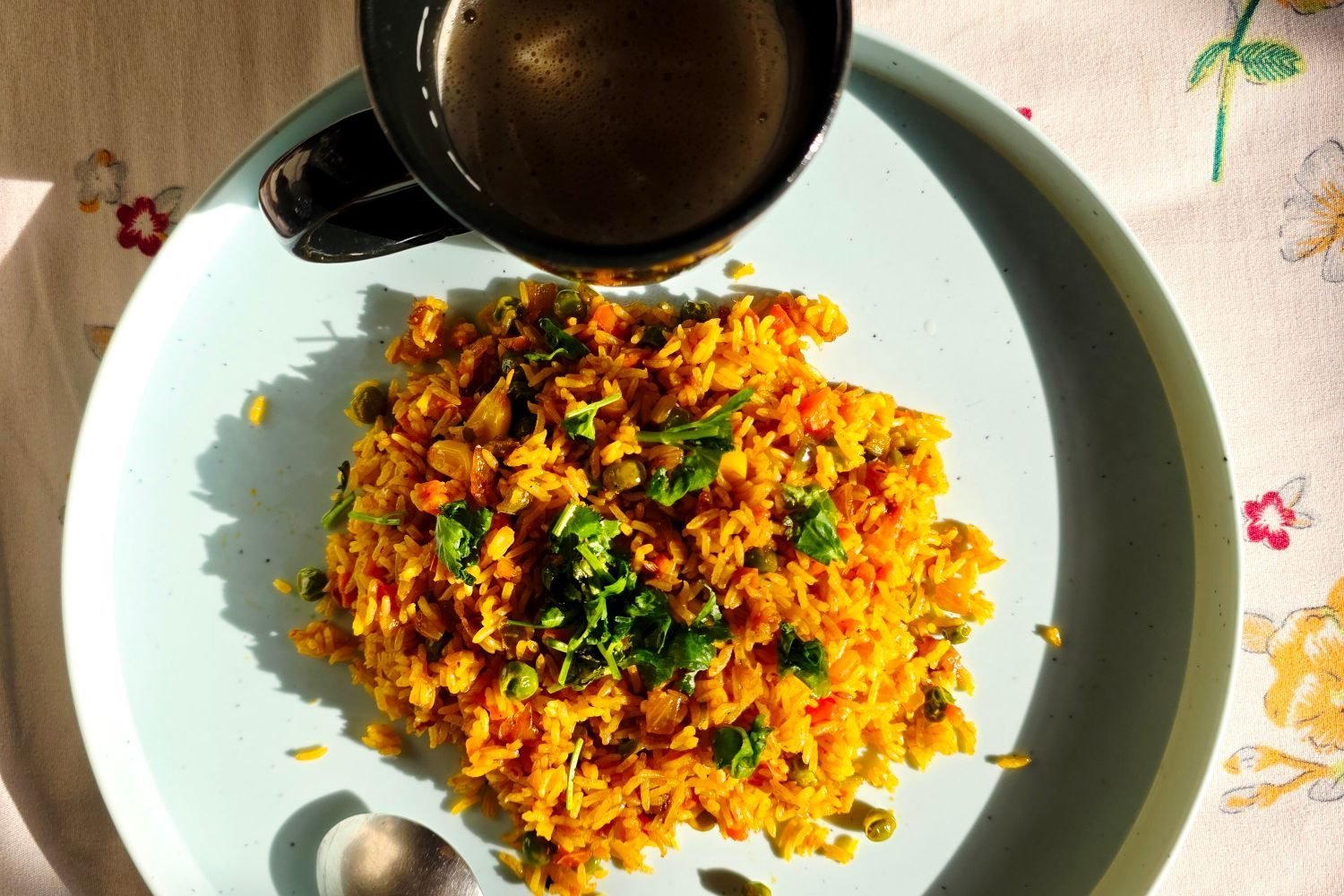
Vegetable poha or upma
Flattened rice (poha) or semolina (upma) becomes a solid fiber source the moment you load it with onions, carrots, peas, and beans instead of just peanuts and potatoes. Use minimal oil (a teaspoon of mustard oil or a light drizzle of olive oil for tempering is enough), skip deep-frying the peanuts, and add a squeeze of lemon plus coriander for flavor without salt overload.
Besan chilla (gram flour pancake)
Besan is naturally high in protein and fiber and has a lower glycemic impact than maida. Whisk it with grated vegetables — spinach, onion, tomato, grated bottle gourd — and cook on a non-stick pan with a teaspoon of oil rather than ghee. Two medium chillas with mint chutney is a filling, heart-smart plate.
Moong dal or oats idli
Classic idli is steamed, not fried, which already makes it a reasonable base. Swap plain rice idli batter for moong dal or oats-based batter occasionally to add protein and fiber. Just watch the sambar and coconut chutney — more on that below.
Vegetable dalia (broken wheat porridge)
Dalia cooked with mixed vegetables and a light tempering is one of the most underrated heart-healthy breakfasts in Indian kitchens. It’s high in fiber, low in fat, and keeps you full for hours.
Sprouts chaat or moong sprouts bhel
Sprouted moong or matki tossed with chopped tomato, onion, cucumber, and a dash of chaat masala and lemon is essentially a fiber-and-plant-protein bomb with zero cooking oil needed.
What are good Western heart-healthy breakfast options?
If you lean toward a Western-style breakfast, the same fiber-plus-protein principle applies.
Steel-cut or rolled oats
Oats contain beta-glucan, a soluble fiber specifically linked to lower LDL cholesterol. Cook with water or low-fat milk, then top with berries, a spoon of flaxseed or chia, and a few walnuts instead of sugar, honey, or flavored syrups.
Egg-white vegetable omelet
Egg whites give you protein without the saturated fat load of multiple whole yolks. A 2-3 egg-white omelet with spinach, tomato, mushroom, and bell pepper, cooked in a teaspoon of olive oil, is filling and heart-friendly. If you enjoy whole eggs occasionally, one whole egg plus two whites is a reasonable middle ground.
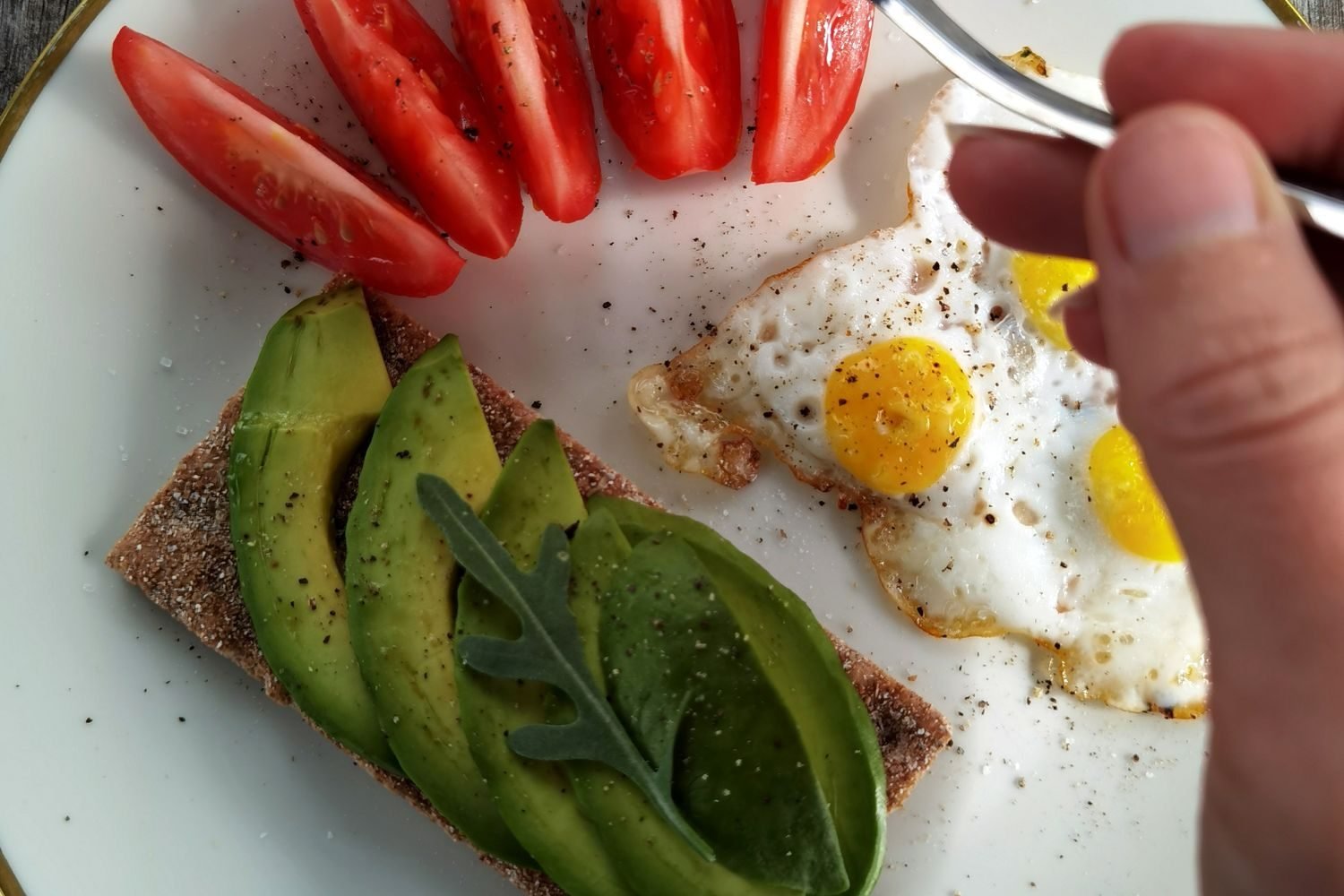
Whole-grain toast with avocado or nut butter
Choose 100% whole wheat or multigrain bread (check the label — “wheat bread” isn’t the same as “whole wheat”) and top with mashed avocado, a sprinkle of seeds, and a pinch of pepper instead of butter or margarine.
Greek yogurt with fruit and seeds
Plain, unsweetened Greek yogurt with fresh fruit, a spoon of ground flaxseed, and a few almonds delivers protein, fiber, and heart-healthy unsaturated fat in one bowl — no added sugar needed.
For more protein-centered combinations across both cuisines, our companion piece on high-protein breakfast ideas goes deeper on portion sizes and protein targets specifically.
Which common breakfast traps quietly hurt your heart?
Some breakfasts look healthy but carry hidden sodium, sugar, or saturated fat.
- Sugary breakfast cereals: Many popular cereals pack 10-15 grams of added sugar per serving with barely 1-2 grams of fiber. Check the label — if sugar appears in the first three ingredients, skip it.
- Deep-fried items (puri, bhature, samosa) as a daily habit: Occasional indulgence is fine, but a daily fried breakfast adds significant saturated fat and refined flour, both linked to higher LDL cholesterol over time.
- Excess ghee on parathas: A stuffed paratha loaded with ghee on both sides can carry more saturated fat than an entire day’s recommended limit. Use a light brushing instead, or bake/dry-roast it.
- Sambar and chutney portions: Restaurant-style sambar and coconut chutney often carry more oil and salt than the idli or dosa itself. Ask for less oil, or make it at home with a light tempering.
- Flavored yogurt and packaged fruit juice: Both are often sugar-loaded despite a “healthy” image. Whole fruit and plain yogurt are the better swap.
- White bread and refined-flour biscuits with tea: A common Indian breakfast pairing, but almost entirely refined carbs with negligible fiber.
For a broader list of what tends to help versus hurt heart health beyond breakfast, see best and worst foods for heart health.
How can you make your usual Indian breakfast heart-smarter without changing the dish?
You often don’t need a new recipe — just a swap within the one you already make.
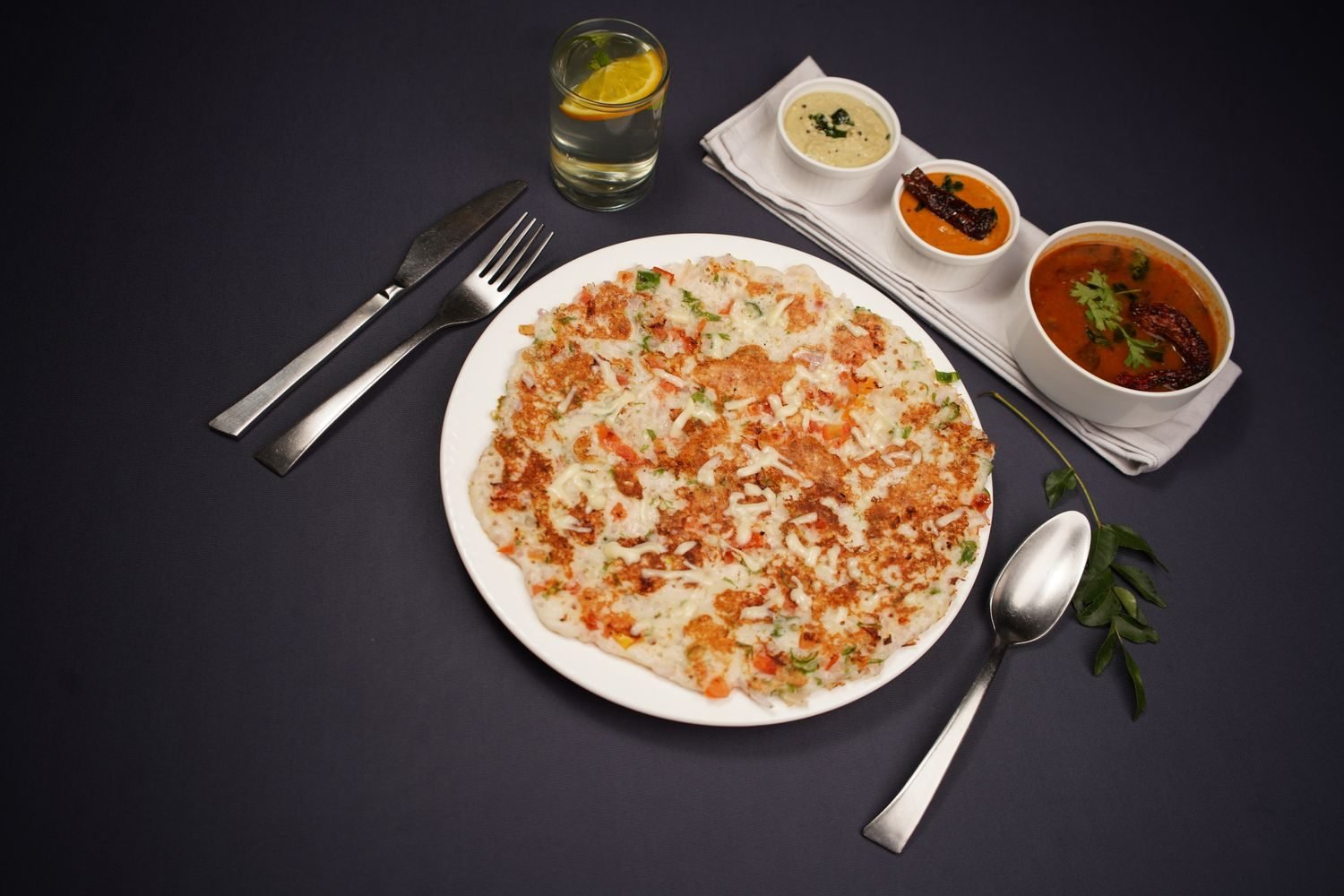
- Dosa: Choose a plain or vegetable-stuffed dosa over the butter or ghee-roast version; ask for it cooked with minimal oil.
- Paratha: Swap maida for whole wheat atta, stuff with vegetables (methi, mooli, palak) instead of extra potato, and dry-roast with a light oil brushing instead of shallow-frying in ghee.
- Upma/poha: Add a handful of boiled vegetables and a spoon of roasted peanuts or chana instead of increasing oil for flavor.
- Tea-time biscuits: Replace refined-flour biscuits with a small bowl of roasted makhana (fox nuts) or a fruit.
- Vada: Swap for a steamed version (idli or dhokla) most days, and treat fried vada as an occasional item rather than a daily one.
- White rice-based idli/dosa batter: Blend in a portion of oats, ragi, or moong dal into the batter for added fiber without changing the taste much.
These small substitutions add up. Fiber and healthy fat intake work cumulatively — one heart-healthy breakfast a day, most days of the week, moves your cholesterol numbers more than one perfect meal followed by a week of fried snacks.
How much fiber and protein should a heart-healthy breakfast actually have?
As a practical target, aim for 5-8 grams of fiber and 12-20 grams of protein at breakfast. This isn’t an arbitrary number — it reflects the AHA’s broader recommendation of 25-30 grams of fiber daily, spread across meals, with breakfast being an easy place to front-load a third of that target using oats, whole grains, dals, or vegetables.
On the fat side, prioritize unsaturated fats (nuts, seeds, olive oil, avocado) over saturated ones (ghee, butter, coconut oil in large quantities) and keep added sugar as close to zero as possible at this meal. Sodium is worth watching too — restaurant-style chutneys, packaged cereals, and salted butter can add up quickly before 9 a.m.
If your cholesterol numbers are already a concern, pairing these breakfast choices with foods known to actively help includes looking at our cholesterol-lowering foods list for ingredients worth adding across the day, not just at breakfast.
Frequently asked questions
Is idli-sambar a heart-healthy breakfast?
Yes, largely. Idli is steamed, not fried, and rice-based batter can be boosted with oats or moong dal for extra fiber. The main watch-point is the sambar and coconut chutney portions, which can carry more oil and salt than people expect — ask for or make a lighter version.
Are eggs okay for heart health at breakfast?
Yes, in moderation. Whole eggs contain dietary cholesterol but current research shows moderate intake (about one a day) doesn’t significantly raise heart disease risk for most healthy people. Egg whites are a safe, protein-rich option if you want to eat more without the saturated fat from multiple yolks.
Is oats really better than poha for heart health?
Both work well. Oats has a slight edge due to beta-glucan, a soluble fiber shown to help lower LDL cholesterol. Poha is lighter and easier to load with vegetables. Alternating between the two across the week is a reasonable approach rather than picking one permanently.
Can I still have chai or coffee with a heart-healthy breakfast?
Yes, black tea, green tea, or coffee in moderation is generally fine. The concern is usually what’s paired with it — sugar-loaded chai or a side of refined-flour biscuits. Cut back on added sugar in the drink itself and pair it with a fiber-rich breakfast instead.
How quickly can breakfast changes affect cholesterol levels?
Meaningful changes in cholesterol from dietary shifts, including breakfast composition, are usually seen over 6-12 weeks of consistent effort, not days. Fiber-rich breakfasts work cumulatively alongside your overall diet, so consistency matters more than any single “perfect” meal.
Small, consistent breakfast swaps — more vegetables in your poha, less ghee on your paratha, oats instead of sugary cereal — add up to real cardiovascular benefit over months, not overnight. If you’d like a breakfast and full-day plan built around your specific cholesterol numbers, lifestyle, and food preferences, an online nutritionist consultation can help you get there faster.