
A baby who is getting enough nutrition shows it through steady weight gain over time, regular wet diapers (six or more per day after the first week), and a growth curve that tracks its own consistent path on a pediatrician’s chart — not necessarily a high number, just a steady one. Baby nutrition is best judged by these real-world signals and growth trends over weeks and months, not by comparing your child to the baby next door or panicking over a single percentile number. If you’re new to feeding fundamentals, our infant nutrition guide covers the 0-12 month timeline — this article focuses on what growth monitoring actually means and how to read the signs that feeding is going well.
Growth charts can feel like a report card, and it’s easy to spiral over a percentile that dropped a few points between checkups. But percentiles are a comparison tool, not a grade. Knowing what they measure — and what actually warrants a call to your pediatrician — turns a source of anxiety into something reassuring.
What do growth chart percentiles actually mean?
A percentile shows where your baby’s measurement (weight, length, or head circumference) falls compared to a reference population of babies the same age and sex. If your baby is in the 40th percentile for weight, roughly 40 out of 100 babies the same age and sex weigh less, and about 60 weigh more. It is a ranking, not a pass/fail score.
In the U.S., the CDC recommends using the World Health Organization (WHO) Child Growth Standards to plot growth for babies from birth to 24 months, then switching to CDC growth charts after age two. The WHO charts describe how healthy, predominantly breastfed babies grow under optimal conditions, which is why they’re considered the better fit for the first two years. Pediatricians typically watch for measurements below the 2.3rd percentile or above the 97.7th percentile (labeled the 2nd and 98th lines on the chart) as a signal to look closer — not a diagnosis, just a prompt for more monitoring.
Why “average” isn’t a target
The 50th percentile is the statistical middle, not a goal to hit. Babies come in a wide range of healthy sizes depending on genetics, birth weight, sex, and feeding method. A baby steadily tracking the 15th percentile for weight can be just as healthy as one tracking the 85th, provided the curve is consistent. What pediatricians care most about is the trend — whether your baby is following their own curve over time — not the specific number on any given visit. A single measurement rarely means much alone; it’s the pattern across visits, combined with feeding behavior, that tells the real story. For a deeper look at how much a baby actually needs at each stage, see our guide to infant nutritional requirements.
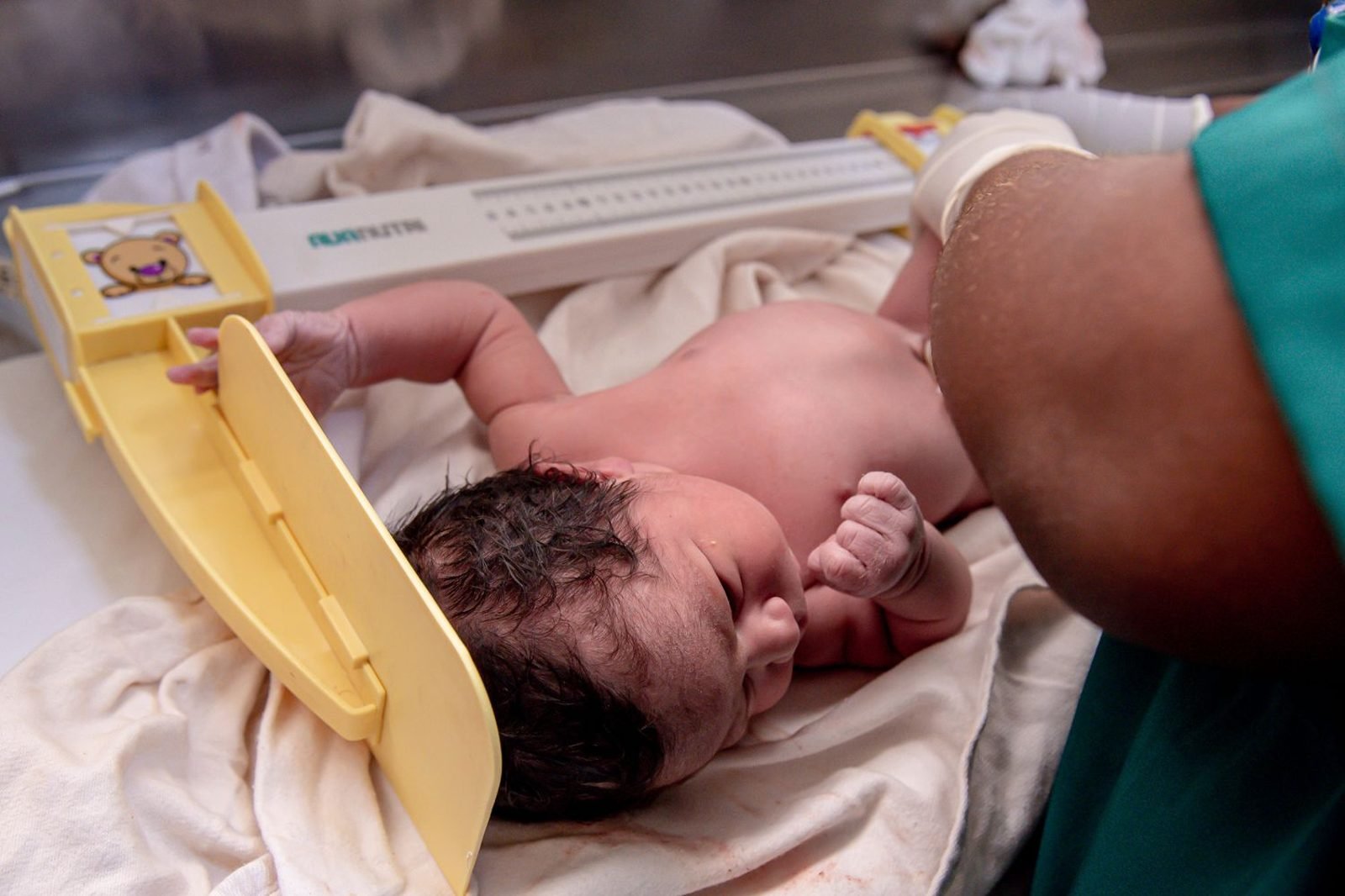
When would a pediatrician actually be concerned about growth?
Doctors are less concerned with where a baby sits on the chart and more concerned with sudden changes in direction. Patterns that typically prompt closer attention include:
- Crossing two or more major percentile lines downward in a short period (for example, dropping from the 60th to below the 20th between visits).
- A flattening weight curve alongside continued height growth, which can sometimes signal inadequate calorie intake.
- Weight-for-length measurements that fall outside the expected range, since this compares a baby’s weight to their own length rather than to age alone.
- Loss of more than about 7-10% of birth weight in the first days of life without regaining it by roughly two weeks, which pediatricians monitor closely in newborns.
It’s also worth knowing that breastfed and formula-fed babies tend to grow a little differently after around three months. Weight gain is generally a bit slower for breastfed infants from that point on, while formula-fed babies often gain more quickly and may drift upward across percentile lines. This is a recognized, normal pattern on the WHO charts, not a sign that one feeding method is failing — our infant nutrition guide covers how both feeding methods support healthy growth. Growth charts are one data point among several, and only your pediatrician, who has your baby’s full history, can interpret a specific chart accurately.
How can you tell if your baby is getting enough nutrition day to day?
Between well-child visits, most parents want signals they can check at home. According to the CDC and AAP, a few concrete signs tend to line up with adequate intake:
Wet and dirty diapers
Diaper output is one of the most reliable early indicators. The CDC’s general guidance for the first week is roughly 1 wet diaper on day 1, 2 on day 2, building to 6 or more per day by day 5 through 7, with urine that’s pale yellow to nearly colorless. Stool frequency matters too — after day 3, babies typically have at least 3 bowel movements a day. After the first week, the AAP flags fewer than 6 wet diapers and 4 stools a day as a reason to call your clinician.
Feeding rhythm and demeanor
The AAP notes a well-fed newborn typically feeds 8 to 12 times in 24 hours and seems satisfied — calm, relaxed hands, released latch — for one to three hours between feeds. Persistent fussiness right after a full feeding, or a baby who never seems satisfied, is worth mentioning to your pediatrician, though it doesn’t automatically mean something is wrong.
Steady weight gain
This is ultimately what your pediatrician tracks at each visit — not a single weight, but the trajectory. Most newborns regain their birth weight by about two weeks and then gain steadily from there, though the exact rate varies by baby. If you’re formula feeding, mixed feeding, or just started solids, the practical side of getting these numbers right — how much, how often, what textures — is covered in our baby food nutrition guide.

What feeding cues should you actually watch for?
Babies communicate hunger and fullness before they can talk, and reading those cues takes the guesswork out of feeding.
- Early hunger cues: rooting (turning toward a touch on the cheek), bringing hands to the mouth, smacking or licking lips.
- Late hunger cue: crying — ideally you catch hunger before it escalates here, since an upset baby can struggle to latch or settle into a feed.
- Fullness cues: turning away from the bottle or breast, slowing or stopping sucking, relaxed open hands, falling asleep contentedly.
Feeding on cue, rather than strictly by the clock, is generally the approach pediatric guidelines favor for young infants, since it lets the baby regulate intake to their own appetite. As babies move toward six months, appetite naturally becomes more variable — which leads into one of the most common sources of parental worry.
Why does my baby suddenly refuse to eat or seem endlessly hungry?
Both extremes are common and usually have unremarkable explanations.
Growth spurts tend to cluster around 2-3 weeks, 6 weeks, and 3 months of age, and again around 6 months. During these windows, babies often want to feed much more frequently for a few days and seem fussier than usual, or — confusingly — sometimes briefly resist feeding instead. Both patterns typically resolve within a few days with no change needed in how you’re feeding.
Temporary feeding refusal can also show up around teething, minor illness, a stuffy nose that makes feeding uncomfortable, or a simply distractible phase. As long as wet diapers, energy levels, and demeanor stay normal, a day or two of reduced intake is rarely cause for alarm.
Picky eating becomes more relevant once solids are introduced, usually around 6 months. The CDC and AAP both describe food refusal and strong preferences as a normal developmental stage, not a failure of feeding. It can take 8 to 10 exposures to a new food before a baby accepts it — a rejected bite of sweet potato on the first try is expected, not a reason to stop offering it. The AAP’s advice: keep offering variety without pressure, avoid making a separate “safe” meal every time food is refused, and let repeated, low-stakes exposure do the work. Our baby food nutrition guide has practical ideas for keeping meals varied without a fight.

When feeding worries need more than reassurance
Most feeding hiccups are temporary, but a few situations are worth a call sooner rather than later: refusal to feed lasting more than 24 hours, fewer than 6 wet diapers a day after the first week, signs of dehydration (sunken soft spot, dry mouth, notable lethargy), a flattening growth curve across visits, or refusal to eat with fever or vomiting. These aren’t meant to cause alarm — they’re simply the thresholds pediatric guidance uses to separate “wait and watch” from “worth a same-week visit.”
How does nutrition monitoring change as your baby grows?
Growth monitoring evolves alongside feeding. In the newborn stage, diaper counts and weight checks dominate. By 4-6 months, pediatricians watch how readiness signs for solids line up with the growth curve. Past the first birthday, focus shifts toward variety and appetite that’s naturally less predictable day to day — a normal transition covered in our toddler nutrition guide. The underlying principle stays constant: watch trends, not single data points, and weigh behavioral signs — energy, diapers, feeding cues, mood — alongside the chart. Our guide to nutritional needs maps how requirements shift from infancy through early childhood.
Frequently asked questions
Is it normal for my baby’s percentile to change between checkups?
Some movement is normal, especially in the first year as babies settle into their genetic growth pattern. Pediatricians generally become more attentive when a baby crosses two or more major percentile lines, particularly downward, rather than at small shifts. Bring any noticeable change up at your next visit.
Should I use the WHO or CDC growth chart for my baby?
The CDC recommends WHO growth standards for infants from birth to 24 months, since they’re based on optimal growth patterns in predominantly breastfed babies. After age two, practices switch to CDC growth charts. Your pediatrician’s office will already be using the correct one for your child’s age.
My exclusively breastfed baby gains weight slower than my friend’s formula-fed baby — is that a problem?
Usually not. Weight gain patterns commonly diverge after around three months, with breastfed babies often gaining a bit more gradually. This is a recognized, typical difference on the WHO charts, not evidence that breastfeeding is falling short, as long as diaper output and your baby’s own curve stay consistent.
How many wet diapers should a healthy baby have per day?
By day 5 to 7 of life, most healthy babies have 6 or more wet diapers daily, with urine that’s pale yellow or nearly clear. After the first week, the AAP notes fewer than 6 wet diapers or 4 stools a day is worth a call to your pediatrician.
My 7-month-old refuses vegetables — is this picky eating already?
Very likely, and it’s normal. It can take 8 to 10 exposures before a baby accepts a new food, so refusal on the first try isn’t a reliable signal of long-term preference. Keep offering it without pressure, alongside foods your baby already accepts, and reintroduce it periodically.
When should I actually worry about my baby’s growth or feeding?
Contact your pediatrician if feeding refusal lasts more than a day, wet diapers drop noticeably, your baby seems unusually lethargic, or their growth curve flattens or drops across two or more visits. These are the specific thresholds pediatric guidance treats as signals to check in sooner, rather than normal variation.
Every baby’s growth curve tells its own story, and reading it well often takes more context than a single percentile can offer. For a closer, personalized look at your baby’s feeding pattern and growth trends, an online nutritionist consultation can help you build a feeding approach that fits your baby specifically — always alongside, not instead of, your pediatrician’s guidance.