The most effective individual yoga poses for weight loss are those that engage large muscle groups isometrically or through flowing movement — Chair Pose, Warrior poses, Boat Pose, and Plank build strength and elevate heart rate, while a sequence like Surya Namaskar links multiple poses into continuous, calorie-burning movement.
I’m Yash Pathak, founder and lead trainer at FitStrot. Rather than a general overview of yoga for weight loss, this guide breaks down specific poses in more depth — how to perform them correctly and what each one contributes to a weight-loss-focused practice.
Chair Pose (Utkatasana)
Stand with feet hip-width apart, bend the knees as if sitting into an invisible chair, and raise your arms overhead, keeping your weight in your heels. Hold for 30-60 seconds. This pose intensely engages the quadriceps, glutes, and core, functioning similarly to an isometric squat hold — one of the more demanding standing poses for building lower-body strength and elevating heart rate.
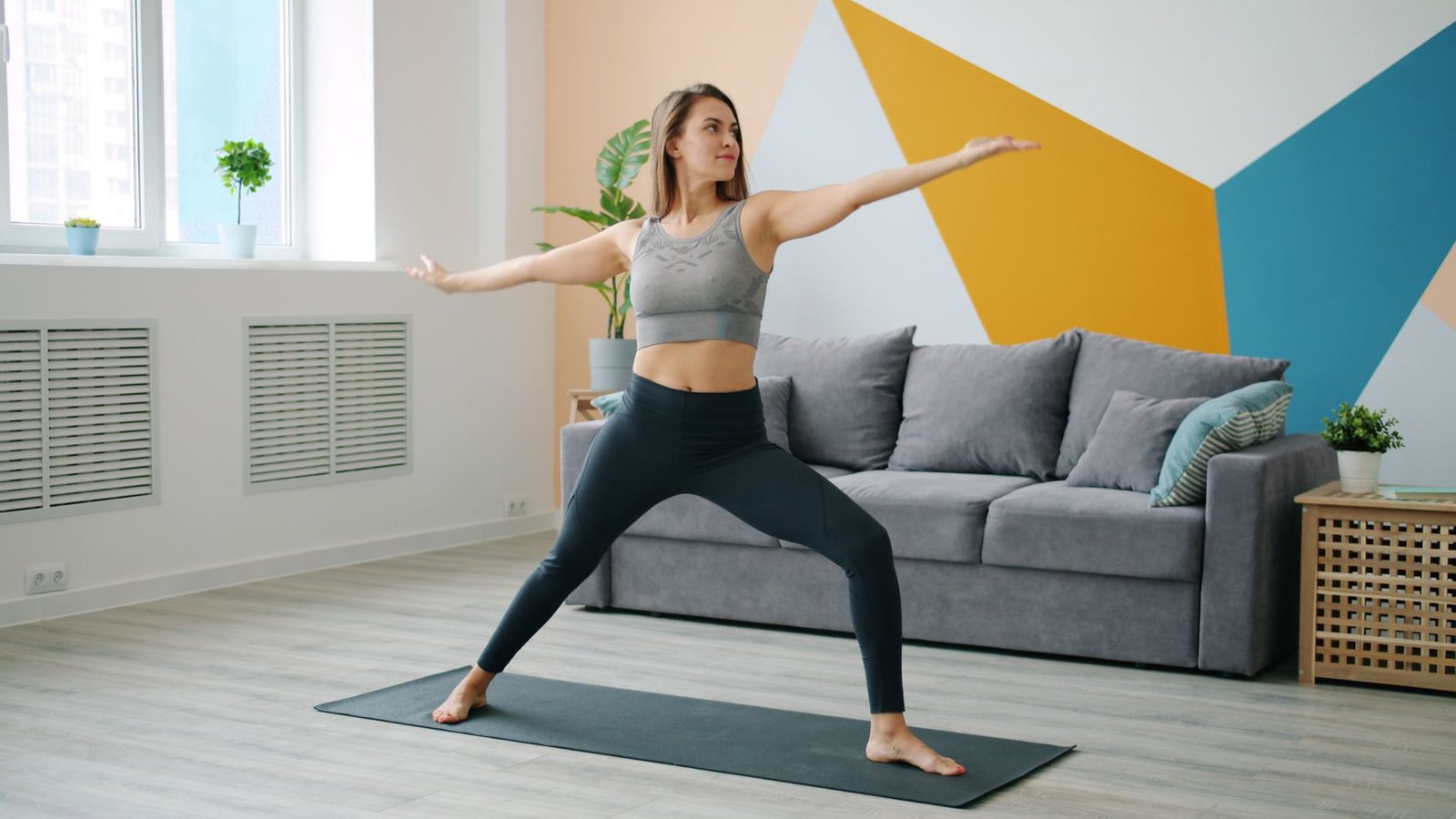
Warrior II (Virabhadrasana II)
From a wide stance, turn one foot out 90 degrees, bend that knee to a right angle, and extend your arms parallel to the floor. Hold for 30-45 seconds each side. This pose builds strength through the legs and improves hip mobility, and holding the position for an extended duration adds an isometric strength component beyond typical stretching.
Boat Pose (Navasana)
Sitting with knees bent, lean back slightly and lift your feet off the floor, balancing on your sitting bones, extending your arms forward. Hold for 20-30 seconds, building up as core strength improves. This pose directly targets the abdominal muscles and hip flexors, contributing to core strength and definition, though it doesn’t spot-reduce fat from the stomach area specifically.
Plank Pose
From a push-up position (or on forearms for a modified version), hold your body in a straight line from head to heels, engaging the core throughout. Hold for 20-45 seconds. Plank engages the entire core, shoulders, and to a lesser extent, the legs — a foundational strength-building pose used across many fitness disciplines, not just yoga.
Downward-Facing Dog to Plank Flow
Moving repeatedly between Downward-Facing Dog and Plank pose creates a dynamic, flowing movement that elevates heart rate more than either static pose alone, adding a cardio element to what would otherwise be primarily a strength-focused practice.
Bridge Pose (Setu Bandhasana)
Lying on your back with knees bent, feet flat, lift your hips toward the ceiling, engaging the glutes and hamstrings. Hold for 30-45 seconds, or pulse gently for a more dynamic variation. This pose closely mirrors a glute bridge exercise, building strength in the posterior chain.
Surya Namaskar (Sun Salutations) as a Complete Sequence
Rather than a single pose, Sun Salutations link 12 poses — including Downward Dog, Cobra, and forward folds — into one continuous, flowing sequence. Performing multiple rounds briskly elevates heart rate significantly more than holding individual poses, making it one of the most effective components of a weight-loss-focused yoga practice specifically because of this cardio element layered onto the strength and flexibility benefits.
Building These Poses Into a Practice
A structured session might begin with 5-8 rounds of Sun Salutations as a warm-up and cardio component, move into standing poses (Chair, Warrior variations) held for strength, add core work (Boat Pose, Plank), and finish with Bridge Pose and some gentle stretching to cool down. Performed 4-5 times weekly for 45-60 minutes, this structure provides meaningful calorie burn and strength-building alongside yoga’s traditional flexibility benefits.
Why Individual Poses Aren’t a Substitute for a Full Practice
No single pose, performed occasionally, produces meaningful weight loss on its own. The cumulative effect of consistent practice — combining these poses into structured sessions multiple times weekly — combined with attention to diet, is what actually drives visible results over weeks and months.
Related Guidance
Our yoga exercises for weight loss guide covers the broader sequencing and calorie-burn comparison across yoga styles, and our online yoga classes for weight loss guide covers how to structure a consistent practice around these poses.
Sequencing Poses for Maximum Benefit
Starting a session with gentler warm-up poses (cat-cow, gentle twists) before moving into more demanding standing poses (warrior sequences, chair pose) reduces injury risk and lets you sustain effort through a longer practice, which matters more for the cumulative calorie-burn benefit than any single pose in isolation. Ending with a few minutes of deeper stretching and brief relaxation (even just 3-5 minutes) supports recovery and the stress-reduction benefits that are a meaningful part of yoga’s overall contribution to weight management, separate from calorie burn.
Common Form Mistakes That Quietly Sabotage These Poses
In years of correcting form in group classes and one-on-one sessions, I have noticed the same handful of mistakes repeating themselves regardless of a person’s age or fitness background. People rush toward the shape of a pose without paying attention to what is actually working underneath. The pose ends up looking right in a mirror while doing almost nothing for the muscles it is meant to target. This is the biggest reason some people practice yoga for months and see very little change in strength or body composition.
In Chair Pose, the most common error is letting the knees cave inward and the weight shift onto the toes. This takes the load off the glutes and thighs and puts unnecessary strain on the knee joints instead. The fix: press weight back into the heels, keep the knees tracking over the second toe, and actively squeeze the inner thighs toward each other. In Warrior II, I often see the front knee drift past the ankle or collapse inward, and the torso lean forward instead of staying stacked over the hips. Both mistakes reduce the demand on the glute and quad of the front leg, which is where most of the calorie-burning work of the pose comes from.
Plank and the Downward-Facing Dog to Plank flow are where I see the most wasted effort. Sagging hips turn an intense core exercise into a passive stretch for the lower back. Shoulders creeping up toward the ears mean the upper body is bracing through tension rather than active strength, which tires people out faster without building real stability. In both poses, drawing the navel in, lengthening through the crown of the head, and keeping the shoulder blades pulled gently down the back changes the pose from something you endure into something that actually works your core and shoulders.
Boat Pose is often done with a rounded spine, which shifts the effort away from the deep core muscles and into the hip flexors and lower back, sometimes causing discomfort that has nothing to do with fitness level. And across almost every pose in this list, I see people holding their breath through the hardest part of the hold. This spikes blood pressure, cuts short the oxygen supply your muscles need to keep working, and works against the very stress-reducing effect that makes yoga useful for weight loss in the first place.
The Role of Breath in Turning These Poses Into a Fat-Loss Tool
Breath is not a background detail in yoga, it is what separates a genuinely effective session from a series of stretches held in silence. In strength-based poses like Chair, Warrior II, and Plank, steady, controlled breathing keeps oxygen flowing to the working muscles, which lets you hold the pose longer and with better engagement. In poses like Bridge or the stillness at the end of a Surya Namaskar round, slow breathing shifts the body out of a stressed state and into one where recovery and fat metabolism can actually happen.
A lot of my clients are surprised to learn that the breathing pattern in Surya Namaskar, one inhale or exhale matched to each movement, is what makes the sequence metabolically different from simply moving through twelve poses. The breath sets the pace, keeps the heart rate elevated in a controlled way, and prevents the kind of jerky, momentum-driven movement that leads to injury and reduces muscle engagement.
There is also a stress hormone angle that is easy to overlook. Chronic stress keeps cortisol elevated, and elevated cortisol is strongly linked to fat storage around the abdomen and to increased cravings for sugary, calorie-dense food. Slow, deliberate breathing during a yoga session, especially the extended exhale you use in poses like Bridge or the final relaxation, activates the parasympathetic nervous system and brings cortisol down. This is one of the reasons people who practice yoga consistently often report fewer cravings and steadier appetite, independent of the calories burned during the session itself.
A practical habit I recommend to every client is to spend the first two minutes of practice simply lengthening the exhale, aiming for an exhale that is noticeably longer than the inhale. Carry that same rhythm into the effort-based poses rather than holding your breath through the hard parts. It sounds like a small adjustment, but over weeks it changes how much you get out of the exact same sequence of poses.
Modifying These Poses When Your Knees, Back, or Wrists Aren’t Cooperating
I regularly get messages from clients who love the idea of a yoga-based fat loss practice but hit a wall the moment a specific joint objects, a knee that aches in Chair Pose, a lower back that complains during Boat Pose, or wrists that cannot support Plank for more than a few seconds. This is common, especially for people starting yoga after years of a sedentary desk job or a previous injury, and it does not mean these poses are off-limits, it usually means they need a genuine modification rather than either pushing through pain or abandoning the pose entirely.
For knee discomfort in Chair Pose or Warrior II, the fix is almost always about depth and alignment rather than avoiding the pose. Bending the knees only to a comfortable 45-degree angle instead of a full 90 degrees, and consciously checking that the knee tracks directly over the second toe rather than caving inward, resolves most of the strain, since the discomfort usually comes from misalignment putting lateral pressure on the joint rather than the pose itself being unsuitable. A folded blanket placed under the knee during any kneeling transition also removes a surprising amount of pressure for people with sensitive joints.
For lower back sensitivity, which comes up constantly with Boat Pose and Bridge Pose, the modification is to keep the knees bent in Boat Pose rather than extending the legs fully, which dramatically reduces the load on the lower spine while still working the core effectively, and to place a yoga block under the sacrum in Bridge Pose so the pelvis is supported rather than relying entirely on the lower back muscles to hold the lift. I also tell clients with any history of disc issues to skip full Boat Pose entirely in the early weeks and build core strength through modified planks first, then reintroduce it gradually once the back feels stable through a full practice session.
Wrist pain in Plank Pose and the Downward-Dog-to-Plank flow is one of the most common complaints I hear from beginners, particularly those who spend all day typing, and the fix here is distributing weight differently rather than avoiding weight-bearing poses altogether. Coming down onto the forearms for a modified forearm plank removes wrist loading completely while still training the same core and shoulder muscles, and spreading the fingers wide with the middle finger pointing forward, rather than keeping fingers together, distributes pressure more evenly across the hand in full Plank. If wrist pain persists even with these adjustments, it is worth getting the joint checked rather than continuing to modify around it, since persistent pain during a bodyweight pose is not something a yoga adjustment alone should have to solve indefinitely.
Frequently Asked Questions
Which specific yoga poses burn the most calories?
Dynamic sequences like Surya Namaskar burn more than static poses due to continuous movement, while held poses like Chair Pose and Warrior variations build significant strength and elevate heart rate through isometric engagement.
How long should I hold weight-loss-focused yoga poses?
Most standing and strength poses (Chair, Warrior, Plank) are held for 20-60 seconds, building up duration as strength improves — start with shorter holds and increase gradually rather than pushing to maximum duration immediately.
Can these poses replace strength training for weight loss?
They provide a genuine strength component, but typically at a lower intensity than dedicated weight training — they work well as a complement to or lighter alternative for strength training, depending on your goals and access to equipment.
Are these poses suitable for beginners?
Yes, most can be modified — shorter hold times, using a wall for balance in Chair or Warrior poses, or performing Boat Pose with bent knees — building toward the full versions as strength and balance improve.
Ready for a Yoga Practice Sequenced for Weight Loss?
A FitStrot online weight loss trainer builds a structured yoga practice using these poses effectively, paired with the right diet plan for visible results.