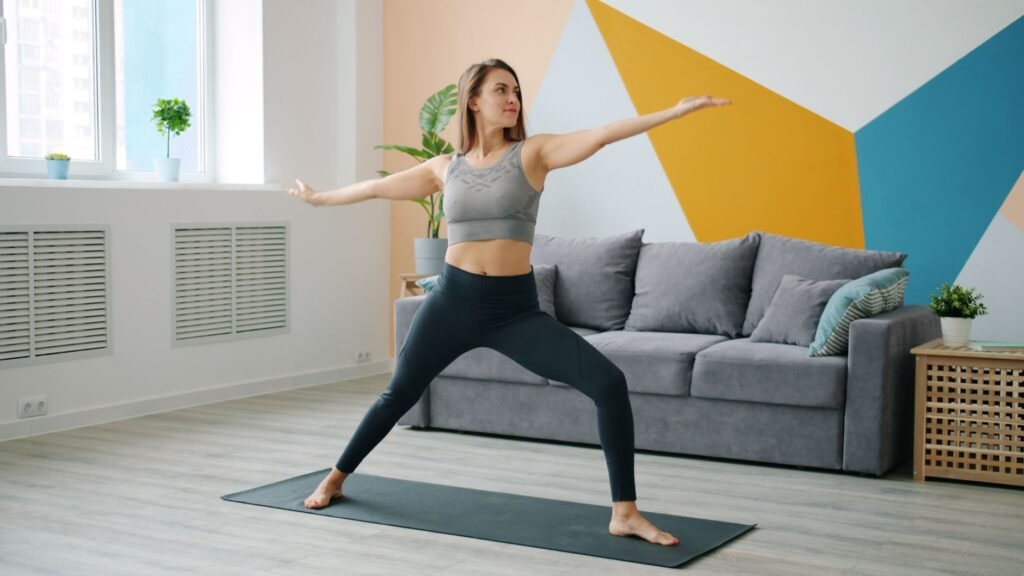
Dynamic yoga styles and specific poses that engage large muscle groups — like Surya Namaskar (Sun Salutations), Warrior poses, and Boat pose — burn more calories and build more strength than restorative yoga, making them the more effective choice when weight loss is the specific goal, though yoga’s broader value also comes from stress reduction and improved consistency.
I’m Yash Pathak, founder and lead trainer at FitStrot. Not all yoga is built equally for weight loss, and knowing which poses and sequences to prioritize changes how effective your practice is for this specific goal.
Poses and Sequences That Support Weight Loss Most
Surya Namaskar (Sun Salutations). A flowing sequence of 12 poses performed continuously, engaging nearly every major muscle group while elevating heart rate — widely considered one of the most effective yoga sequences specifically for calorie burn and full-body toning. Multiple rounds performed briskly can burn a meaningful number of calories in a short session.
Warrior I, II, and III. These standing poses build significant lower body and core strength while also improving balance — held for 30-60 seconds each, they engage muscles isometrically in a way that contributes to strength and toning.
Boat Pose (Navasana). A core-focused pose that builds abdominal strength, contributing to overall core toning, though like all targeted poses, it doesn’t spot-reduce fat from that specific area.
Chair Pose (Utkatasana). Engages the legs and glutes intensely, similar to an isometric squat hold, building lower body strength and elevating heart rate when held for extended periods.
Plank and Side Plank. Core and full-body engagement poses that build strength throughout the torso, shoulders, and legs.
Bridge Pose (Setu Bandhasana). Engages the glutes, hamstrings, and core, offering a strength component similar to a glute bridge exercise.
Building an Effective Sequence
A weight-loss-focused yoga session typically flows through several rounds of Sun Salutations as a warm-up and cardio component, followed by a series of standing poses (Warriors, Chair Pose) held for strength, core work (Boat Pose, Plank variations), and finishing with some flexibility and cool-down poses. A 45-60 minute session structured this way, performed 4-5 times weekly, provides meaningful calorie burn alongside the flexibility and stress-reduction benefits yoga is traditionally known for.
Comparing Calorie Burn Across Styles
Restorative or gentle yoga (Hatha at a slow pace, Yin) burns relatively little — roughly 150-200 calories per hour, similar to a slow walk. Vinyasa Flow, which links poses like the ones above into continuous movement, burns considerably more — often 300-450 calories per hour. Power Yoga, a more athletic variation incorporating strength-building holds, sits at a similar or slightly higher range. Ashtanga, a set, demanding sequence, can burn comparably to Power Yoga for those with the experience to sustain its pace.
Why Consistency Matters More Than Any Single Pose
No individual pose or sequence produces significant weight loss in isolation — the cumulative effect of consistent practice, 4-5 times weekly over weeks and months, combined with attention to diet, is what drives visible results. Practicing an intense sequence once a week produces far less than a moderately paced routine done consistently multiple times weekly.
Combining Yoga With Diet for Better Results
Yoga alone, even the more dynamic styles above, rarely creates a large enough calorie deficit on its own for significant weight loss without corresponding dietary attention. Pairing a consistent yoga practice with a moderate calorie deficit through diet produces meaningfully faster and more visible results than either alone.
Related Guidance
Our yoga poses for weight loss and online yoga classes for weight loss guides go deeper into building a complete practice and choosing the right style for your goals and experience level.
Building a Consistent Yoga-for-Weight-Loss Routine
Consistency matters more than intensity when it comes to yoga’s weight-loss contribution — a 30-40 minute practice done 5-6 days a week produces meaningfully better results than an occasional 90-minute session once a week, even though the single long session feels more intense in the moment. Combining a more dynamic style (Vinyasa or Power Yoga) on some days with gentler, restorative practice on others balances the calorie-burning benefit with the stress-reduction and flexibility benefits yoga is particularly good at, rather than treating every session as purely a workout.
Tracking how you feel — energy, stress levels, sleep quality — alongside any weight changes gives a fuller picture of yoga’s benefit, since several of its effects support weight loss indirectly through stress and cortisol reduction rather than through calorie burn alone.
Why Breath Work Matters as Much as the Poses
Pranayama (breathing exercises), often paired with asana practice, activates the parasympathetic nervous system and reduces cortisol — a stress hormone that, when chronically elevated, is associated with increased abdominal fat storage for many people. This is part of why yoga’s weight-loss benefit extends beyond the calories burned during a session; the stress-reduction component genuinely supports better hormonal balance in a way that purely calorie-focused cardio doesn’t directly address.
Common Mistakes That Quietly Undercut a Yoga Practice for Weight Loss
The most frequent mistake I see is rushing through poses to get through a longer sequence, treating yoga like a checklist rather than a practice where the quality of each hold matters. A Warrior II held for five seconds with loose form delivers a fraction of the muscular engagement, and therefore the calorie and strength benefit, of the same pose held with intention for 30 to 45 seconds. Slowing down and actually holding poses long enough for the muscles to fatigue is what turns a gentle stretch session into something that meaningfully contributes to weight loss.
A second mistake is choosing a style mismatched to the goal and then feeling like yoga “isn’t working.” Restorative or Yin yoga, while genuinely valuable for flexibility, stress reduction, and recovery, burns very little compared to a Vinyasa flow or Power Yoga session, and someone doing only gentle restorative sessions while expecting Power Yoga-level calorie burn is comparing the wrong things. Matching the style to the goal, or at minimum understanding what each style is actually good for, avoids a lot of unnecessary disappointment.
The third mistake is skipping strength-building elements within a practice, holding only easier variations of poses indefinitely rather than progressing toward more demanding versions, like moving from a modified Chaturanga with knees down to the full version, or building toward an actual Crow Pose rather than staying in the prep position for months. Just like any other form of exercise, yoga needs progressive challenge to keep delivering results rather than becoming a comfortable routine your body has fully adapted to.
Morning vs Evening Practice — What Actually Works Better for Fat Loss
There’s a strong tradition in India of practicing yoga first thing in the morning on an empty stomach, and there’s real logic behind it beyond just cultural habit. Practicing fasted, before breakfast, may modestly increase the proportion of fat used as fuel during the session, and for many people mornings simply offer fewer interruptions and a better chance of consistency before the day’s work and family demands take over. A 6am practice, before the household wakes up or before leaving for work, tends to have a far higher completion rate over months than a session planned for later in a busy day.
That said, evening practice has its own legitimate advantages that shouldn’t be dismissed. Body temperature and muscle flexibility are typically higher later in the day, which can make deeper stretches and more demanding poses feel more accessible and reduce injury risk compared to a stiff, just-woken-up body. Evening sessions can also serve as a genuinely effective way to unwind from work stress, which matters for weight loss indirectly, since high stress and poor sleep are both linked to increased appetite and harder-to-lose abdominal fat.
My honest recommendation is that the best time is whichever one you’ll actually stick to for months rather than weeks. If mornings mean you skip breakfast prep and rush the practice to get to work on time, you’ll likely abandon it within a few weeks despite the fasted-state theory. If evenings mean you’re too tired after a full workday to show up consistently, that’s not the right slot either. Pick the window that fits your actual daily rhythm, and treat the specific timing question as secondary to simply getting on the mat consistently, since consistency over months is what drives results in yoga far more than the hour on the clock.
Practicing Around Your Menstrual Cycle — Why Some Weeks Call for a Gentler Sequence
For the women I coach, energy and capacity for yoga genuinely shift across the menstrual cycle, and building a routine that ignores this usually backfires within a few months, either through burnout or through skipping the practice entirely during the weeks it feels hardest. In the days right after your period ends through roughly mid-cycle, estrogen is rising and most women report their highest energy and best physical performance of the month — this is a good window for more demanding sequences, sun salutations at a brisker pace, and poses that challenge balance and strength like warrior variations or crow pose attempts. It’s not a coincidence that this is also when people tend to report their best workouts across the board, not just in yoga.
The days leading up to and during your period are a different story physiologically. Dropping estrogen and progesterone, along with the prostaglandins responsible for cramping, mean many women genuinely have less capacity for intense practice during this window, and forcing a hard vinyasa flow through cramps and fatigue on day one or two often just leads to skipping the mat entirely rather than a gentler, sustainable session. This is where switching to restorative or gentle sequences pays off — supported forward folds, child’s pose, gentle seated twists rather than deep ones, and legs-up-the-wall pose, which several of my clients specifically credit with easing period-related lower back and abdominal discomfort. Avoid strong inversions and deep abdominal twisting poses during heavy flow days specifically, less because of any strict rule and more because most women simply find them uncomfortable or find they aggravate cramping when the pelvic area is already tender.
The mistake I see most often isn’t overtraining through this phase, it’s the opposite — treating the period week as an excuse to skip movement altogether for five to seven days a month, which adds up to roughly two months of the year with no activity if it becomes a consistent pattern. A twenty-minute gentle sequence during your period still supports the weight-loss goals discussed throughout this piece, both by maintaining the consistency that matters more than intensity, and because gentle movement genuinely helps some women manage cramping and bloating better than lying still does.
Practically, this means the smartest weekly yoga structure for many women isn’t identical week to week at all — it flexes with roughly a two-week higher-intensity phase and a one-week lower-intensity phase built in deliberately, rather than trying to hit the same demanding sequence regardless of where you are in your cycle. Once clients start planning around this instead of fighting it, adherence over a full year improves noticeably, simply because the practice stops feeling like something to push through and starts feeling like something that adapts with them.
Frequently Asked Questions
Which yoga exercises are best for weight loss?
Dynamic sequences like Surya Namaskar, along with strength-building poses like Warrior variations, Chair Pose, and Boat Pose, burn more calories and build more muscle than restorative styles — these are the most effective choices when weight loss is the specific goal.
How many calories do yoga exercises burn?
This varies widely by style and intensity — restorative yoga burns roughly 150-200 calories per hour, while dynamic styles like Vinyasa or Power Yoga can burn 300-450 calories per hour.
How often should I do yoga for weight loss results?
4-5 sessions weekly, combining dynamic sequences for calorie burn with some gentler sessions for recovery, tends to produce visible results within 6-8 weeks when combined with a calorie-appropriate diet.
Can beginners do these weight-loss-focused yoga poses?
Yes, most can be modified for beginners — Sun Salutations can be performed at a slower pace initially, and standing poses can be held for shorter durations, building up as strength and stamina improve.
Ready for a Yoga-Based Plan Built for Weight Loss?
A FitStrot online weight loss trainer sequences yoga practice for maximum effectiveness and pairs it with the right diet plan for visible, sustained results.