An online nutritionist assesses your health history, labs, and lifestyle in a video or phone consultation, then builds a personalized eating plan around your goals and preferences, and tracks your progress over weeks or months through app check-ins, follow-up calls, and adjustments to the plan. It’s the same core process as an in-person visit, minus the commute — but it works best when you know exactly what it can and can’t do for you.
That last part trips people up. Online nutrition coaching is genuinely effective for building sustainable habits, managing weight, and supporting conditions like diabetes or PCOS alongside your regular medical care. It is not a substitute for diagnosis, medication management, or treatment of a medical condition — a good nutrition consultant will say this upfront and coordinate with your doctor rather than work around them. Below is what actually happens, step by step, from the first call to month three.
What happens in the first online nutrition consultation?
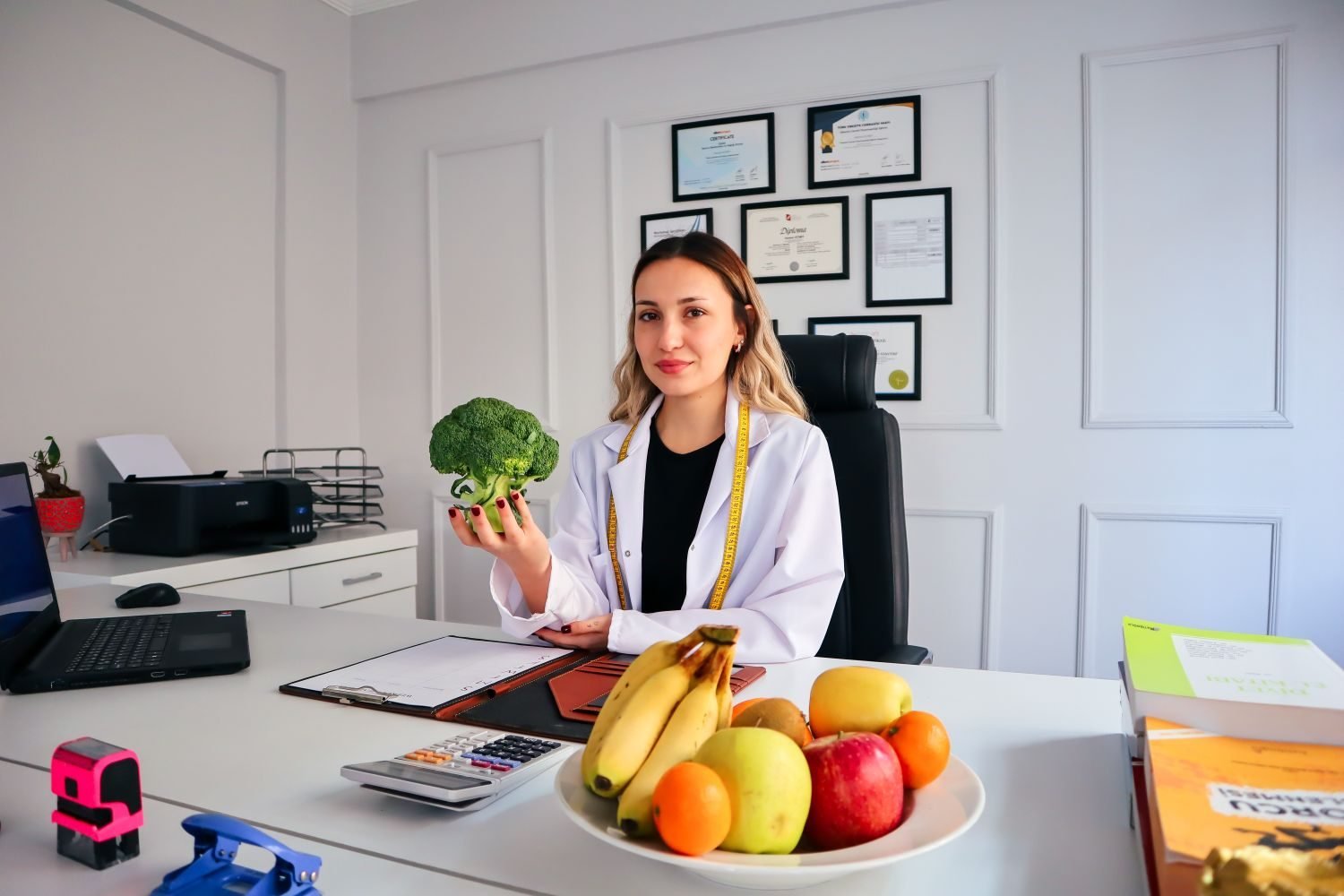
The first session usually runs 45 to 60 minutes over video call and functions as a full intake, not a quick chat. Expect the nutritionist to walk through four things: your medical history (existing conditions, medications, past diagnoses), your current eating pattern (a typical day or week of meals, not judged, just mapped), your goals (weight, energy, blood sugar control, digestive symptoms, sports performance — whatever brought you there), and any lab work you can share, such as a recent HbA1c, lipid panel, thyroid panel, or vitamin D level.
This mirrors what the Academy of Nutrition and Dietetics describes as the standard Nutrition Care Process: assessment, diagnosis of the nutrition-related problem, intervention planning, and ongoing monitoring. Online delivery doesn’t skip any of these steps — it just moves them to a screen. You’re not required to bring anything to the first call, but arriving with a food log from the past few days, a list of medications and supplements, and your latest lab reports (if you have them) will make the session more productive and cut down on back-and-forth in the following weeks.
By the end of the call, you should walk away with a rough sense of direction — not necessarily a finished meal plan, since that typically takes another day or two to build around everything discussed.
How does an online nutritionist personalize your diet plan?
Personalization is where online nutrition coaching earns its cost, and it’s built from four inputs layered together, not a generic template with your name on it.
- Lab values. Fasting glucose or HbA1c shapes carbohydrate timing and portioning. A lipid panel influences fat sources and fiber targets. Low iron or B12 changes what’s prioritized in meal planning. Without labs, a nutritionist is working from symptoms and history alone — which is still useful, but less precise.
- Medical history and current conditions. Someone managing insulin resistance needs a different carbohydrate strategy than someone training for a marathon. A nutritionist working with a client who has PCOS, for instance, will typically focus on insulin sensitivity, inflammation, and cycle regularity — details that don’t show up in a generic weight-loss plan.
- Goals. Fat loss, muscle gain, better energy, gut symptoms, and sports performance all call for different calorie targets, meal timing, and macronutrient splits, even for two people with similar starting stats.
- Food preferences and constraints. Vegetarian or vegan diets, cultural or regional food habits, allergies, budget, cooking time, and even how many meals you actually eat away from home all get factored in. A plan built around foods you won’t eat or can’t access gets abandoned within a week, regardless of how well it’s designed on paper.
In practice, this usually results in a plan with some flexibility built in — swap lists, portion ranges instead of rigid grams, and meal templates rather than a single fixed menu for 30 days straight. Rigid plans tend to break the first time life gets busy; flexible frameworks survive real weeks.
How is progress tracked in online nutrition coaching?
Remote tracking replaces the in-office weigh-in with a mix of tools, and most coaching relationships use several at once rather than relying on one.
- Scheduled video or phone check-ins. Typically every one to two weeks initially, spacing out to monthly as things stabilize. These are where the plan gets adjusted based on what’s actually working.
- App-based logging. Food diaries, weight trends, water intake, symptoms, or energy levels logged daily or a few times a week, reviewed by the nutritionist between calls.
- Photo and measurement updates. Progress photos, waist or hip measurements, or fitness tracker data, when relevant to the goal.
- Asynchronous messaging. Quick questions — can I eat this at a restaurant, how do I adjust for a travel week — handled through chat or email without waiting for the next scheduled call.
- Lab re-checks. For condition-specific goals like managing blood sugar or cholesterol, periodic re-testing (often every three months) gives an objective marker of whether the plan is actually moving the needle, not just how the scale looks.
The evidence backs up this kind of hybrid tracking. A 2016 systematic review and meta-analysis in the American Journal of Clinical Nutrition, evaluated by the CDC’s Community Preventive Services Task Force across 25 randomized controlled trials, found that telehealth-delivered dietary interventions produced measurable results — participants increased fruit and vegetable intake by roughly one serving a day, reduced sodium intake significantly, and in several studies, kept those improvements at 12 and 24 months. The Task Force’s conclusion: comprehensive telehealth nutrition interventions are recommended as an effective supplement to standard care for adults with diet-related chronic conditions like cardiovascular disease and diabetes. That’s not a marketing claim — it’s a government-reviewed synthesis of controlled trials.
What can an online nutritionist actually help with?
Within its lane, online nutrition coaching covers a lot of ground:
- Weight management — both loss and healthy gain, built around sustainable habits rather than short-term restriction.
- Everyday eating pattern overhauls — reducing ultra-processed food, improving protein and fiber intake, fixing meal timing.
- Support alongside diagnosed conditions such as type 2 diabetes or prediabetes, PCOS, and elevated cholesterol, working from a plan that complements what a physician has already prescribed.
- Sports and performance nutrition — fueling strategies for training, competition, or body composition goals.
- Digestive and energy complaints where diet is a contributing factor, such as bloating, irregular energy crashes, or poor sleep tied to eating patterns.
- Habit and behavior coaching — the accountability layer that most people actually struggle with more than the food knowledge itself.
Where it stops: an online nutritionist cannot diagnose a medical condition, prescribe or adjust medication, order and interpret complex diagnostic labs independently of a physician, or treat an eating disorder, severe malnutrition, or a condition requiring inpatient or specialist-level medical care. If you’re managing a diagnosed condition, the nutritionist’s plan should sit alongside your doctor’s treatment, not instead of it — and a credible one will ask who else is on your care team and, with your permission, coordinate rather than operate in isolation. This is also a useful moment to understand the credentialing gap: if you want to know exactly who’s qualified to do what, see our breakdown of the difference between an online nutritionist and a registered dietitian.

What does a typical first month of online nutrition coaching look like?
A realistic month one usually breaks down like this: week one is the intake call and the first draft of the plan, often with a short adjustment call a few days later once you’ve tried it against a real day. Weeks two and three involve one or two check-ins, refining portions, swapping out foods that didn’t fit your schedule or taste, and troubleshooting anything that came up — social events, travel, cravings, plateaus in energy or mood. By week four, most people have a plan that finally looks less like a document and more like how they’re actually eating, plus a first read on trends: weight direction, energy levels, or early symptom changes if relevant.
This is also the phase where the value of online diet counseling over a one-time consultation becomes clear — a single session gives you information, but the iteration over several weeks is what actually changes behavior. Expect the plan to keep shifting through month two and three as real-world feedback comes in; a plan that never changes after the first draft usually isn’t being tracked closely enough.
FAQ
Do I need lab reports before my first online nutritionist consultation?
No, they’re not required, but they help. If you have a recent HbA1c, lipid panel, thyroid, or vitamin panel, share it — it lets the nutritionist personalize faster. Without labs, the first plan is built on history and symptoms, then refined once test results are available.
How often will I talk to my online nutritionist?
Most programs start with check-ins every one to two weeks for the first month, then space out to every two to four weeks as the plan stabilizes. Between calls, many services allow chat-based questions, so you’re not waiting weeks for small clarifications.
Can an online nutritionist replace my doctor for a diagnosed condition?
No. An online nutritionist supports dietary management alongside medical treatment for conditions like diabetes or PCOS — they don’t diagnose, prescribe, or replace physician-led care. A responsible nutritionist will explicitly work in coordination with your existing doctor, not instead of them.
What apps or tools are used to track progress remotely?
Typically a food-logging app, periodic weight or measurement updates, and sometimes fitness tracker data, all reviewed by the nutritionist between video calls. The specific tools vary by provider, but the goal is the same: objective data between sessions, not just how you feel that week.
Is online nutrition coaching actually as effective as in-person visits?
Research suggests it can be. A CDC Task Force review of 25 randomized controlled trials found telehealth dietary interventions significantly improved diet quality, fruit and vegetable intake, and sodium reduction, with benefits sustained at 12 and 24 months in several trials — comparable to what’s typically seen with in-person counseling.
If you want to see this process applied to your own history, labs, and goals, you can book an online nutritionist consultation and go through the same intake, planning, and tracking approach described above.