A healthy Ramadan diet plan comes down to three habits: build Suhoor around slow-digesting complex carbs and protein instead of salty or fried foods, break the fast at Iftar with dates and water before easing into a full meal, and spread your fluid intake across the whole night instead of chugging it all at once. Ramadan fasting is not the same as general intermittent fasting for beginners — the window is longer and water is off-limits too, so the two meals you do eat need to work harder. Get the structure right and you can move through the month with steady energy instead of the usual cycle of afternoon crashes and Iftar overeating.
This guide breaks down what to eat at Suhoor, how to break your fast properly at Iftar, how to manage hydration across the non-fasting hours, and the pitfalls that trip up most people during Ramadan — especially the festive, fried, sugar-heavy spread that shows up at the table every evening.
What should a healthy Suhoor meal look like?
Suhoor is the meal that determines how your day goes, so it deserves more thought than a quick glass of milk and a samosa. The goal is a combination of complex carbohydrates, protein, and a bit of healthy fat that digests slowly and keeps blood sugar stable for 12-plus hours.
| Food Group | Examples | Why It Helps at Suhoor |
|---|---|---|
| Complex carbohydrates | Oats, whole wheat roti or paratha (without excess oil), brown rice, dalia (broken wheat) | Release glucose gradually instead of spiking and crashing |
| Protein | Eggs, paneer, yogurt, lentils, a small portion of chicken | Slows digestion and helps you feel full for longer, which matters when your next meal is 14-16 hours away |
| Fruits and vegetables | Banana, apple, sautéed vegetables | Adds fiber, which slows digestion and supports gut health during a disrupted eating pattern |
| Healthy fats (in moderation) | Almonds, a drizzle of olive oil, a spoon of peanut butter | Helps with satiety without weighing you down |
Timing matters too — eating Suhoor as close to dawn as possible, rather than early at night before sleeping, gives you the longest runway of steady digestion before the fast begins. Our guide on what to eat during fasting covers the same food-quality principles in more depth, though Ramadan’s dry fast (no water either) makes these choices even more important.
What foods should you avoid at Suhoor?
The foods that feel comforting at 4 a.m. are often the ones that make the fast harder. Salty foods — pickles, papad, salted snacks, processed cheese, and anything heavily seasoned — increase thirst almost immediately because sodium pulls water out of your cells. Fried foods (parathas swimming in ghee, pakoras, fried eggs in excess oil) sit heavy in the stomach and digest slowly in a way that doesn’t translate to sustained energy; they just make you sluggish for the first few hours of the fast.
Sugary foods and refined carbs — white bread, sugary cereals, sweetened tea, pastries — cause a fast blood sugar spike followed by an equally fast crash, which is the last thing you want a few hours into an already long fasting window. If you’re managing a condition like diabetes, this carb-quality issue matters even more; our diabetes nutrition guide covers how to choose lower glycemic-index carbs that won’t cause sharp swings, which is directly relevant to Suhoor planning.
How should you break your fast at Iftar?
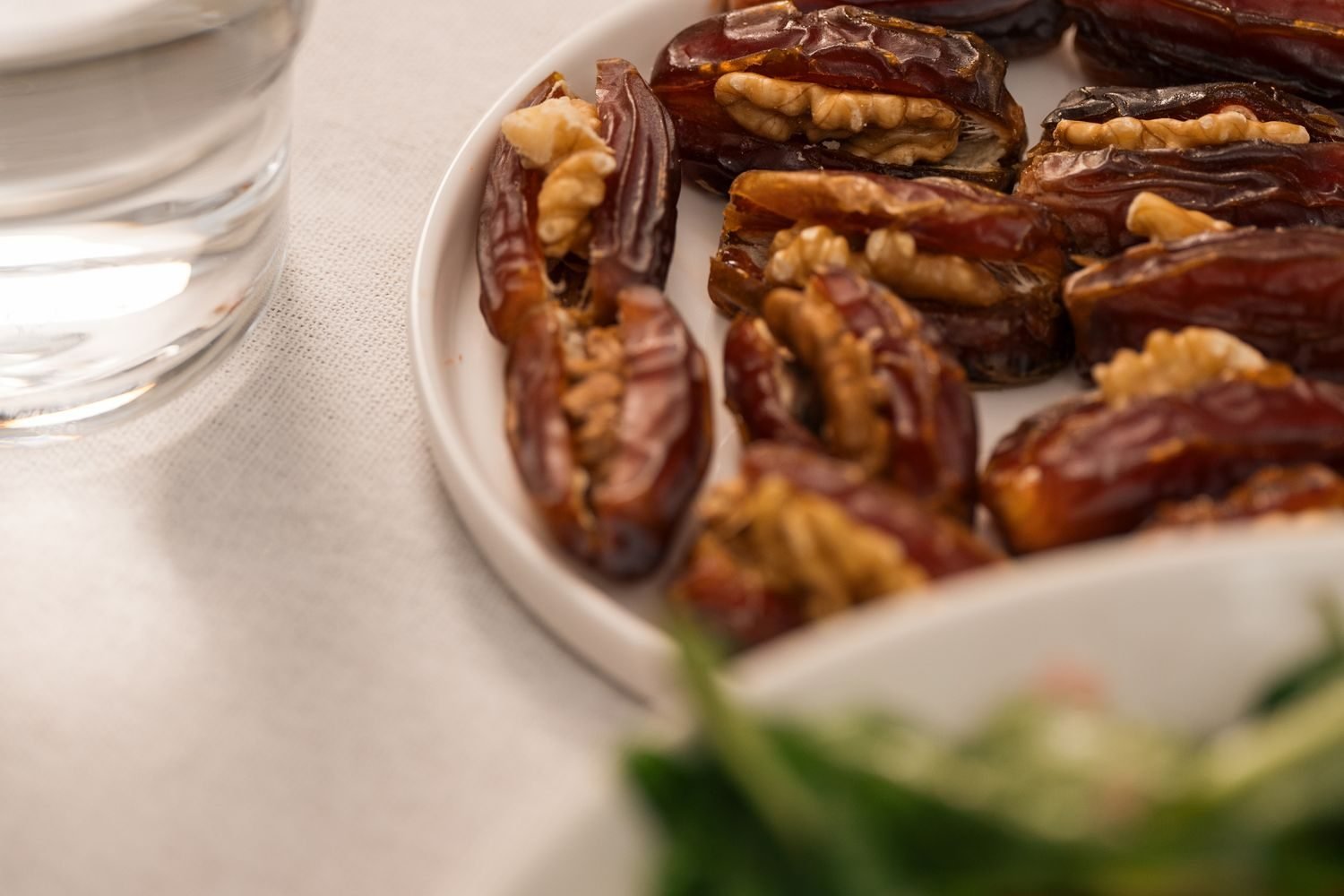
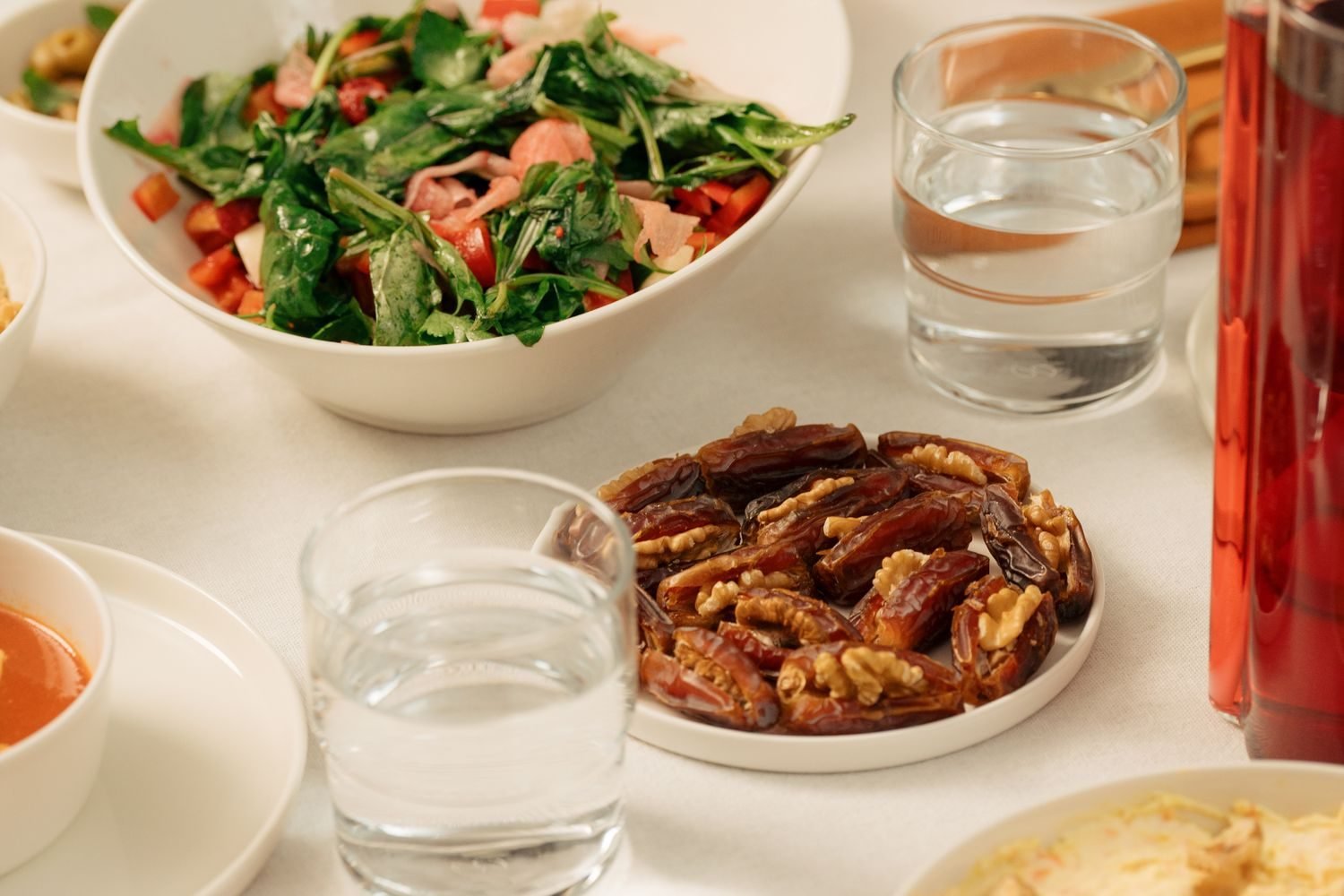
The traditional way to open Iftar — a few dates and a glass of water — isn’t just custom, it’s genuinely good nutrition science. After 12 or more hours without food or water, your digestive system needs a gentle signal to restart, not a plate piled high all at once.
- Start with 2-3 dates and water. Dates offer fast-digesting natural sugars that raise blood sugar gently and restore some quick energy, along with a bit of fiber and potassium. Pairing them with water begins rehydration immediately.
- Move to something warm and light. A small bowl of soup or a few spoonfuls of fruit gives your stomach a few minutes to signal fullness before the main meal arrives — one of the simplest ways to prevent overeating.
- Pray or pause before the main meal. For many observing Ramadan, this is when Maghrib prayer happens, and that natural 15-20 minute gap works in your favor by giving satiety hormones time to catch up.
- Eat the main meal slowly and in moderate portions. Build your plate around lean protein, vegetables, and a modest portion of whole grains or rice rather than multiple fried items. Eating slowly matters here more than at almost any other meal, since appetite regulation after a long fast is easy to override if you rush.
This staged approach also protects against the blood sugar swing that a large, quickly-eaten meal after 12+ fasting hours can trigger — a rapid spike followed by a slump that leaves you sleepy through the evening.
How much water do you actually need between Iftar and Suhoor?
A common target is 2-3 liters of fluid spread across the hours you’re allowed to eat and drink, rather than trying to gulp it all in one sitting close to dawn — which usually just means more bathroom trips overnight and no real hydration benefit. A practical way to hit that target:
- A glass of water at the start of Iftar (before the dates, or right alongside them).
- Water steadily through the evening — with the meal, after prayers, and during any evening activities.
- Water-rich foods folded into meals: watermelon, cucumber, oranges, and tomatoes all contribute meaningfully to fluid intake alongside actual water.
- A final glass or two at Suhoor, without overdoing it right before the fast begins, since large volumes right before dawn mostly just increase urination during the fasting hours.
Caffeine is worth watching too — coffee, tea, and cola have a mild diuretic effect, so balance each cup with extra plain water elsewhere in the evening. On long, hot fasting days, lean harder on water-rich fruits and vegetables, since they help retain fluid better than plain water alone.
What are the most common pitfalls during Ramadan eating?
Most of the fatigue, weight gain, and sluggishness people report during Ramadan traces back to a handful of repeatable mistakes rather than the fasting itself.
Overeating at Iftar
After a long fast, it’s natural to want to eat everything on the table at once. But a stomach that’s been empty for 12+ hours doesn’t handle a sudden, large volume of food well — it leads to bloating, heaviness, and often undoes the appetite control that skipping meals during the day might otherwise support. The staged approach above (dates, water, light food, pause, then the main meal) is the single best defense against this.
Too many fried and sugary festive foods
Samosas, pakoras, fried kebabs, and sugar-syrup-soaked desserts like jalebi or gulab jamun are woven into Ramadan food culture, and there’s no need to eliminate them entirely. The issue is frequency and portion — when fried and sugary items make up most of the plate every single night for a month, the calorie and sodium load adds up fast, along with the thirst and sluggishness that come with it. Keeping these as occasional additions rather than the default, and balancing them with vegetables, protein, and fruit, keeps the tradition intact without the health cost.
Skipping Suhoor altogether
Sleeping through Suhoor is common later in the month, but it sets up a much longer effective fast and usually leads to overeating at Iftar to compensate. Even a small, protein-and-fiber-forward Suhoor is better than none.
Not adjusting activity and sleep
A full month of disrupted sleep and reduced activity changes how your body handles the food you eat. A light walk after Iftar, once heavy digestion settles, can help with both digestion and blood sugar regulation.

Can a Ramadan diet plan support weight management goals?
Yes, though it takes intention rather than assuming the fast alone does the work. Many people actually gain weight during Ramadan because Iftar spreads are calorie-dense and eaten quickly, which outweighs the calories not consumed during the fasting hours. If weight management is a goal, the same core principles apply: protein and fiber at both meals to control hunger, portion awareness at Iftar even with festive dishes on the table, and minimizing fried food frequency rather than banning it outright. It’s a similar mindset to eating well around any festival period — our Navratri diet plan for weight loss covers comparable strategies, and the same logic of pacing meals and prioritizing whole foods carries over directly. It also helps to know your baseline daily calorie and nutrition requirements so your Suhoor and Iftar portions actually match what your body needs.
Frequently asked questions
Is it better to eat one large meal or split Suhoor and Iftar into smaller portions?
Splitting each meal into stages works better than one large sitting. At Suhoor, eat a full but not excessive meal shortly before dawn. At Iftar, follow the dates-water-light food-main meal sequence rather than piling everything onto one plate immediately after the fast ends.
What should I drink at Suhoor besides water?
Plain water is the priority, but milk, yogurt-based drinks like lassi or laban, and coconut water can add hydration along with some electrolytes and protein. Limit or avoid sugary juices and caffeinated drinks, since both work against steady hydration through the fasting hours.
Are dates necessary to break the fast, or just tradition?
They’re tradition with real nutritional logic behind them. Dates provide quick natural sugars that gently raise blood sugar and reduce the urge to overeat immediately after. If dates aren’t available, a piece of fruit and water serves a similar purpose.
Can I exercise during Ramadan while fasting?
Light to moderate activity is generally fine for most healthy adults, ideally timed close to Iftar or a couple of hours after eating, when energy and hydration are better supported. Intense training during the fasting hours themselves, especially in hot weather, is best avoided without personalized guidance.
How do I stop feeling exhausted by the afternoon during Ramadan?
Afternoon fatigue is often traceable to a Suhoor that was too light, too sugary, or skipped, combined with insufficient hydration the night before. Prioritizing protein, complex carbs, and 2-3 liters of fluid across the Iftar-to-Suhoor window is the most reliable fix.
Do the same overeating risks apply to people managing diabetes?
Yes, and often more so, since a long fast followed by a large, carb-heavy Iftar can cause sharper blood sugar swings. Our diabetes nutrition guide explains glycemic-index basics that apply directly to Suhoor and Iftar planning, but fasting decisions should always be made with a doctor’s input.
Ramadan nutrition isn’t about restriction on top of restriction — it’s about making the hours you can eat and drink count. If you have diabetes, are pregnant, manage a chronic condition, or are on medication that requires food or timed dosing, speak with your doctor before and during Ramadan fasting to make sure your plan is safe for your specific situation. For a personalized Suhoor and Iftar plan built around your goals and health history, an online nutritionist consultation can help you fast the whole month without running on empty.