A first day gym workout is a short, low-intensity session meant to get you comfortable with the gym environment, not to test your limits. On day one, you’re checking in, meeting your surroundings, learning where things are, and doing a simple 30 to 40 minute routine that leaves you feeling capable rather than wrecked. The goal isn’t fitness progress. It’s showing up again tomorrow.

Most people overthink their first gym visit. They read ten articles about push-pull splits and progressive overload before they’ve even figured out where to keep their shoes. We’re going to skip all that. This is just about day one: what to pack, how to walk in without feeling lost, what to actually do once you’re on the floor, and how to keep your nerves in check. Once you’ve got day one down, our beginner gym workout guide picks up from there with your first few weeks of training.
What should you bring on your first day at the gym?
Keep your first-day bag simple. You don’t need half of what fitness influencers pack.
- A government ID (Aadhaar, PAN, or driving licence) most Indian gyms ask for one at registration, even for a trial session.
- Non-marking sports shoes. Many gyms in India won’t let you on the floor in regular sneakers or sandals.
- A full water bottle. Not every gym has a reliable water cooler near the floor.
- A small hand towel to wipe down equipment after use. This is basic gym etiquette and most staff will expect it.
- Comfortable, breathable clothes. You don’t need gym-branded gear. A cotton t-shirt and track pants work fine.
- A padlock if the gym has lockers and doesn’t provide one.
Leave your phone on silent and in your pocket. You don’t need to film your first day. You need to pay attention to how your body feels, and that’s hard to do while filming a story.
How do you check in and register at the front desk?
Walk in ten to fifteen minutes before your scheduled slot. Most gyms will ask if this is your first visit and hand you a short form, name, contact number, emergency contact, and sometimes a basic health declaration (any injuries, surgeries, or conditions like high blood pressure or asthma). Be honest here. It’s not paperwork for the sake of paperwork, it helps the trainer or staff avoid pushing you into something your body isn’t ready for.
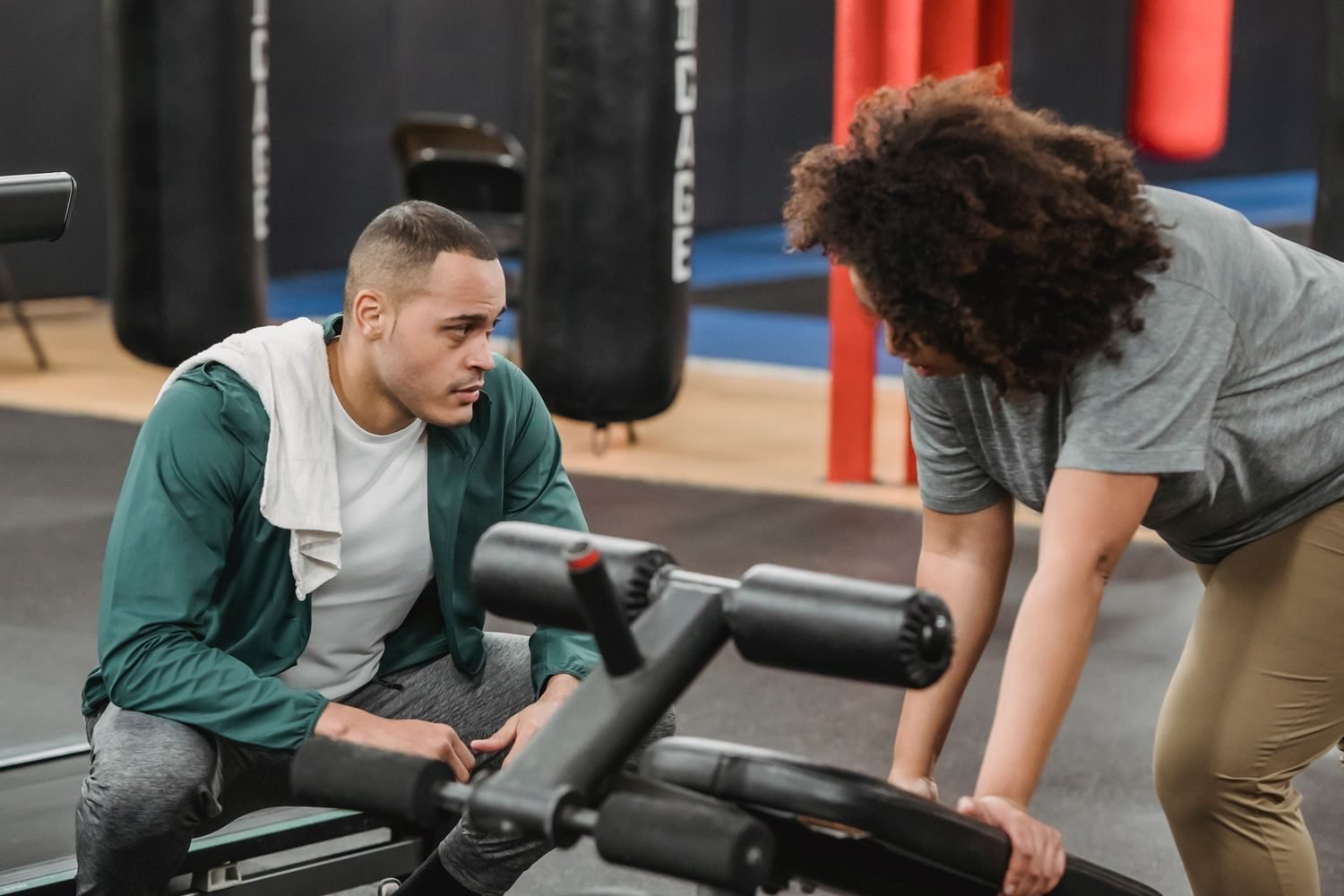
If you’ve signed up for a trial or a personal training package, mention it at the desk immediately. Some gyms will pair you with a trainer for an orientation walk-through on day one. If nobody offers this, ask. A five-minute tour showing you the changing room, water point, and different equipment zones will save you a lot of confusion later.
Don’t feel awkward asking basic questions at the desk, where the mats are, whether shoes need to be gym-only, what the locker process is. Every regular at that gym asked the same questions once.
What should your actual first-day workout look like?
Your first session should be short, simple, and mostly about movement, not effort. Ten minutes of walking on a treadmill and a handful of basic bodyweight or light-resistance exercises is enough. You’re not trying to feel sore tomorrow. You’re trying to leave the gym today thinking “that was fine, I can do this again.”
Here’s a sample first-day session you can follow without needing a trainer standing over you:
| Step | Exercise | Duration / Reps | Purpose |
|---|---|---|---|
| 1 | Treadmill walk (flat incline) | 8 to 10 minutes | Warm up, get comfortable moving in the space |
| 2 | Bodyweight squats | 2 sets of 10 | Learn the movement pattern before adding weight later |
| 3 | Assisted or wall push-ups | 2 sets of 8 to 10 | Get a feel for upper body pressing without strain |
| 4 | Seated leg press (light weight) | 2 sets of 12 | Introduce a machine at a weight that feels almost too easy |
| 5 | Lat pulldown (light weight) | 2 sets of 12 | Learn the pulling motion with control, not load |
| 6 | Standing stretch (full body) | 5 minutes | Cool down and end the session feeling loose, not tight |
If any machine feels confusing, skip it. There’s no rule that says you have to touch every piece of equipment in the gym on day one. Pick two or three things you understand, do them with decent form, and call it a session. Once this kind of session feels easy, our gym workout chart gives you a printable plan to follow as you build consistency.
How do you deal with first-day nerves?
Almost everyone feels a bit out of place on their first gym visit. You’re unsure where to stand, worried people are watching your form, unsure how long to rest between sets. This is completely normal and it passes faster than you’d expect.
A few things help. Pick a quieter time slot for your first visit, usually mid-morning or early afternoon on weekdays, rather than the 7 to 9 PM rush. Stick to a small, predictable routine like the one above instead of wandering between machines you don’t recognise. And remind yourself that the regulars around you were once new too. Nobody is tracking your form as closely as you think they are.
We see that first-day nerves usually aren’t about the exercises themselves, they’re about not knowing the unwritten rules of the space. Once someone knows where to keep their bag, how long to hold a machine, and that it’s fine to ask a trainer a “silly” question, the anxiety drops within a session or two. Familiarity with the room does more for confidence than fitness level does.
What should you avoid doing on day one?
A few common mistakes make the first visit harder than it needs to be.
- Don’t chase heavy weights. Your first goal is learning movement, not lifting max loads.
- Don’t copy a stranger’s routine. What an experienced lifter is doing next to you isn’t meant for a first-timer.
- Don’t skip the warm-up. Even a light 10-minute walk matters more than people assume.
- Don’t stay for two hours. A long, unstructured first session is more likely to put you off than a focused 30 to 40 minute one.
- Don’t compare your day one to someone else’s month six. Different starting points, different timelines.
What comes after your first day?
Once day one is done, the real question is how to build a routine you’ll actually stick to. That’s a different conversation from what to do on your first visit. If you’re still deciding what kind of gym workout structure suits you best, our broader gym workout guide covers the fundamentals.
If you’d rather not figure out day one and the weeks after it alone, a trainer can plan your first session, watch your form in real time, and adjust the pace based on how your body actually responds, not a generic template. That’s exactly what FitStrot’s 1-on-1 personal training is built for, whether you’re training from a gym floor or from home.
Frequently Asked Questions
What is a first day gym workout?
A first day gym workout is a short, low-intensity session focused on orientation, learning where equipment is, understanding gym etiquette, and doing a few basic movements. It typically lasts 30 to 40 minutes and avoids heavy weights or high-intensity training, since the real goal is comfort, not performance.
How do you do a first day gym workout?
Check in at the front desk with an ID, get a quick tour if offered, then do a short warm-up walk followed by two or three simple exercises like bodyweight squats, wall push-ups, and a light machine or two. Keep rest periods relaxed, stop before you feel exhausted, and finish with a short stretch.
What are the benefits of a first day gym workout?
A structured first day workout reduces intimidation, teaches you basic gym layout and etiquette, and builds early confidence in your movements. It lowers the chance of injury from unfamiliar equipment and, most importantly, makes you far more likely to return for a second and third session.
What should I do if I don’t know how to use gym equipment on my first day?
Skip anything unfamiliar. Stick to machines and movements you understand, like a treadmill or bodyweight exercises, and ask a trainer or staff member to show you one new machine at a time. There’s no need to use every piece of equipment in a single visit.
How long should a first day gym session last?
Aim for 30 to 40 minutes. This is long enough to warm up, do a handful of simple exercises, and cool down, without leaving you so fatigued or bored that you dread coming back the next day.
Ready to make your first day count without the guesswork? Book a session with FitStrot’s 1-on-1 personal training and let a trainer plan it with you, not for you.