
Yes, Pilates can support weight loss, though primarily through building lean muscle, improving core strength and posture, and complementing a calorie deficit — it burns fewer calories per session (roughly 150-250 for a 45-minute mat class) than high-intensity cardio, making it a supporting tool rather than the primary driver of significant fat loss on its own.
I’m Yash Pathak, founder and lead trainer at FitStrot. Pilates gets asked about often, usually with an expectation that it works like cardio — understanding what it’s actually good for changes how useful it becomes in a weight-loss plan.
What Pilates Actually Does for Your Body
Pilates is a low-impact strength and control-focused practice, built around controlled movements that engage the core, improve flexibility, and build lean muscle throughout the body, particularly the deep stabilising muscles that other forms of exercise often miss. Unlike Vinyasa yoga or dynamic HIIT-style workouts, it doesn’t elevate heart rate as dramatically, which is why the direct calorie burn is comparatively modest.
Where it earns its place in a weight-loss plan is through the muscle-building and postural benefits — more lean muscle mass supports a higher resting metabolic rate over time, and better core strength and posture often make other forms of exercise (and daily movement generally) more effective and comfortable.
Calorie Burn: Setting Realistic Expectations
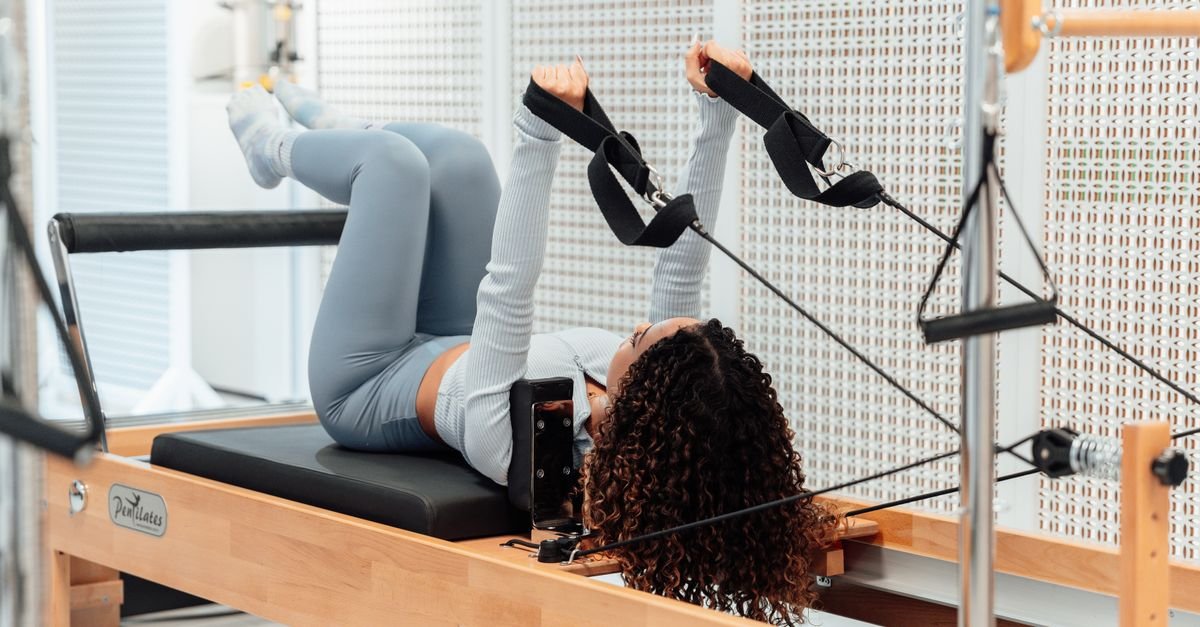
A 45-minute mat Pilates class burns roughly 150-250 calories for most people, depending on intensity and body weight. Reformer Pilates (using the spring-resistance machine) tends to burn somewhat more, in the 250-350 calorie range for the same duration, due to the added resistance work. Compare this to 45 minutes of running (400-500+ calories) or a vigorous cardio session, and it’s clear Pilates isn’t the tool to reach for if calorie burn alone is the goal.
Where Pilates Genuinely Adds Value to a Weight-Loss Plan
Building lean muscle without high joint impact. Pilates strengthens muscle through controlled resistance (body weight or spring tension) without the joint stress of running or jumping-based cardio, making it accessible for people managing joint pain or earlier in a fitness journey.
Core strength that supports other training. A stronger core improves stability and form in strength training and cardio alike, which can mean more effective, safer sessions elsewhere in your routine.
Improved body awareness and posture. Many people report better awareness of movement patterns and posture after consistent Pilates practice, which has knock-on benefits for how effectively other exercise is performed.
Recovery-friendly. Because it’s low-impact, Pilates works well as an active recovery day between higher-intensity training sessions, keeping you moving without adding excessive fatigue.
Building Pilates Into a Weight-Loss Routine
Pilates works best paired with activities that create a larger calorie deficit — 2-3 Pilates sessions weekly alongside 2-3 cardio or higher-intensity strength sessions tends to produce better overall results than Pilates alone. Relying exclusively on Pilates for weight loss, without attention to diet or additional higher-intensity activity, typically produces slower results than combining approaches.
Mat Pilates vs Reformer Pilates for Weight Loss
Mat Pilates uses body weight and requires no equipment, making it more accessible and easier to do consistently at home — a real advantage for online, self-directed practice. Reformer Pilates, using the spring-loaded machine typically found in studios, adds resistance that increases both calorie burn and muscle engagement, but requires equipment access. Neither is definitively “better” for weight loss; the more accessible option you’ll do consistently tends to outperform the theoretically superior one you rarely get to.
Who Benefits Most From Pilates as Part of Their Plan
People recovering from injury or managing joint issues, those wanting to build core strength and improve posture alongside weight loss, and anyone looking for a lower-impact complement to higher-intensity training days all tend to see genuine value from incorporating Pilates, both physically and in terms of workout variety supporting long-term consistency.
What to Pair Pilates With for Faster Results
Since Pilates alone creates a modest calorie deficit, pairing it with either structured cardio (walking, cycling, swimming) or a moderate diet-based deficit accelerates results considerably. Our online yoga classes for weight loss guide covers a similar low-impact complement, and our gym workout for weight loss guide outlines a higher-intensity strength option to pair alongside Pilates sessions.
Why a Structured Program Beats Pilates in Isolation
Pilates is a genuinely valuable tool, but without being coordinated alongside diet and other activity, it’s easy to plateau. An online weight loss trainer can incorporate Pilates into a complete program — balancing it with the calorie deficit and higher-intensity training needed to produce visible, sustained results.
How Pilates Fits Alongside Diet for Belly Fat Specifically
Pilates builds deep core strength and improves posture, both of which can make your midsection look more toned and pulled-in even before significant fat loss occurs — better posture alone changes how your stomach appears. That said, the calorie burn from Pilates is generally lower than higher-intensity cardio, so pairing it with either additional cardio sessions or a properly calculated calorie deficit remains necessary for the fat-loss component specifically; Pilates alone, however consistent, is unlikely to create a deficit large enough to drive significant fat loss on its own.
Reformer Pilates tends to burn somewhat more calories than mat-based Pilates due to the added resistance, worth considering if calorie burn is a priority alongside the core-strengthening benefit.
Common Mistakes That Quietly Stall Pilates Results
I see the same handful of errors again and again when clients start Pilates hoping it will move the needle on weight loss. The most common one is treating it like a stretching class rather than a strength session. Mistake one: going through the motions without actually bracing the core. Pilates works because of controlled tension through the trunk during every movement, not because the shapes look elegant. If you can chat through an entire mat class without your abs ever feeling like they’re working, you’re likely not engaging deeply enough to get the metabolic or postural benefit.
The second mistake is breath mismanagement. Pilates breathing is deliberately coordinated with movement, inhaling to prepare, exhaling on the effort phase, and that exhale is what helps you recruit the deep transverse abdominis. Clients who hold their breath through a Hundred or a Teaser lose a large part of the core activation the exercise is designed to deliver, and they tire out faster without actually working harder in any useful sense.
The third, and probably the most damaging for weight loss specifically, is staying at the same beginner level for months on end. I’ve had clients doing the identical 30-minute beginner mat routine six months after they started, wondering why their body stopped changing. Pilates needs progressive overload just like any other training method: more control, longer holds, added resistance, or a harder variation of the same move. Without that progression, your body adapts within four to six weeks and the calorie and strength benefit plateaus even though you’re still putting in the time.
How to Keep Pilates Challenging as Your Fitness Improves
Progression in Pilates doesn’t mean adding heavy weights, it means layering complexity onto movements you’ve already mastered. Once a beginner sequence starts feeling comfortable, usually around the six to eight week mark for most people, it’s time to slow the tempo down (slower is almost always harder in Pilates), add a prop like a resistance band, a small weighted ball, or a Pilates ring between the thighs, or move into full-body integration moves like Teaser or Side Plank series instead of isolated limb work.
If you’re on a Reformer, progression is more visible because the spring tension and carriage resistance are adjustable. Moving from three or four springs down to one or two forces your stabilizer muscles to work far harder to control the carriage, and that alone can turn a fairly easy footwork sequence into a genuinely demanding one. Instructors will also introduce standing and kneeling reformer work, jump board sequences, and longer eccentric holds as clients advance, all of which raise the effort level without changing the basic movement vocabulary.
I’d suggest reassessing your own routine every four to six weeks. Ask honestly whether the session that used to leave you sore now feels easy. If it does, that’s your body telling you it has adapted and it’s time to add a variation, not a sign that Pilates has stopped working for you. Most studios and good instructors will build this progression in automatically, which is one more reason a structured, supervised program tends to outperform following the same free YouTube video on repeat for a year.
Pilates When Your Knees, Back or a Recovering Joint Are Part of the Picture
A good number of people who come to Pilates aren’t choosing it as their first option — they’ve been told by a doctor or physio to stay off running and HIIT because of a knee that clicks on the stairs, a lower back that flares up after a long drive, or a shoulder that’s still healing. This is where Pilates earns its place independent of any calorie math. It’s low-impact by design — your feet stay grounded, movements are slow and controlled, and you’re rarely asking a joint to absorb your body weight the way a run or a jump squat would. For someone managing early knee osteoarthritis or a lingering disc issue, that distinction matters more than any number on a fitness tracker.
The catch is that low-impact doesn’t automatically mean safe for every injury. I’ve seen people with disc problems attempt full roll-ups or deep spinal flexion moves that a physiotherapist would have stopped immediately. If you have a diagnosed back condition or you’re less than six to eight weeks out from joint surgery, get clearance from whoever is treating you before starting, and ideally do your first few sessions with an instructor who can watch your form in person rather than following a video at home. A competent instructor swaps a full roll-up for a pelvic tilt, or a teaser for a supported bridge, so you build core strength without loading the exact structure that’s compromised.
What I’ve seen play out over eight to ten weeks with this group is genuinely encouraging. Pain during ordinary daily movement — climbing stairs, getting up from a low sofa, bending to pick something off the floor — often eases as the deep stabilizing muscles around the spine and hips get stronger, and that indirectly changes how much someone moves overall. I’ve had clients who avoided walks because of knee pain go from barely 2,000 steps a day to a comfortable 6,000 once Pilates rebuilt enough hip and core control to make walking pain-free again. The weight loss in these cases isn’t happening on the mat itself — it’s happening because the mat work reopened a door that pain had shut.
If this sounds like you, don’t treat Pilates as a stopgap you’ll drop once the pain settles. Keep it as a permanent low-impact base even after you reintroduce walking, cycling or strength training, because the joint or spine issue that brought you here rarely vanishes completely — it just gets managed well long-term. And pair it with a nutrition plan that doesn’t assume you can out-train a bad knee with extra cardio, because for this group you usually can’t, and pushing through pain to burn more calories tends to set the injury back further than it moves the scale forward.
Frequently Asked Questions
Can Pilates help with weight loss?
Yes, primarily by building lean muscle, improving core strength, and supporting a calorie deficit when paired with proper nutrition — though its direct calorie burn is modest compared to cardio, so it works best as part of a broader plan.
Is Pilates enough on its own for significant weight loss?
Usually not, given its modest calorie burn (150-250 calories per session). It’s more effective combined with cardio, strength training, or a structured calorie deficit through diet.
How long does it take to see weight loss results from Pilates?
With 2-3 sessions weekly combined with a calorie-appropriate diet, most people notice improved strength and posture within 3-4 weeks, with visible body composition changes typically by 8-12 weeks.
Is Pilates safe for beginners trying to lose weight?
Yes, Pilates is generally beginner-friendly and low-impact, making it a good starting point, especially for those with joint concerns or new to structured exercise.
Which burns more calories, Pilates or yoga?
This depends on style — dynamic yoga (Vinyasa, Power Yoga) tends to burn more than mat Pilates, while restorative yoga burns less. Reformer Pilates sits closer to moderate dynamic yoga in calorie burn.
Ready to Add Pilates to a Complete Weight-Loss Plan?
A FitStrot online weight loss trainer can incorporate Pilates alongside the right cardio, strength training, and diet plan to produce results Pilates alone typically can’t achieve as quickly.