The right skipping rope — properly sized, appropriately weighted, and used with correct form — makes a meaningful difference in both workout effectiveness and injury risk, since an ill-fitting rope forces compensatory movements that reduce calorie burn and increase strain on wrists, shoulders, and knees over repeated sessions.
I’m Yash Pathak, founder and lead trainer at FitStrot. This guide focuses specifically on choosing the right rope and using proper technique, since these details matter more than most people realize for getting real results from skipping.
Choosing the Right Rope Length
Stand on the middle of the rope with both feet, and pull the handles up toward your armpits — if they reach roughly to your armpit or slightly below, the length is correct. A rope that’s too long causes it to hit the ground with a wider, less controlled arc, while one that’s too short forces you to jump excessively high or hunch your shoulders, both reducing efficiency and increasing injury risk.
Rope Types and Which Suits Weight Loss Best
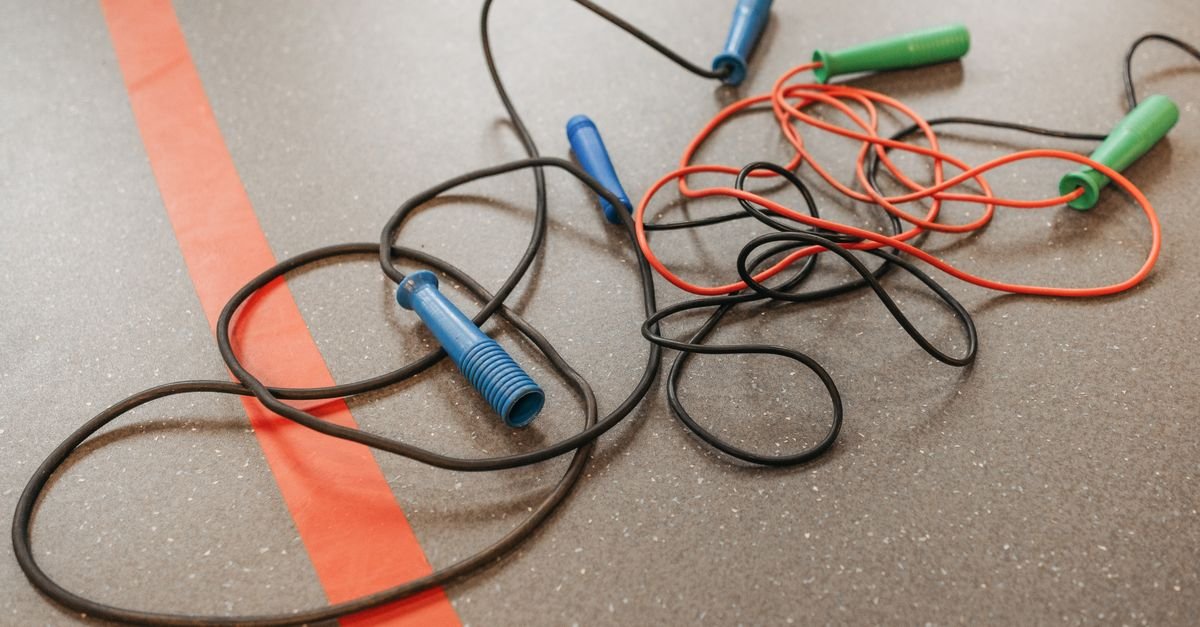
PVC or beaded ropes. Heavier and slower, making them good for beginners learning rhythm and form, since the added weight provides more feedback on the rope’s position.
Speed ropes (thin wire or cable). Lighter and faster, allowing higher rep counts and more advanced techniques (double-unders) — better suited once basic coordination is established.
Weighted ropes. Add resistance through the handles or rope itself, increasing the calorie burn and building more arm and shoulder strength per session, though they require more energy and can be harder on joints if introduced too soon.
For weight loss specifically, starting with a standard or slightly weighted rope, then progressing to a speed rope as coordination and stamina improve, tends to work well for most beginners.
Proper Technique for Effectiveness and Safety
Keep jumps low. You only need to clear the rope by 1-2 inches — jumping higher wastes energy and increases impact on your joints without adding proportional benefit.
Use your wrists, not your arms, to turn the rope. Excessive arm movement is inefficient and tires you out faster than necessary — the rotation should come primarily from wrist movement.
Land softly on the balls of your feet. Avoid landing flat-footed or on your heels, which increases impact stress through your ankles, knees, and hips.
Keep your core engaged and posture upright. Hunching forward or arching your back reduces efficiency and can contribute to strain over repeated sessions.
Choose an appropriate surface. A slightly cushioned surface (a proper mat or sprung floor) reduces impact compared to concrete, protecting joints during frequent sessions.
Common Technique Mistakes That Reduce Effectiveness
Jumping too high, which wastes energy and increases fatigue without improving calorie burn proportionally. Using excessive arm movement instead of wrist rotation, tiring out the shoulders faster than the workout should require. And skipping without adequate footwear support, increasing impact stress through the feet and lower legs.
Building Skill and Intensity Progressively
Beginners often benefit from starting with basic single-bounce jumps, mastering consistent rhythm before introducing variations like alternating foot jumps, high knees, or eventually double-unders (where the rope passes twice per jump). Rushing to advanced techniques before basic coordination is solid increases both frustration and injury risk.
Combining the Right Rope and Technique for Weight Loss Results
Once the rope fits correctly and basic technique is solid, skipping becomes one of the more time-efficient cardio options available, burning roughly 500-1000 calories per hour depending on pace, in a format that requires minimal space and equipment. Our skipping for weight loss guide covers the broader calorie-burn breakdown and progressive weekly structure for building this into a full routine.
When to Consider Professional Guidance on Form
If you’re experiencing wrist, shoulder, or knee discomfort despite using an appropriately sized rope, a trainer can review your specific technique and identify compensations that aren’t obvious from generic guidance — sometimes small adjustments to stance or rhythm resolve discomfort that persists despite following general form tips.
Skipping Rope Technique That Reduces Injury Risk
Landing softly on the balls of your feet (not flat-footed), keeping jumps low (just enough to clear the rope, not high bounces), and maintaining a slight bend in the knees all reduce the joint impact that skipping rope, being higher-impact than walking or cycling, naturally carries. A rope sized correctly for your height (when standing on the middle of the rope, the handles should reach roughly armpit height) also makes the movement more efficient and less likely to cause the tripping and form breakdown that leads to most beginner skipping injuries.
How Many Calories Skipping Actually Burns, and Where That Number Comes From
Skipping rope gets thrown around with some fairly exaggerated calorie-burn claims online, so let me give you numbers grounded in actual research rather than marketing copy. For a person weighing around 70 kg, moderate-paced skipping burns roughly 10 to 13 calories per minute, which works out to somewhere between 300 and 400 calories in a genuinely continuous 30-minute session. That’s a solid number, comparable to running at a moderate pace, but the key word is continuous — most people, especially beginners, can’t actually skip non-stop for 30 minutes without breaks.
This is where the real-world number diverges from the theoretical one. A beginner doing 30-second bouts of skipping with 30 to 45 seconds of rest between them, across a 20-minute session, might realistically burn somewhere in the range of 150 to 220 calories once you account for the rest periods, which is still meaningful but noticeably less than the continuous-skipping number people often see quoted. This isn’t a reason to avoid the interval approach — it’s simply more accurate expectation-setting, and interval-based skipping is genuinely the right way for most beginners to build up capacity anyway.
Body weight also changes this calculation more than people expect — someone at 90 kg will burn meaningfully more calories per minute of skipping than someone at 60 kg doing the identical movement, because calorie expenditure during weight-bearing exercise scales with how much mass is being moved. What matters practically is not obsessing over the exact number a fitness tracker gives you, since these are frequently inaccurate for skipping specifically due to how the wrist moves, but using skipping consistently as one part of a broader calorie deficit built primarily through diet.
Skipping Rope Workouts for Different Fitness Levels: A Structured Progression
For someone starting from zero, I don’t recommend jumping straight into continuous skipping sessions, because calf and shoulder fatigue set in quickly for untrained skippers, well before any real cardiovascular benefit kicks in. A sensible starting structure is 10 rounds of 30 seconds skipping followed by 30 seconds rest, three times a week, which totals just five minutes of actual skipping time but builds the coordination and calf endurance needed to progress. Most beginners can move past this stage within two to three weeks.
The intermediate stage extends both the work interval and reduces the rest — something like 8 rounds of 60 seconds skipping with 30 seconds rest, done three to four times a week, alternating between basic bounce steps and simple variations like alternate-foot steps to keep the calves from overloading in exactly the same way every session. At this stage, I also introduce a short set of double-unders or high-knee skipping for those who’ve built enough coordination, purely to add variety and intensity spikes within the session rather than a flat, monotonous pace throughout.
The advanced stage looks more like genuine interval training — 30 seconds of fast, high-intensity skipping followed by only 15 seconds of rest, repeated for 15 to 20 rounds, sometimes structured as a proper HIIT session combined with bodyweight exercises like squats or mountain climbers in between skipping bouts. At this level, skipping is less about the specific calorie count and more about the cardiovascular conditioning and calorie afterburn that a genuinely intense session produces. The mistake I’d caution against at any level is jumping stages too quickly — shin splints and calf strains are common precisely because people move from beginner to advanced intensity within a week or two instead of the three to four weeks progression actually needs.
Skipping Rope Considerations for Terrace, Marble Floors, and Indian Home Setups
Most guides to skipping rope assume you’re training on a proper rubberised gym floor, but the reality for the majority of my clients is a terrace, a marble-floored living room, or a paved outdoor patch near the building, and each of these surfaces changes how skipping should be approached. Marble and vitrified tile flooring, common in Indian homes, is unforgiving on the joints because it has essentially zero give, and it’s also genuinely slippery, especially if there’s any dust or if you’re skipping in socks or worn-out shoe soles. If marble is your only indoor option, I’d strongly recommend a thin exercise mat or even a folded cotton dhurrie underneath your feet, both to soften impact on the knees and ankles and to stop your feet sliding out from under you mid-jump.
Terraces solve the impact and slipping problem somewhat, since most have a rougher cement or tiled finish with better grip, but they bring their own issues. Surface unevenness is common, small cracks, water drainage slopes, or loose gravel near the edges, all of which increase the risk of rolling an ankle if you’re not watching the ground while focused on rhythm. I tell clients to walk the full terrace area once before starting, checking for any uneven patches, and to keep sessions away from the edges and any parapet that’s lower than waist height. Early morning or after sunset are the practical windows, since terrace surfaces in most Indian cities get too hot to stand on comfortably by mid-morning, particularly on darker tile or exposed cement.
Footwear matters more on these surfaces than people expect. Skipping in bare feet or thin house slippers on marble is a genuine fall risk, while a proper pair of training shoes with some cushioning protects both your grip and your joints on any surface. If you’re skipping on a terrace with a rougher finish, a shoe with a slightly thicker sole helps absorb some of the unevenness underfoot that a smooth gym floor wouldn’t have. Ceiling height is worth checking too if you’re skipping indoors, since older Indian flats sometimes have lower ceiling fans or fittings positioned in a way that a rope swung too high, or a taller person’s natural jump arc, can actually catch on, something worth a quick visual check before your first session in a new room.
Noise is the last practical factor, particularly in apartment buildings with shared walls or floors below. Skipping on a mat over a rug reduces the impact sound significantly, and choosing early evening over late night sessions avoids most complaints from neighbours. None of these are reasons to skip skipping rope as a workout, they’re just adjustments worth making once, so the habit doesn’t get derailed by a slipped foot on marble or a sore ankle from an uneven terrace three weeks in.
Frequently Asked Questions
How do I choose the right length skipping rope?
Stand on the middle of the rope and pull the handles toward your armpits — if they reach roughly to armpit height, the length is correct. Too long or too short both reduce efficiency and increase injury risk.
Is a weighted skipping rope better for weight loss?
Weighted ropes can increase calorie burn and build more upper body strength per session, but they require more energy and are better introduced once basic coordination is established, rather than as a starting point for complete beginners.
What surface should I skip on for weight loss workouts?
A slightly cushioned surface (a proper exercise mat or sprung floor) reduces joint impact compared to concrete or hard tile, which matters more with frequent, longer sessions.
Can beginners use a speed rope, or should they start with something heavier?
Beginners generally benefit from starting with a standard or slightly weighted rope to build rhythm and control, progressing to a lighter speed rope as coordination improves.
Ready for a Complete Skipping-Based Program?
A FitStrot online weight loss trainer can build proper technique guidance and a progressive skipping routine into a complete program alongside the right diet for your goals.