Stress eating isn’t a character flaw — it’s a hormonal response. When cortisol stays elevated for hours or days, it acts directly on the brain’s hunger and reward circuits, increasing appetite and steering cravings toward high-fat, high-sugar foods. The most reliable way to stop stress eating isn’t to push past cravings through effort; it’s to lower the cortisol driving them, using tools like breathing exercises, movement, and sleep that work with your physiology instead of against it.
If you’ve ever found yourself in front of the fridge after a brutal day, reaching for something you weren’t even hungry for an hour ago, you already know the feeling. This article breaks down what’s actually happening in your body in that moment, and what research says helps — not by suppressing the urge to eat, but by addressing the stress underneath it. For a broader look at emotional eating in general, see our companion piece on how to stop emotional eating.
Why does stress make you want to eat, even when you’re not hungry?
The short answer is cortisol. When your brain perceives a stressor — a deadline, a conflict, a long commute, financial pressure — it activates the hypothalamic-pituitary-adrenal (HPA) axis, a chain of signals that ends with your adrenal glands releasing cortisol into your bloodstream. Cortisol isn’t inherently a “bad” hormone; it’s part of a normal, protective stress response. The problem shows up when stress doesn’t resolve quickly and cortisol stays elevated for extended periods.
According to Harvard Health, timing matters here. In the short term, acute stress typically suppresses appetite — this is the fight-or-flight phase, driven largely by adrenaline, where your body prioritizes escape or defense over digestion. But if stress persists, cortisol takes over as the dominant hormone, and cortisol does the opposite of adrenaline: it increases appetite and can heighten motivation to eat. If your stress response gets “stuck in the on position,” as Harvard Health puts it, cortisol may stay elevated well past the point where the original stressor has passed, keeping appetite switched on long after the triggering event. This is a physiological mechanism, not a willpower failure — your body is running an ancient survival program that wasn’t built for chronic modern stressors like inbox overload or traffic.
Why does stress specifically make you crave sugar and fat, not broccoli?
This is one of the more well-documented parts of the stress-eating picture. Research reviewed by Harvard Health notes that numerous studies have shown physical or emotional distress increases intake of foods high in fat, sugar, or both, and that high cortisol levels — especially combined with high insulin — appear to be part of the mechanism. Other research points to a role for ghrelin, often called the “hunger hormone.” There’s also a reward-system component: cortisol appears to increase the salience and reward value of highly palatable food by interacting with the brain’s dopamine and opioid pathways — the same circuitry involved in pleasure and motivation. A stressed brain doesn’t just want more food in general; it specifically wants the food that will light up its reward system fastest, which tends to be energy-dense, high-sugar, high-fat food.
There’s a feedback loop hiding inside this, too. Eating those foods appears to genuinely blunt the stress response in the short term — sugar and fat intake seem to dampen activity in stress-related brain circuits, which is part of why they’re called “comfort foods” in the first place. That short-term relief is real, and it’s exactly what makes the pattern so sticky: stress rises, cortisol rises, you eat something high in sugar or fat, cortisol-related distress eases briefly, and your brain quietly logs that food as a reliable coping tool. Over time this cycle can become close to automatic, which is why simply trying to “resist” a craving in the moment often doesn’t work — the loop was never really about hunger. Our article on how stress affects your diet and weight goes deeper into how this plays out over weeks and months.
Is stress eating the same thing as emotional eating?
They overlap, but they’re not identical. Emotional eating is the broader category — eating in response to any emotional state, including boredom, sadness, loneliness, or celebration. Stress eating is a specific subset driven by an identifiable physiological cascade: the HPA axis, cortisol, and its downstream effects on appetite and reward. That’s a meaningful distinction, because it means stress eating responds especially well to interventions that lower physiological stress and cortisol output, not just interventions that build general emotional awareness around food.
If your eating pattern tracks closely with your stress levels — worse during high-pressure weeks, calmer during vacations or slower periods — you’re likely dealing with the cortisol-driven version specifically. That points you toward stress-reduction strategies as a primary tool, alongside the broader emotional-eating awareness work described in our piece on how to stop emotional eating.
Can you actually lower cortisol enough to reduce cravings?
Yes — and this is where the research gets genuinely useful, because it points away from food restriction and toward nervous-system regulation. A few approaches have real evidence behind them.
Breathing exercises
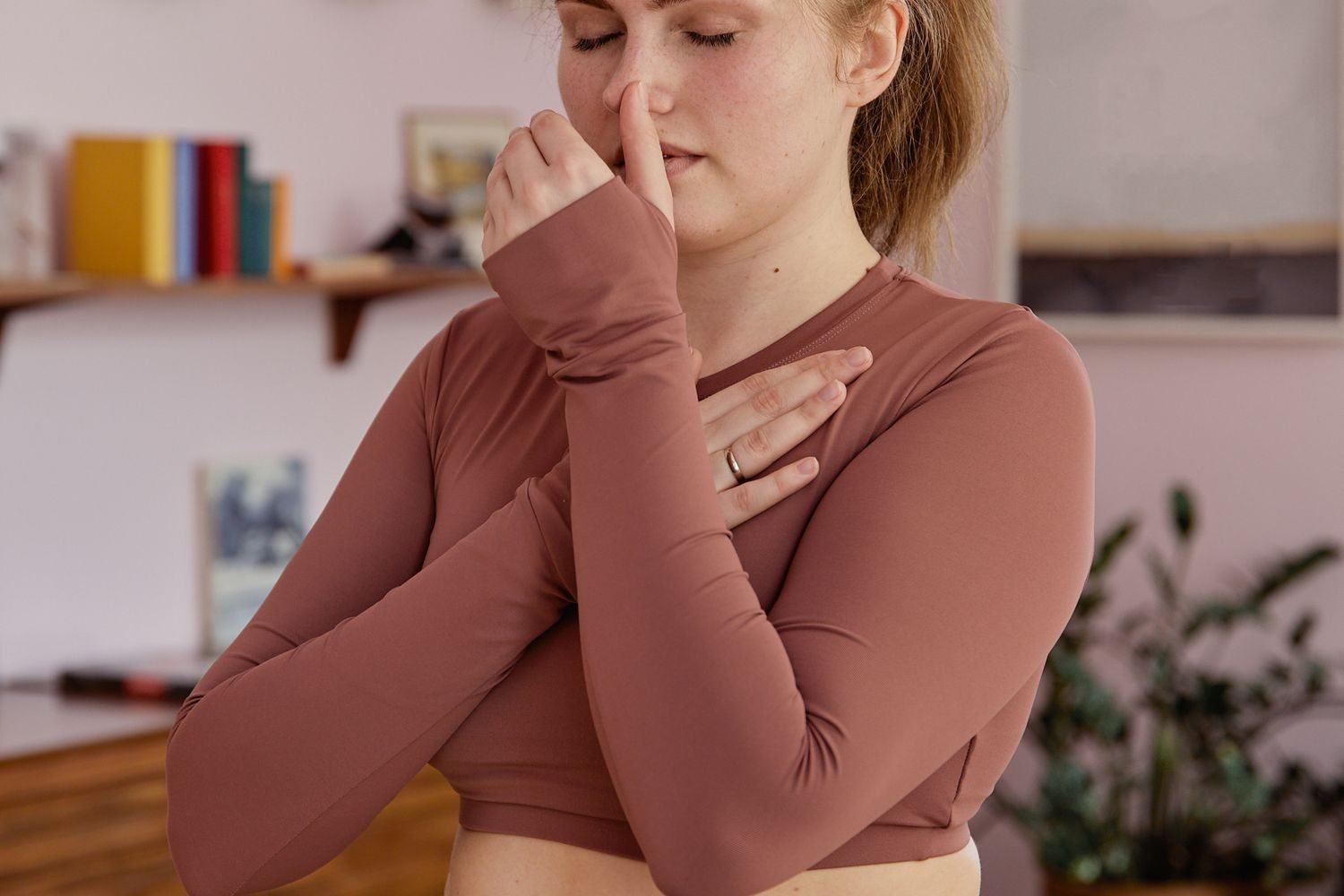
Slow, diaphragmatic (“belly”) breathing has been studied specifically for its effect on stress physiology. A widely cited review found that belly breathing helped lower cortisol and reduce subjective stress, and a broader systematic review covering 58 clinical trials found that controlled breathing practices — including slow diaphragmatic breathing and alternate-nostril breathing — produced significant reductions in measures of stress and anxiety. The likely mechanism is activation of the parasympathetic nervous system (the “rest and digest” counterpart to fight-or-flight), which helps down-regulate the HPA axis. A few minutes of slow breathing — inhaling for a count of four, exhaling for a count of six or longer — before a meal or during a craving spike can measurably shift your physiological state, not just your mindset.
Physical activity
Exercise has a two-part effect that’s particularly relevant here: it helps the body metabolize and clear circulating stress hormones like cortisol and adrenaline, while simultaneously triggering the release of endorphins, which support mood independent of cortisol levels. Harvard Health specifically notes that moderate activities like walking, yoga, and tai chi — which combine movement with a meditative or breath-focused component — can blunt some of the negative effects of stress. You don’t need an intense workout for this; the point isn’t calorie burn, it’s helping your nervous system complete the stress-response cycle rather than staying activated.
Sleep
Sleep and cortisol have a tightly bidirectional relationship: poor sleep raises next-day cortisol and stress reactivity, and elevated stress makes it harder to fall and stay asleep, which compounds the cycle further. This matters directly for cravings, since sleep loss is independently associated with increased hunger signaling and a stronger pull toward high-calorie foods. If stress eating tends to hit hardest on days following a bad night’s sleep, that’s not a coincidence — it’s two overlapping physiological systems working against you at once. See our guide on how sleep affects weight loss for more on this connection.
Social connection
Easy to overlook, but Harvard Health highlights social support as a genuine buffer against stress physiology — research on people in high-stress jobs, like hospital emergency staff, shows better mental health outcomes among those with strong support networks. A short call with a friend isn’t just emotionally nice; it appears to have a measurable dampening effect on stress load.
What can you do in the moment when a craving hits?
Long-term stress management matters most, but cravings still show up in real time, and it helps to have a plan that doesn’t rely on suppressing the urge through sheer effort.
- Pause and name it. Simply noticing “this is stress, not hunger” interrupts the automatic pattern enough to create a choice point — not judgment, just information.
- Try 90 seconds of slow breathing first. Because cortisol is part of what’s driving the craving, giving your nervous system a short window to downshift can measurably reduce the urgency of the craving itself, not just your ability to resist it.
- Move, if you can. A short walk or a few minutes of stretching helps metabolize the stress hormones currently circulating.
- Eat if you’re still hungry, without a script. If food still sounds good after that pause, that’s fine. The goal is a genuine choice instead of an automatic reflex. Approaching the moment with curiosity rather than rules is central to mindful eating, which pairs well with the stress-physiology approach described here.
- Keep some steadying foods within reach. Certain foods and nutrients are associated with lower stress reactivity and steadier blood sugar. Our roundup of the best foods to reduce stress and anxiety covers specific options worth having on hand.
How long does it take for this to actually change?
Because stress eating is rooted in a hormonal feedback loop rather than a habit alone, don’t expect it to fully resolve in a few days — the HPA axis recalibrates gradually. Most people notice smaller, more manageable cravings within a few weeks of consistently practicing stress-lowering habits like regular movement, a steadier sleep schedule, and daily breathing practice, not because cravings disappear entirely, but because the baseline cortisol load driving them is lower.
Expect variability, too. Stressful weeks will still produce stronger pulls toward comfort food even after you’ve built these habits — that’s expected, not a sign anything has failed. The goal is a lower baseline and a faster recovery, not a permanent absence of cravings.
Frequently Asked Questions
Is stress eating a sign of a bigger problem?
Not necessarily. Occasional stress eating is extremely common and reflects a normal cortisol-driven appetite response, not a disorder. It’s worth extra support if it feels compulsive, causes significant distress, or is the primary way you cope with most emotions — a professional or nutritionist can help you build a broader toolkit.
Does cutting sugar completely stop stress cravings faster?
Not usually, and it can backfire. Because sugar and fat genuinely blunt cortisol-related distress in the short term, sudden restriction can increase perceived stress and intensify cravings. Gradually lowering baseline stress tends to reduce the pull toward these foods more sustainably than restriction does.
Why do I stress eat at night specifically?
Cortisol naturally follows a daily rhythm, typically dropping in the evening, but accumulated daily stress and poor sleep can disrupt that pattern. Evenings also often mean less structure and more decision fatigue, both of which lower resistance to automatic habits. Prioritizing wind-down routines can help.
Can stress eating cause weight gain even if I’m not eating that much more?
Yes, it’s possible. Chronically elevated cortisol is linked with changes in fat storage patterns, particularly around the abdomen, independent of total calorie intake. This is one reason stress management is a legitimate weight-related strategy, not just a comfort measure.
What’s the fastest way to calm a craving without eating?
Slow diaphragmatic breathing for one to two minutes is one of the better-studied quick options, since it directly engages the parasympathetic nervous system. A short walk or stepping outside can have a similar effect if breathing alone doesn’t feel like enough in the moment.
If stress eating feels like a recurring pattern rather than an occasional moment, you don’t have to untangle the hormonal and behavioral pieces on your own. An online nutritionist consultation can help you build a plan that addresses both the physiology and the day-to-day realities behind it, at a pace that actually fits your life.