You can eat healthy while dining out with three shifts: scan the menu for how food is cooked (grilled, steamed, or tandoor over fried or “crispy”), ask for sauces and dressings on the side so you control the extra calories, and treat restaurant portions as bigger than a single serving rather than a target to finish. None of this requires ordering a sad salad while everyone else enjoys their meal. Eating out is a normal, enjoyable part of life — not a test you can fail.
Most guilt around restaurant meals comes from an all-or-nothing mindset: order the “clean” option and feel virtuous, or order what you actually want and feel like you’ve blown it. Neither extreme is useful. The more practical approach is understanding what happens to your plate between kitchen and table, then using that knowledge to choose in a way that fits your goals without turning dinner into a negotiation with yourself.
Why do restaurant meals have more calories than home-cooked ones?
It’s not your imagination — restaurant food is genuinely denser in calories, and the reasons are structural, not a reflection of your choices. Restaurants optimize for taste, speed, and perceived value, which typically means more oil, more butter, richer sauces, and bigger plates than you’d naturally serve yourself at home.
Research comparing home-cooked meals to restaurant dishes found that homemade versions of commonly ordered dishes save an average of 435 calories per meal compared to their restaurant counterparts. A single full-service restaurant meal — one entrée, a side, and half an appetizer — can add up to roughly 1,500 calories, close to a full day’s needs for many people in one sitting. Fast food and casual chains aren’t much better; one widely cited analysis found the vast majority of restaurant meals studied exceeded reasonable calorie limits for a single meal.
This isn’t a reason to avoid restaurants — it’s a reason to walk in with a plan, the same way you’d plan a grocery list before shopping hungry. For a broader framework, our guide on healthy eating habits to build covers the daily habits that make occasional restaurant meals easy to absorb.
How do you read a menu for healthier choices without overthinking it?
You don’t need to analyze every line item — just a few keywords. Cooking method tells you more about a dish’s calorie load than almost anything else on the menu.
- Favor: grilled, steamed, baked, roasted, tandoor, boiled, stir-fried, poached.
- Be cautious with: fried, crispy, battered, breaded, creamy, buttery, loaded, smothered, au gratin.
- Ask before ordering: “Can the sauce come on the side?” and “Is this cooked in butter or oil, and can it be lighter?” Most kitchens will accommodate this.
Sauces and dressings are a sneaky source of extra calories because a restaurant ladle rarely measures light. A creamy dressing or curry gravy can add several hundred calories to a dish that otherwise looks reasonable. Asking for it on the side puts you in control of the amount.
This is also where mindful eating becomes useful at a restaurant table — slowing down enough to actually taste your food naturally reduces the urge to drown it in extra sauce out of habit rather than hunger.
How big are restaurant portions compared to what you actually need?
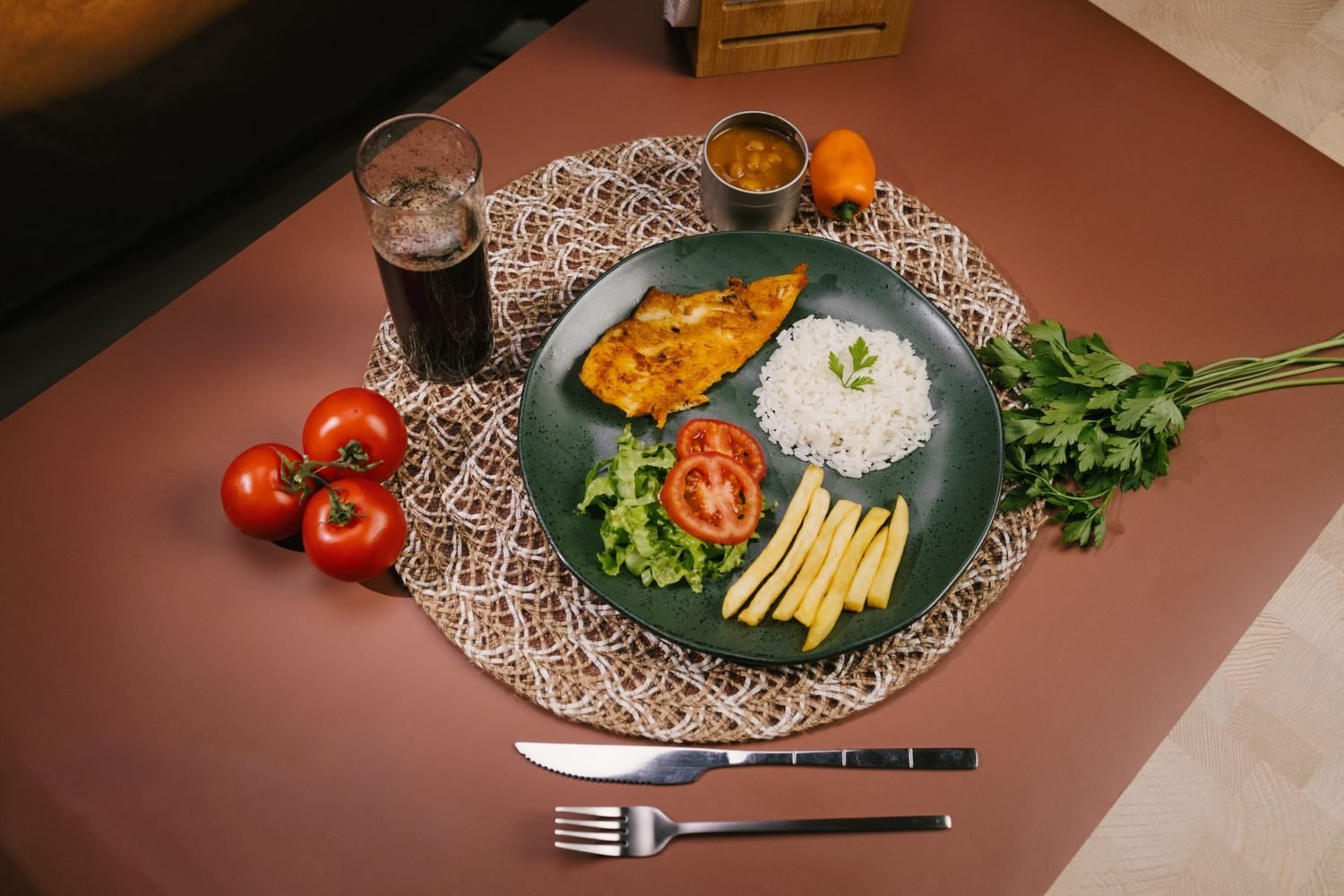
Bigger than most people assume. Research has consistently found that many restaurants serve two to three times the portion size recommended in dietary guidelines for a single meal — what looks like “one dish” on the menu can realistically be closer to two servings.
Portion research also offers reassurance: a study from Kaiser Permanente’s research division found that when restaurants served smaller portions, diners reported feeling just as full and satisfied as with the oversized versions. The extra food on your plate isn’t adding to your satisfaction — it’s just extra food.
Practical ways to work with this instead of fighting it:
- Ask for a to-go box early and portion out half before eating, rather than after you’re already full.
- Split an entrée with a dining companion at restaurants known for large plates.
- Order an appetizer and a side as your main if entrées are oversized — often plenty of food.
- Start with a salad or broth-based soup, which research suggests helps moderate how much you eat during the rest of the meal.
None of this is about eating less than you need. It’s about recognizing that a restaurant portion was never designed around your appetite — it was designed to look generous on the plate. Our piece on how to build a healthy plate is a useful mental template even when you didn’t build the plate yourself.
What are smart choices at an Indian restaurant specifically?
Indian menus have wide gaps between the healthiest and richest versions of the same basic dish, which actually makes them easy to navigate once you know what to look for.
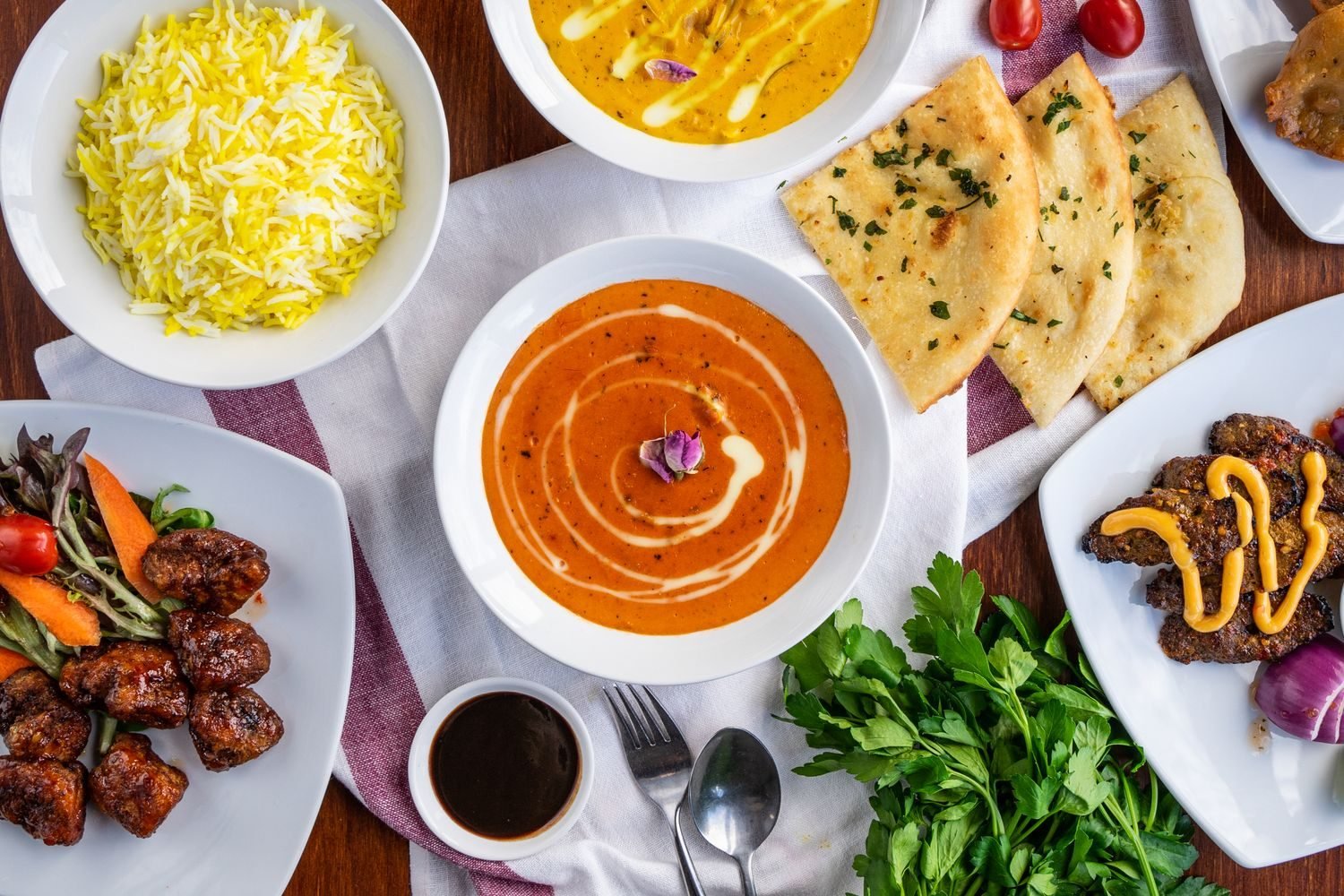
Tandoor over fried. Tandoori chicken, tikka, and grilled paneer are cooked at high heat with minimal oil, compared to pakoras, samosas, or anything “crispy” or “fried,” which absorb significant oil during cooking. A tandoori dish and a fried dish can look similarly sized but differ substantially in fat content.
Dal and sabzi are genuinely good choices. A simple dal (lentils) or vegetable sabzi cooked with modest oil is high in fiber and protein relative to its calories, and far lighter than paneer butter masala or a heavy korma, both of which typically lean on cream, butter, or cashew paste in the gravy. If you love richer curries, pairing one with a simple dal or sabzi lets you enjoy it while keeping the overall meal balanced.
Roti beats naan and paratha by a meaningful margin. A plain whole-wheat roti typically runs 70-120 calories, while a piece of naan — made with refined flour and often brushed with butter — commonly runs 200-300 calories. Paratha, layered and shallow-fried in ghee, tends to be the richest of the three. None of these breads are “bad,” but a naan or paratha is doing noticeably more caloric work than a roti.
Watch the rice portion, not just the rice itself. Biryani and pulao aren’t inherently unhealthy, but restaurant portions of rice dishes tend to be large, and rice is calorie-dense in bulk. Sharing a rice dish or treating it as a side alongside a protein-forward curry or tandoori item tends to balance out a meal nicely.
How do you enjoy eating out without feeling guilty afterward?
By dropping the idea that any single meal needs to be “perfect.” One dinner out doesn’t undo a week of balanced eating, and treating it that way tends to backfire — either by triggering restrictive eating for the rest of the day (skipping meals to “save calories” rarely goes well) or by generating guilt that makes the meal less enjoyable than it should be.
Social eating is genuinely part of a healthy relationship with food. Meals out are tied to celebration, connection, and culture — not a separate category from “real” eating that needs to be minimized. The goal isn’t to eat as little as possible; it’s to eat in a way that feels good during the meal and afterward, without swinging into overeating simply because the food is in front of you.
A few mindset shifts that help:
- Decide before you’re starving. Arriving ravenous makes it harder to eat with any intention — a light snack beforehand can help if the reservation runs late.
- Eat slowly and notice fullness. It takes roughly 20 minutes for your brain to register fullness, so pacing yourself genuinely changes how much you eat.
- Order first in a group that tends to go big, so you’re not anchored by everyone else’s choices.
- Let go of the “clean plate” reflex. Restaurant portions are often built to be split or boxed. Stopping when satisfied, not when the plate is empty, is a high-leverage habit.
If eating out consistently triggers overeating or guilt regardless of what you order, it may be less about the restaurant and more about your broader relationship with food. Our guides on intuitive eating for beginners and how to control food cravings go deeper into building that steadier foundation, so dining out stops feeling like a high-stakes event.

What should you actually order if you want a simple rule of thumb?
One rule works across almost any cuisine: build your plate around a protein cooked without heavy frying, add vegetables or a legume-based side, treat bread or rice as an accompaniment rather than the main event, and ask for sauces on the side. No need to memorize calorie counts or interrogate the server about every ingredient.
Beyond that, the strategies that help most are the boring ones: checking a menu online before you go, choosing water or unsweetened tea over sugary drinks (which add calories without adding fullness), and giving yourself permission to actually enjoy the meal rather than treating it as damage control.
Dining out well isn’t about finding “hacks” — it’s about understanding a few consistent patterns (bigger portions, richer sauces, heavier oil) and adjusting for them naturally, the way you’d adjust your pace for a hill. Do this often enough and it stops requiring willpower.
FAQ
Is it okay to eat out regularly and still be healthy?
Yes. What matters most is your overall pattern over weeks and months, not any single meal. Eating out two or three times a week is compatible with good health if your choices lean toward balanced plates most of the time, with room for dishes you genuinely enjoy.
Should I always ask for sauce or dressing on the side?
It’s one of the easiest changes you can make, since restaurants tend to apply sauces more heavily than you would at home. Asking for it on the side doesn’t mean skipping it — it puts you in control of the amount, which is usually less than what’s poured on by default.
Is naan really that much worse than roti?
Naan is typically higher in calories and fat than roti because it’s made with refined flour and often brushed with butter, while roti is whole wheat and cooked dry. Naan isn’t “bad,” but if you’re eating it regularly, it’s worth knowing it’s the richer choice, not a neutral swap.
How do I stop feeling guilty after eating out?
Guilt usually comes from an all-or-nothing mindset rather than the meal itself. Reminding yourself that one meal doesn’t define your health, and that food is meant to be enjoyed socially, helps more than restricting your next few meals to “compensate.”
What’s the single best change I can make when eating out?
Paying attention to cooking method — choosing grilled, tandoor, steamed, or roasted over fried or “crispy” — has the biggest impact for the least effort, since it targets where most extra calories in restaurant food actually come from.
If you’d like a personalized plan for eating out without derailing your goals, an online nutritionist consultation can help you map out a realistic approach based on your favorite restaurants and routines.