The fastest way to beat sugar cravings isn’t willpower — it’s stabilizing your blood sugar with regular, protein-and-fiber-rich meals, protecting your sleep, and dropping the “forbidden food” mindset that tends to make cravings worse, not better. Sugar cravings are rarely a character flaw; they’re usually your body responding to a blood sugar crash, a short night of sleep, or the psychological backlash of telling yourself you can “never” have dessert again. Fix the underlying trigger, and the craving loses most of its grip.
This guide covers why sugar cravings happen and what actually works to quiet them — without swearing off sugar for life or white-knuckling your way through every afternoon slump.
Why do sugar cravings happen in the first place?
A sugar craving is your brain and body sending a signal, and that signal usually has one of three sources: a blood sugar swing, a sleep deficit, or a learned emotional habit. Understanding which one is driving the craving changes how you respond to it.
When you eat a meal heavy in refined carbohydrates with little protein or fiber, your blood sugar spikes quickly and then drops — sometimes below where it started. That crash triggers a strong urge to eat something fast-acting, almost always sugar. This is the classic “crash-then-crave” cycle, and it’s one of the most common — and most fixable — drivers of daily sugar cravings. Understanding how sugar affects the body more broadly helps explain why this cycle feels so hard to break once it starts.
Sleep debt is another major, often-overlooked trigger, and cravings aren’t always about hunger at all — sometimes they’re about stress, boredom, or habit, a broader pattern covered in our guide to how to control food cravings. This article focuses specifically on sugar.
How does poor sleep make sugar cravings worse?
Short sleep disrupts the two hormones that regulate appetite — ghrelin and leptin — in a way that specifically increases your drive for sugary, high-carbohydrate food. Ghrelin signals hunger to your brain, while leptin signals satiety. When sleep is cut short, this system tips out of balance: ghrelin rises and leptin falls, leaving you hungrier and less satisfied after eating.
A randomized crossover trial found that after a night of curtailed sleep, healthy young adults showed a stronger preference for sweet tastes, greater appetite, and higher overall food intake — with the extra calories coming disproportionately from carbohydrates. Separate laboratory research measuring hormone levels directly after acute sleep loss found leptin dropped meaningfully while ghrelin rose, consistent with the increased hunger and sweet cravings reported in sleep-restricted participants.
The evidence isn’t perfectly uniform — a systematic review and meta-analysis of the hormonal data found that in the short term, results across studies are somewhat inconsistent, likely due to differences in study design and who was tested. But the behavioral pattern is consistent enough that sleep is worth treating as a first-line craving strategy, not an afterthought. If you routinely get less than seven hours, that’s genuinely working against you before you’ve made a single food choice. For a deeper look at the sleep-weight connection, see how sleep affects weight loss.

How do you stop the blood-sugar crash-and-crave cycle?
You stabilize blood sugar by building meals around protein, fiber, and healthy fat rather than refined carbohydrates eaten alone. Protein and fiber both slow the rate at which glucose enters your bloodstream after a meal, which prevents the sharp spike-and-drop pattern that triggers cravings a couple of hours later.
Protein helps regulate the release of glucose into the blood and slows the absorption of starches and carbohydrates, keeping blood sugar — and appetite — steadier for longer. Fiber works alongside it: research on soluble fiber shows it can meaningfully reduce the rise in blood glucose after a meal while increasing feelings of fullness. In one trial, adults who took a soluble fiber supplement before meals showed a measurably lower post-meal glucose spike compared to controls. Larger cohort studies have also linked higher fiber intake (roughly 25 grams a day for women, 38 for men) with a meaningfully lower risk of developing type 2 diabetes over time — a good marker of how much fiber matters for blood sugar control generally, not just same-day cravings.
In practice, this means:
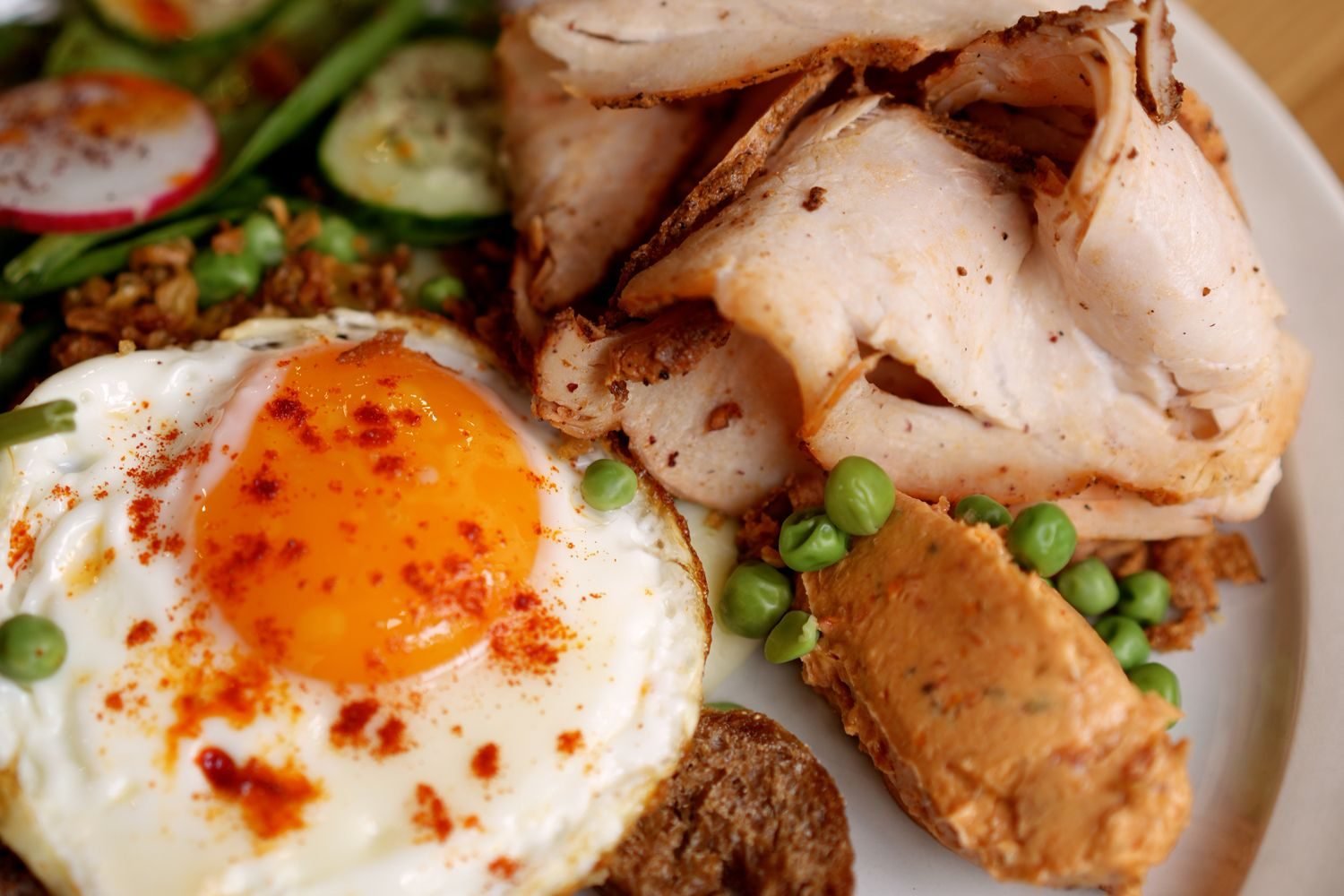
- Anchor each meal with a protein source — eggs, Greek yogurt, poultry, fish, tofu, or legumes.
- Add a fiber source at the same meal — vegetables, beans, lentils, whole fruit, oats, or whole grains.
- Don’t let more than 4-5 hours pass without eating, especially if you’re prone to afternoon crashes.
- Pair any sweet food with protein or fat, like fruit with nut butter, rather than eating it alone.
Legumes are especially efficient here, delivering protein and fiber in the same food. If you regularly notice shakiness or an intense sugar urge 2-3 hours after eating, that’s a sign your meals need more of both. It’s also worth checking whether hidden sugar in everyday foods is quietly contributing to the swings, since sauces, dressings, and packaged snacks often add more sugar than people realize.
Is it better to quit sugar cold turkey or cut back gradually?
For most people, a gradual reduction is more sustainable than quitting sugar cold turkey, because of how cravings respond to restriction. Research on dietary restraint — dating back to classic studies on restrained eaters — has repeatedly found that when people label a food as strictly “forbidden,” their desire for that food tends to intensify rather than fade. Studies on thought suppression show a similar “ironic rebound effect”: actively trying not to think about a food can increase food-related thoughts above baseline, not reduce them.
The research isn’t uniformly against restriction — some studies on longer-term, sustained energy restriction in overweight adults have found cravings actually decrease over time once the body adjusts. The key distinction seems to be between short-term, all-or-nothing deprivation (which tends to backfire) and steady, moderate reduction (which tends to work). In other words, “never again” is more likely to trigger the exact rebound cravings you’re trying to avoid, while a gradual approach lets your palate and habits adjust without the psychological backlash of restriction.
A gradual approach might look like:
- Cutting sugary drinks first, since they’re the easiest source to swap without feeling deprived.
- Reducing added sugar in coffee, tea, or homemade meals by small increments over a few weeks.
- Allowing planned, enjoyed treats rather than banning dessert outright.
- Gradually increasing protein and fiber at meals so satiety does more of the work naturally.
This isn’t about permissiveness — it’s about working with how motivation and craving psychology actually function, rather than against it.
Is it a real sugar craving or actual hunger?
True physical hunger builds gradually, can be satisfied by any reasonably balanced food, and comes with physical signs like a rumbling stomach or low energy. A craving tends to arrive suddenly, points to one specific food, and often shows up regardless of when you last ate. Learning to tell the two apart is one of the most useful — and most underrated — skills for managing sugar intake.
A few questions to ask yourself in the moment:
- Would a plate of chicken, rice, and vegetables satisfy this, or only chocolate will do? If it’s only the one food, it’s more likely a craving than hunger.
- Did this urge appear suddenly, tied to a stressful moment, a specific time of day, or a visual cue like walking past a bakery? Situational cravings are common and don’t necessarily reflect a nutritional need.
- How long ago did I last eat, and was that meal balanced? If it’s been over five hours or your last meal was carb-heavy with little protein, this may be a genuine blood-sugar-driven urge worth responding to with food.
Neither answer is a reason for guilt. The point isn’t to police every craving — it’s to respond appropriately: eating something balanced if it’s hunger, or riding out a short wave (cravings are typically brief) if it’s a passing urge with no nutritional need behind it.
What are practical ways to reduce sugar cravings day to day?
A few small, repeatable habits round out the meal-timing and sleep strategies above and make cravings noticeably easier to manage. None require eliminating sugar entirely — they’re about reducing how often intense cravings show up.
- Stay ahead of dehydration. Thirst is commonly mistaken for hunger or a craving. A glass of water is a low-cost first response worth trying before reaching for something sweet.
- Keep a satisfying alternative on hand. Fruit, a small square of dark chocolate, or Greek yogurt with berries can meet a sweet craving while still delivering fiber or protein alongside the sugar.
- Notice your patterns without judgment. If cravings cluster around a specific time, stressor, or environment, that awareness alone makes them easier to plan for.
Habits like these tend to outperform dramatic overhauls, partly because they don’t trigger the restriction backlash that makes cravings worse.
When should sugar cravings be a bigger concern?
Occasional sugar cravings are normal and not worth over-analyzing. But frequent, intense cravings — especially alongside fatigue or mood swings — are worth paying closer attention to, since they can point to broader patterns, including eating too much sugar overall. If that sounds familiar, review the signs you’re eating too much sugar to see whether your intake is higher than it feels day to day. If cravings still feel unmanageable despite consistent meals, adequate sleep, and a non-restrictive approach, it’s worth looking at the bigger picture.

Frequently Asked Questions
Why do I crave sugar every afternoon around the same time?
This is often a blood sugar pattern tied to your lunch. A carb-heavy lunch without enough protein or fiber can cause a mid-afternoon dip in blood sugar, triggering a strong urge for something sweet. Adding protein and fiber to lunch, or having a balanced snack around the 2-3 hour mark, usually smooths this out within a few days.
Can lack of sleep really cause sugar cravings?
Yes — research shows short sleep alters ghrelin and leptin, the hormones controlling hunger and fullness, and increases preference for sweet, high-carbohydrate foods. A randomized trial found sleep-restricted adults ate measurably more carbohydrate-based calories than after a full night’s sleep.
Is it bad to give in to a sugar craving occasionally?
No. Treating sugar as strictly off-limits tends to backfire, based on research into dietary restraint and rebound cravings. Satisfying a craving occasionally, in a moderate and planned way, is generally more sustainable than rigid avoidance, which can intensify desire for the exact food you’re avoiding.
How long does a sugar craving typically last if I don’t act on it?
Most cravings are short-lived, often peaking and fading within 10-20 minutes. Distraction, water, a short walk, or a small protein-based snack can help you get through that window without needing to fully suppress or judge the craving.
Does cutting sugar out completely make cravings go away faster?
Not necessarily, and it can backfire. Short-term, all-or-nothing restriction has been linked to increased craving intensity for the restricted food, while gradual, moderate reduction tends to be easier to sustain without triggering that rebound effect.
If sugar cravings keep interfering with your goals despite trying these strategies, a personalized look at your eating patterns can help pinpoint what’s actually driving them. An online nutritionist consultation is a practical next step for building a plan tailored to your body, schedule, and relationship with food.