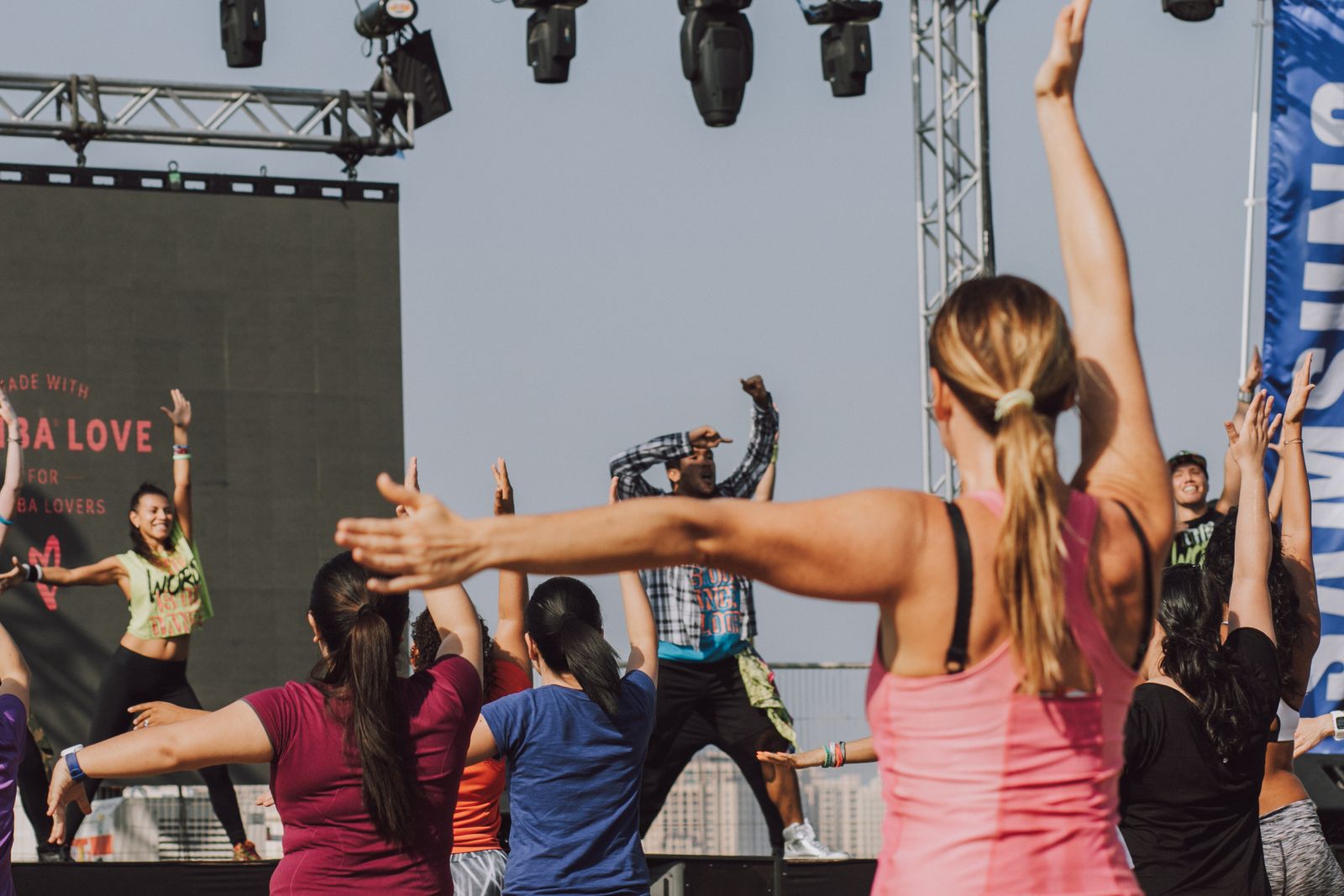
Six main Zumba formats cover nearly every age and fitness level: standard Zumba, Zumba Gold for older adults and beginners, Zumba Toning for added resistance, Aqua Zumba for a joint-friendly pool workout, Zumba Step for platform-based intensity, and Zumba Kids for younger participants. Beyond these six, several additional variants, including STRONG by Zumba, Zumba Sentao, Zumba in the Circuit, and Zumba Yoga, target more specific training goals.
Standard Zumba
The original format works for essentially all fitness levels, built around upbeat music, accessible choreography, and a mix of cardio and rhythm-based movement drawn from salsa, merengue, reggaeton, and cumbia. Our guide to what is Zumba covers this original format in full depth.
Zumba Gold
Zumba Gold adapts the same core rhythms and music to a slower pace, focusing on balance, coordination, and flexibility rather than high-impact intensity, making it well suited for older adults or anyone managing mobility limitations. Our guide to Zumba Gold covers the specific research behind this format’s cardiovascular and joint-safety benefits.
Zumba Toning
Zumba Toning incorporates lightweight toning sticks, resembling small maracas and filled with sand to reduce jarring impact, adding genuine resistance to standard choreography and increasing engagement in the arms, shoulders, core, and lower body. Our guide to Zumba Toning covers exactly how these sticks change the workout compared to standard classes.
Aqua Zumba
Aqua Zumba takes the same dance-based movement into a swimming pool, using water resistance to create a workout that’s simultaneously more challenging on the muscles and gentler on the joints, since water’s buoyancy reduces impact considerably compared to standard land-based classes. Our guide to Aqua Zumba covers the specific joint and cardiovascular research behind this format.
Zumba Step
Zumba Step incorporates a raised step platform into standard choreography, adding coordination challenges and increased intensity through the step-up and step-down movement pattern layered on top of the usual dance steps. This format pushes closer toward genuine lower-body strength work than standard Zumba alone.
Zumba Kids
Built specifically for younger participants, Zumba Kids uses simplified choreography and age-appropriate music and pacing. Our guide to Zumba for kids covers the specific physical, cognitive, and social benefits documented for this age group.
Additional Specialized Formats
STRONG by Zumba departs from dance entirely, combining bodyweight HIIT-style training with music specifically composed to match each movement, rather than choreography set to existing songs. Zumba Sentao incorporates a chair into choreography for seated and standing resistance work. Zumba in the Circuit blends short bursts of Zumba choreography with strength-station circuit training. Zumba Yoga pairs dance-based cardio with yoga-inspired stretching and breathwork for a more balanced, lower-intensity session.
How to Choose the Right Format for You
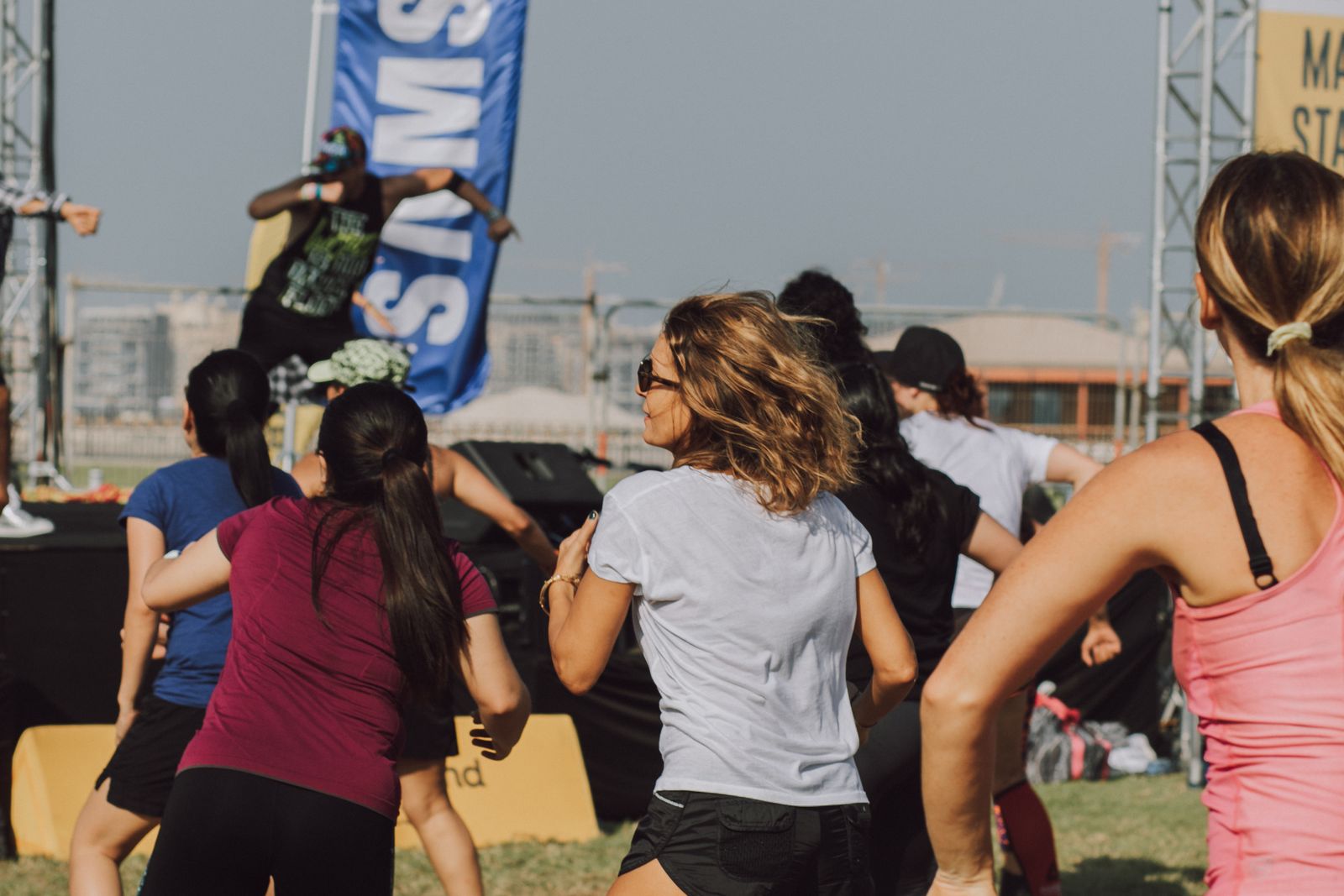
Matching format to your specific goal matters more than assuming one version fits every purpose. Cardiovascular fitness and general accessibility point toward standard Zumba, joint safety and lower intensity point toward Zumba Gold or Aqua Zumba, added resistance and toning point toward Zumba Toning or Zumba Step, and pure strength-focused training points toward STRONG by Zumba specifically.
Zumba Formats Compared
| Format | Impact Level | Best For |
|---|---|---|
| Standard Zumba | Moderate-High | General fitness, all levels |
| Zumba Gold | Low | Older adults, mobility limitations |
| Zumba Toning | Moderate-High | Added resistance, arms/core |
| Aqua Zumba | Low | Joint issues, pool access |
| Zumba Step | High | Lower-body strength |
| STRONG by Zumba | High | HIIT-style strength, no dance |
Common Questions About Types of Zumba
What is the difference between Zumba and Zumba Gold?
Zumba Gold uses the same core rhythms and music as standard Zumba but at a slower pace with reduced impact, designed specifically for older adults or people managing mobility limitations.
Which type of Zumba burns the most calories?
Standard Zumba and Zumba Step tend to produce the highest calorie burn given their higher intensity and impact, though individual results vary based on effort level and body composition.
Is STRONG by Zumba actually a dance class?
No, STRONG by Zumba is a bodyweight HIIT-style workout with music composed to match specific movements, distinct from the dance-based choreography found in standard Zumba and most other variants.
Which Zumba format is best for beginners?
Standard Zumba or Zumba Gold both work well for beginners, with Zumba Gold offering a gentler entry point for anyone wanting lower intensity before progressing to a standard class.
Can I combine different Zumba formats in one week?
Yes, many people combine formats, standard Zumba for cardio, Zumba Toning for added resistance, for example, to target a broader range of fitness goals across a single week.
Try This for Yourself
With this many formats available, there’s a genuine entry point regardless of your current fitness level or specific goal. Explore FitStrot’s Online Zumba Classes and find yours.
Related reading: Zumba Gold, Zumba Toning, or head to Online Zumba Classes to get started.
Sources: Groupon, Different Types of Zumba Classes, STRONG Nation, Music-Led Interval Training