A gym workout plan is not just a list of exercises—it’s a structured system that determines how fast you gain muscle, lose fat, build strength, and stay injury-free. Most people fail to see results in the gym, not because they don’t work hard, but because they follow random routines without progression, recovery, or strategy.
This guide is designed to fix that.
Whether you’re a beginner stepping into the gym for the first time or an experienced lifter stuck at a plateau, this science-backed gym workout plan will help you train smarter, recover better, and achieve sustainable results.
What Is a Gym Workout Plan? (Clear, Science-Based Definition)
A gym workout plan is a structured training program that defines:
- What exercises do you perform
- How many sets and reps do you do
- How often do you train
- How intensity and volume progress over time
- How recovery is managed
Unlike random workouts, a proper gym workout plan is built around progressive overload, volume management, and recovery, ensuring consistent improvement without burnout.
In short: A gym workout plan is a roadmap for measurable results.
Why Following a Gym Workout Plan Is Essential
Key Benefits (Featured Snippet Optimized)
- Faster muscle growth
- More efficient fat loss
- Lower injury risk
- Better recovery and energy levels
- Long-term consistency and motivation
Without a plan, you rely on guesswork. With a plan, you rely on progressive data and structure.
Core Training Principles Behind an Effective Gym Workout Plan
1. Progressive Overload
To grow stronger or build muscle, your body must be challenged gradually through:
- Increased weights
- More reps or sets
- Improved tempo or control
- Reduced rest time
No overload = no adaptation.
2. Training Volume & Frequency
Optimal muscle growth typically requires:
- 10–20 working sets per muscle group per week
- Training each muscle 2 times per week is recommended for most people
Beginners require less; advanced lifters need smarter volume cycling.
3. Intensity & Proximity to Failure
- Beginners: Stop 2–3 reps before failure
- Intermediate: Train 1–2 reps shy of failure
- Advanced: Strategic failure on final sets
Training to failure all the time leads to burnout—not progress.
4. Recovery & Supercompensation
Muscle grows during recovery, not during workouts.
Sleep, nutrition, hydration, and deload weeks are non-negotiable.
Gym Workout Plan by Experience Level
Beginner Gym Workout Plan (0–6 Months)
Frequency: 3–4 days/week
Split: Full body
Focus: Learning movement patterns and building consistency
Key Movements:
- Squat
- Hip hinge
- Push
- Pull
- Core
Sample Beginner Full-Body Workout
- Squats – 3×10
- Chest Press – 3×10
- Lat Pulldown – 3×12
- Shoulder Press – 3×10
- Plank – 3×30 sec
📌 Progression: Increase reps before increasing weight.
Intermediate Gym Workout Plan (6–24 Months)
Frequency: 4–5 days/week
Split: Upper/Lower or Push-Pull-Legs
Focus: Progressive overload + weak-point training
Intermediate lifters benefit from higher volume and structured splits.
Advanced Gym Workout Plan (2+ Years)
Frequency: 5–6 days/week
Split: Push-Pull-Legs or specialization blocks
Focus: Periodization, volume cycling, intensity management
Advanced lifters train smarter—not just harder.
Weekly Gym Workout Plan Templates
3-Day Gym Workout Plan (Full Body)
Day | Focus | Exercises |
Day 1 | Push + Legs | Squats, Bench Press, Shoulder Press |
Day 2 | Pull | Deadlifts, Rows, Pull-Ups |
Day 3 | Full Body | Lunges, Chest Fly, Core |
Read more about:- personalized workout plan
4-Day Gym Workout Plan (Upper/Lower)
Day 1: Upper Body
Day 2: Lower Body
Day 3: Rest
Day 4: Upper Body
Day 5: Lower Body
Balanced volume + recovery = better progress.
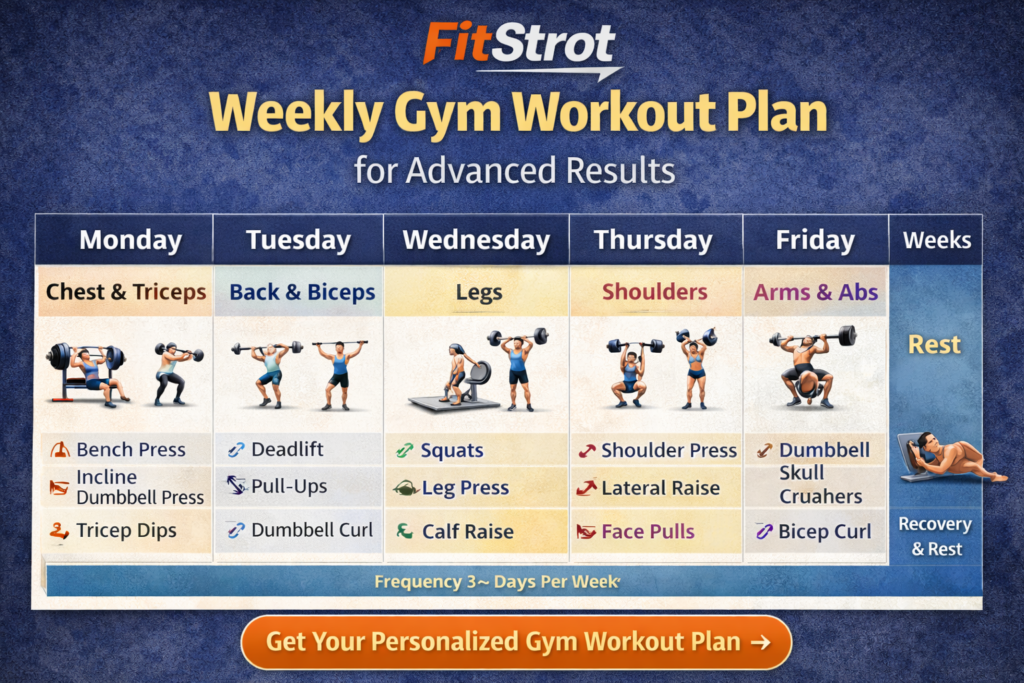
5-Day Gym Workout Plan (Hypertrophy Focus)
- Day 1: Chest
- Day 2: Back
- Day 3: Legs
- Day 4: Shoulders
- Day 5: Arms
Perfect for muscle-building goals.
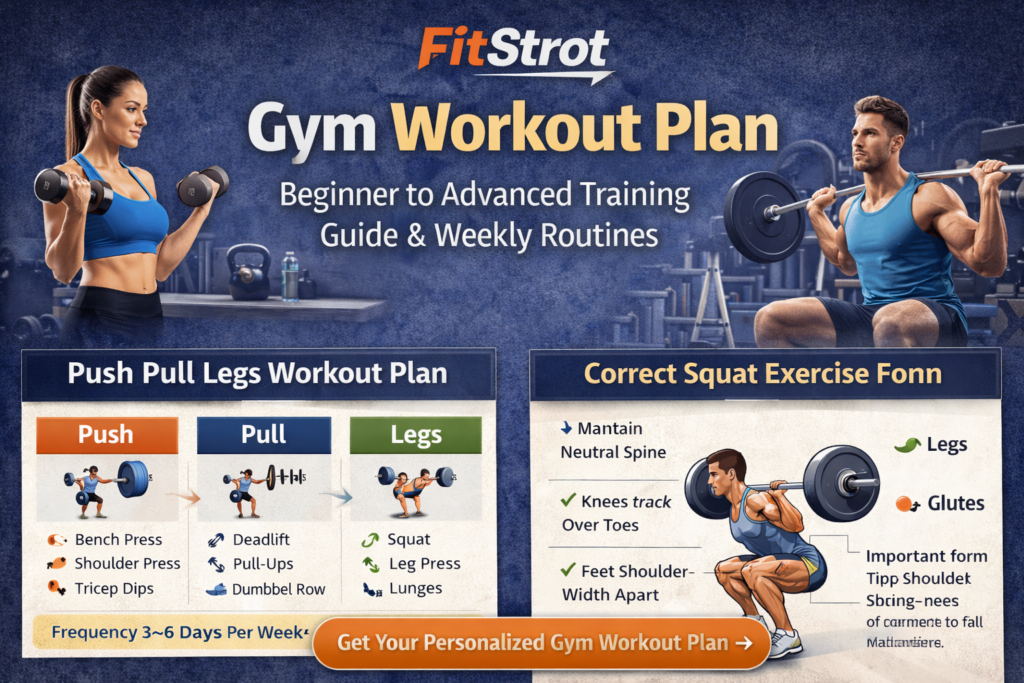
Push Pull Legs (PPL) Gym Workout Plan
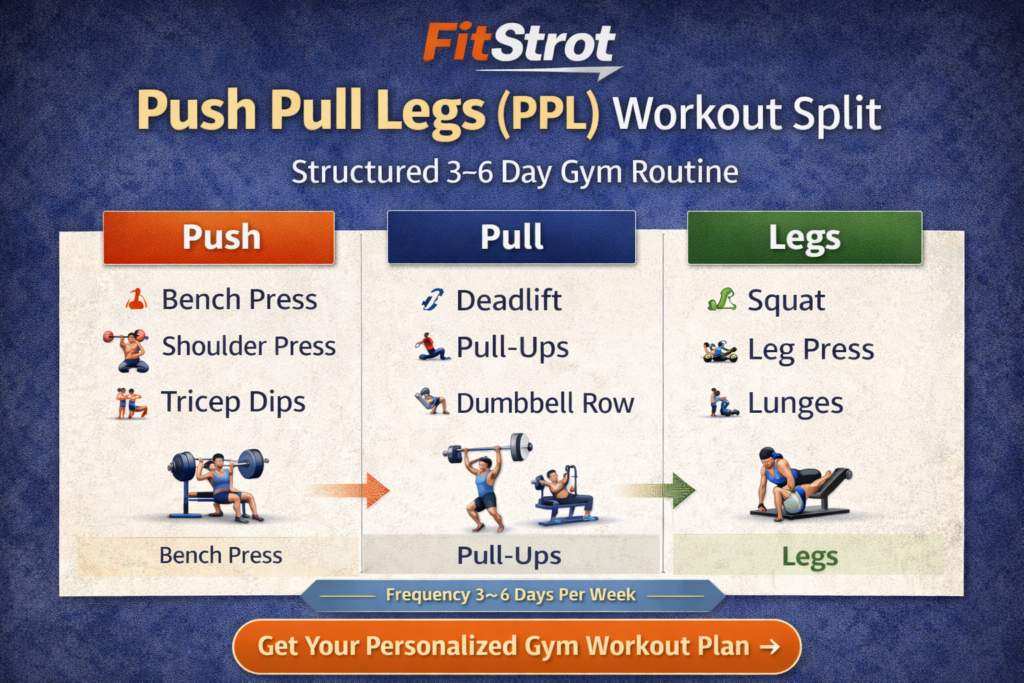
Push: Chest, shoulders, triceps
Pull: Back, biceps
Legs: Quads, hamstrings, glutes
Can be run 3–6 days/week depending on recovery.
Gym Workout Plan Based on Goals
Gym Workout Plan for Muscle Gain
- Moderate-heavy weights
- 8–12 rep range
- Calorie surplus + high protein
Gym Workout Plan for Fat Loss
- Resistance training priority
- Cardio added strategically
- Shorter rest periods
Gym Workout Plan for Strength
- Heavy compound lifts
- 3–6 reps
- Longer rest periods
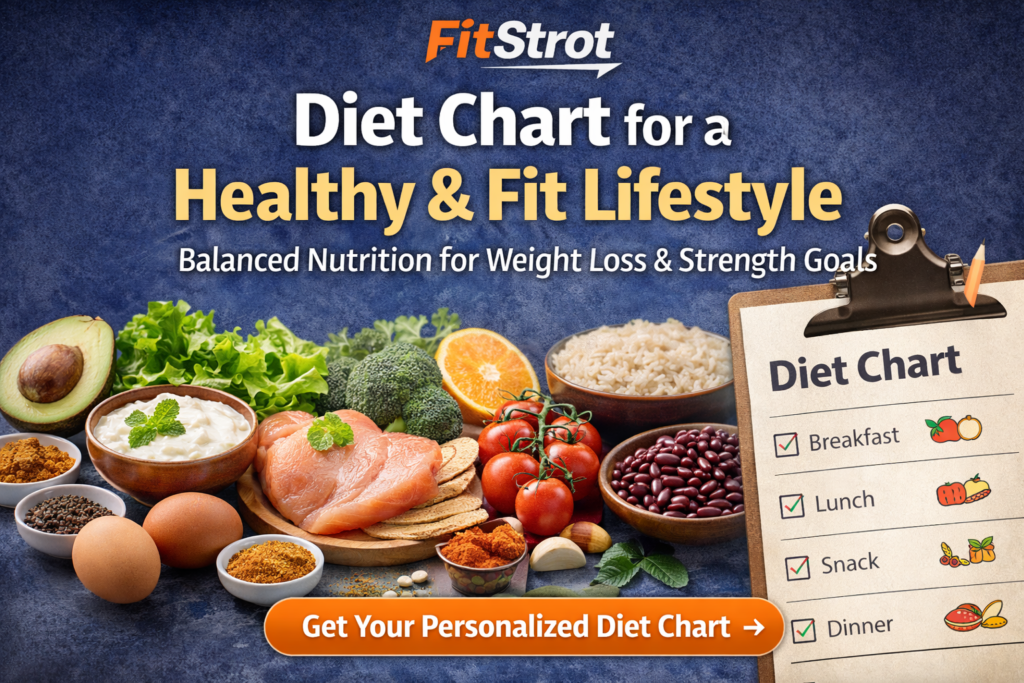
Know More:- Diet Chart for a Healthy & Fit Lifestyle
Sets, Reps, Rest & Tempo Explained
Goal | Sets | Reps | Rest |
Muscle Gain | 3–5 | 8–12 | 60–90 sec |
Fat Loss | 3–4 | 12–15 | 30–60 sec |
Strength | 4–6 | 3–6 | 2–4 min |
Tempo control improves muscle activation and reduces injury risk.
Warm-Up, Mobility & Injury Prevention
A proper warm-up:
- Increases performance
- Reduces injury risk
- Improves movement quality
Warm-Up Structure:
- Light cardio (5 min)
- Dynamic mobility
- Activation sets
Stretch after training, not before heavy lifts.
Nutrition & Recovery for Your Gym Workout Plan
- Protein: 1.6–2.2 g/kg bodyweight
- Carbs fuel workouts
- Sleep 7–9 hours
- Stay hydrated
Training without recovery is wasted effort.
Common Gym Workout Plan Mistakes
- Program hopping
- Junk volume
- Ignoring recovery
- Poor form
- No tracking
Consistency beats complexity—every time.
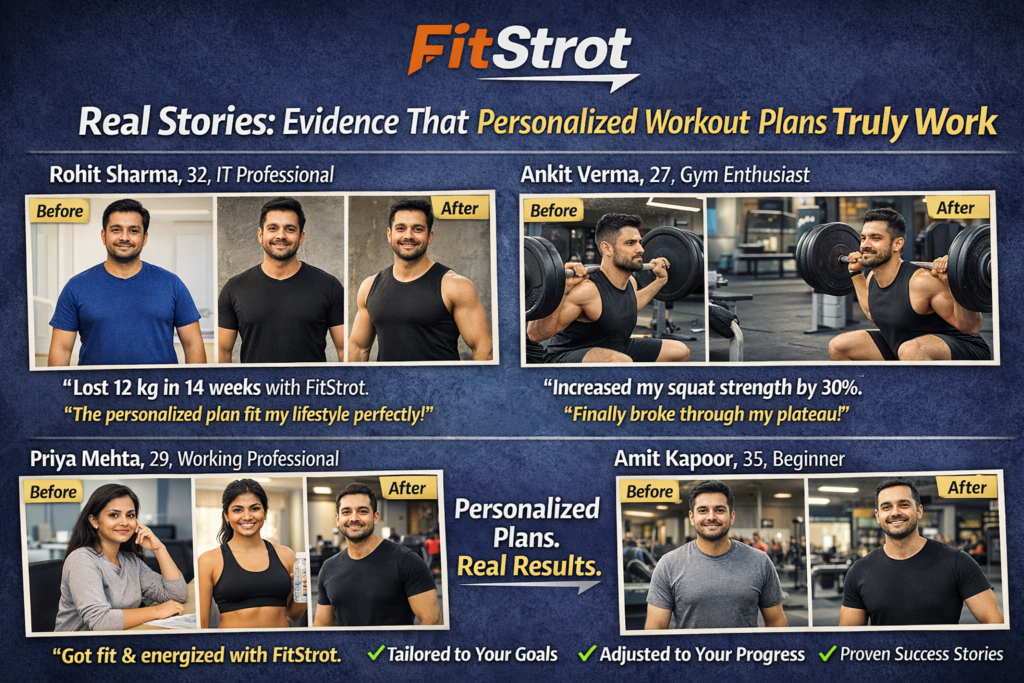
Why Personalized Gym Workout Plans Work Better
Every body is different:
- Limb lengths
- Recovery capacity
- Injury history
- Lifestyle constraints
That’s why personalized gym workout plans outperform generic routines.
🚀 Ready to Stop Guessing and Start Progressing?
At FitStrot, we design personalized gym workout plans based on:
- Your goals
- Your body type
- Your schedule
- Your fitness level
👉 Get your custom gym workout plan today and train with clarity, confidence, and results.
FAQ
How many days should I follow a gym workout plan?
Most people see best results training 3–5 days per week, depending on recovery.
Is a gym workout plan different for men and women?
The structure is similar; differences depend on goals, not gender.
How long before I see results?
Visible results usually appear within 4–8 weeks with consistency.
Should beginners follow a gym workout plan?
Yes—beginners benefit the most from structured training.
Final Thoughts
A gym workout plan is not about doing more—it’s about doing what works, consistently and intelligently. With the right structure, progressive overload, and proper recovery, your gym sessions shift from random effort to purposeful, results-driven training.
At FitStrot, we believe effective fitness is built on personalization, science, and sustainability. Whether your goal is muscle gain, fat loss, or long-term health, following a well-designed gym workout plan—and sticking to it—will always outperform guesswork. Train smart, stay consistent, and let FitStrot guide you toward real, measurable progress.
👉 Train with intention. Recover with discipline. Progress with confidence.