Table of Contents
ToggleCustom Diet Workout Plan for Slow Metabolism
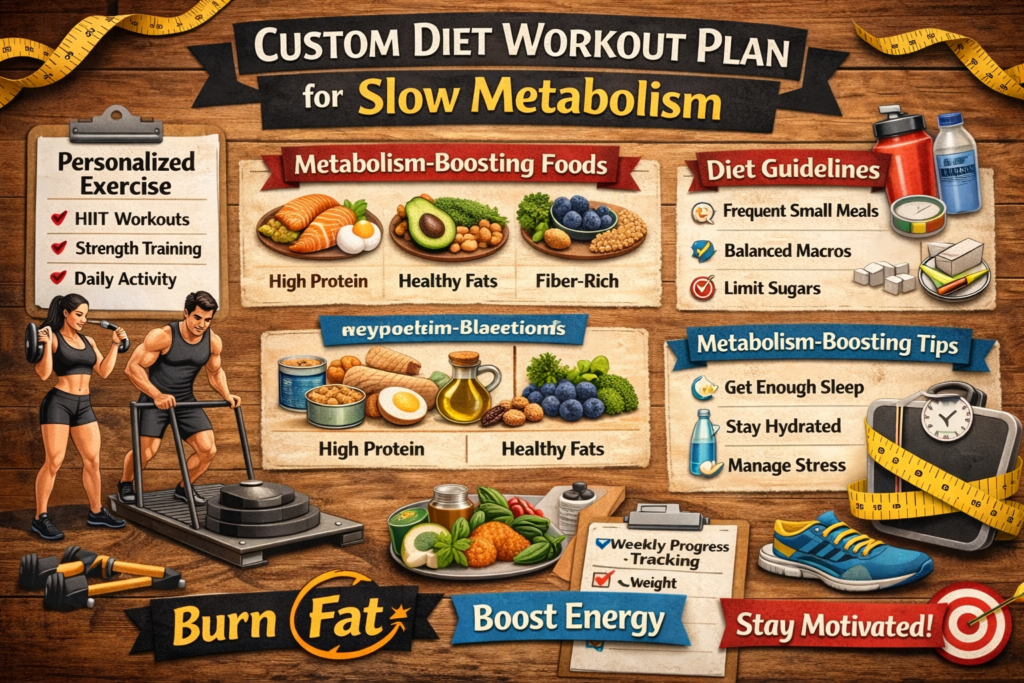
A custom diet workout plan for slow metabolism is a must if you are facing a lifelong issue of weight gain, low energy, and fat loss difficulty even when you are eating less and working out regularly. Slow metabolism is not a myth but a physiological condition influenced by genetics and by hormonal balance, age, lifestyle habits, and lean muscle mass. When the metabolism is slowed down, the body burns fewer calories at rest, thus, making it more difficult to lose fat. Luckily, a scientifically based custom diet workout plan for slow metabolism can, to a great extent, raise your metabolic rate, make your body burn fat more efficiently, and give you excellent fitness results that can last. You may think that the right method is just about starving yourself in an extreme way but instead it is about how the body uses the energy. This comprehensive article is going to cover what makes metabolism tick, the reasons for its slowing down with age, and how a custom diet workout plan for slow metabolism can be the solution to your health and body composition problems.
A custom diet workout plan for slow metabolism that is based on your personality and needs, that is what is going to address your root problems in saving your metabolism and not giving you another temporary fix of medications or supplement. Experts agree that one of the best ways to keep fat loss going and get your energy under control is by focusing on metabolism, muscle mass, and diet simultaneously. The main strategy is to follow the diet with a high, protein, fiber, rich, and nutrient-dense diet and also incorporate regular strength training and sessions of high-intensity workouts. This mix helps increase calorie burn not only during physical activities but also long after the exercises are finished, making a custom diet and workout plan for slow metabolism the best answer if someone is after results that last.
Custom Diet Plan for Slow Metabolism
- High Protein Intake: Eat 1.42.0g of protein per kg of your body weight to protect lean muscle, which in turn, keeps the metabolism running.
- Whole-Food Focused: Make whole, less processed foods, like vegetables, fruits, good fats, and complex carbohydrates (oats, brown rice, ragi), the main part of your diet.
- Carb Cycling: Plan your higher, carb days (with intense training) and your lower, carb, higher, fat days (on rest days) in order to get the best results out of fat burning.
- Smart Meal Frequency: Have 5-6 smaller, yet nutritious meals throughout the day to help control hunger.
- Strategic Fasting: A 12-16 hour overnight fast may be a good idea if you want your body to start using fat stores.
- Hydration: Have 68 glasses of water daily, adding green tea to help with metabolism.
Sample 7-Day Meal Structure
- Breakfast: Protein, packed, for example, oatmeal with berries and chia seeds, or a vegetable omelet.
- Lunch: Lean proteins (like grilled chicken, fish, tofu) served with quinoa, lentils, and salad.
- Dinner: Could be like lunch, or a low, carb meal such as steamed veggies and soup.
- Snacks: Greek yogurt, nuts, seeds, or apple slices.
Custom Workout Plan for Slow Metabolism
- Strength Training (3-4 times/week): Work on resistance training which mainly consists of bodyweight and weightlifting such as squats, deadlifts, bench press, and pull-ups. This will help muscle growth and increase the metabolic rate at rest.
- High-Intensity Interval Training (HIIT) (1-2 times/week): Perform 20-30 minutes of HIIT such as 20 sec sprint and 1 min walk, this kind of workout will give you the “afterburn effect.
- Increase NEAT (Daily Movement): Try to get 7, 50010, 000 steps a day. You can stand while working or take a short walk. Daily movements that are not exercises are very important for the metabolism.
- Active Rest (1-2 times/week): Easy yoga, walking, and stretching are the ways to go.
Sample Weekly Routine
- Day 1: Upper Body Strength (Push)
- Day 2: HIIT Cardio
- Day 3: Lower Body Strength
- Day 4: Active Recovery (Yoga/Walk)
- Day 5: Upper Body Strength (Pull)
- Day 6: Steady-State Cardio (Swimming/Cycling)
- Day 7: Rest
What Is Slow Metabolism?
The chemical processes that make up your body that transforms food into energy are known as metabolism. It decides the efficiency with which your body uses calories as fuel. With a low metabolism rate, the body uses less calories resting, which provides the excess calories with an easier time being stored in the form of fat. This may cause chronic weight gain, despite apparently sufficient diet and exercise.
A low metabolism does not only influence weight. The typical symptoms are tiredness, lack of stamina, fatigue loss, coldness and stomach problems. Most individuals observe that regardless of the daily workouts or the type of food they consume, it seems as though it is an uphill task to lose excess weight. This is due to the fact that body energy consumption is below average, slows the general body processes.
A tailored food and exercise program that targets slow metabolism will be aimed at increasing your metabolism rate naturally. It focuses on healthy foods, consistent strength training to develop muscle, and exercises that promote metabolism, such as high-intensity interval training (HIIT). It also takes into account lifestyle activities like sleep, stress, and hydration, which are very important in aiding metabolic activities.
The solution of slow metabolism is holistic, and therefore, this plan can not only assist in weight loss, but also enhance the energy levels, digestion, and overall well-being. Through a proper mix of food, activity and changes of lifestyle, you can stimulate your metabolism and make your body more effective in burning calories and creating long lasting effects.
Common signs of slow metabolism include:
- Persistent weight gain
- Fatigue and low stamina
- Difficulty losing fat
- Cold sensitivity
- Digestive issues
A well-crafted custom diet workout plan for slow metabolism takes a comprehensive approach in dealing with these symptoms.
Why Generic Diets Fail for Slow Metabolism
The majority of generic or crash diets center on drastically reducing calories to enforce weight loss. Although this strategy might bring about quick results, it is usually a setback, especially for people with slow metabolism. Extreme calorie restriction can even decrease the metabolic rate further, which in turn means that it will be more difficult to lose weight as time goes on. This is the reason why people with slow metabolism need, far more, a tailored diet workout plan for slow metabolism than using a one-size-fits-all approach.
Generic diets simply do not work for too many reasons. Firstly, they make no provision for muscle preservation. As muscles are lost, the capacity for calorie burning also goes down, which in a case of slow metabolism is already low. Secondly, they may lead to hormonal imbalances, thus adversely affecting thyroid function, energy levels, and appetite control. Thirdly, generic diets overlook the fact of metabolic adaptation, whereby the body gets used to fewer calories by lowering its calorie expenditure at rest.
Only a custom diet workout plan for slow metabolism can effectively resolve these problems. It is done through the individual’s proper nutrition, strength training, and metabolism, boosting exercises, which ensure not only sustainable fat loss and increased energy but also good long-term metabolic health. Personalized plans deliver what generic diets fail to produce.
Generic plans fail because they:
- Ignore muscle preservation
- Cause hormonal imbalance
- Reduce metabolic adaptation
Only a custom diet workout plan for slow metabolism can create long-term success.
Key Tips for Success
- Prioritize sleep by aiming for 7-8 hours of sleep every night; lack of sleep not only makes you more greedy by increasing hunger hormones but also slows your metabolism.
- Managing stress through meditation can be a good way to keep cortisol levels low since high cortisol levels are linked to fat storage.
- Keep a journal or use an app for tracking your progress so that you can maintain regularity in your nutrition and workout routines.
- You can get an individual plan from a dietitian if you want to take into account your unique metabolism, health condition, and goals.
Core Principles of a Custom Diet Workout Plan for Slow Metabolism
A well thought-out custom diet workout plan for slow metabolism should be designed around five key components that harmoniously work together to naturally enhance your metabolic rate, safeguard your muscles, and energize your overall system.
- Metabolic-Friendly Nutrition: Nutrition is the basis for any slow metabolism plan. A custom diet workout plan for slow metabolism focuses on nutrient-rich foods, sufficient protein, healthy fats, and complex carbohydrates. Besides supplying the necessary energy, these foods aid muscle growth and metabolism efficiency, thus, the body does not convert calories into fat for later use.
- Strength-Focused Workouts: Since muscles need more energy even when you are not active, building muscle is a must. Strength training, resistance exercises, and weightlifting are the main ingredients of a custom diet workout plan for slow metabolism that not only helps you maintain a lean body but also speeds up calorie burning.
- Strategic Cardio: Cardio is selectively added to give strength training a supportive role without wearing the body out. Cardiovascular fitness is improved, metabolism is increased, and muscle tissue degradation is prevented by means of high, intensity interval training (HIIT) or short, regulated sessions.
- Hormonal Balance: Thyroid, insulin, and cortisol are some of the hormones influencing metabolic rate. A custom diet workout plan for slow metabolism includes diet, exercise time, and lifestyle changes to facilitate hormonal balance and thus unlock the fat-burning capability.
- Recovery and Sleep Optimization: People usually neglect sufficient rest and quality sleep. Recovery time and good sleep will recharge your energy, decrease your stress level, and keep your metabolism from slowing down, which in turn will make your workout plan with a diet for slow metabolism much more efficient.
Together these five principles form a truly comprehensive plan that tackles the original problem of metabolic slowdown thus allowing for sustainable weight management, increased energy, and good health in the long run.
Nutrition Strategy for Slow Metabolism
Nutrition serves as the basis of any personalized diet and exercise regimen for a slow metabolism. You are not supposed to eat less like in the case of crash diets which drastically reduce calories but rather to eat smarter. The body needs proper nutrition to be able to function optimally, it contributes to muscle growth, and it enhances metabolic function which cumulatively ensures that your metabolism doesn’t slow down but operates at its full capacity.
Macronutrient Balance
A successful custom diet workout plan for slow metabolism focuses on a balanced intake of macronutrients. This includes:
- Protein 30-35%: Protein plays an important role in maintaining lean muscle mass which has a direct effect on your metabolic rate. Besides, it contributes to thermogenesis, i.e., your body burning more calories during the processes of digestion and nutrient absorption. Therefore, lean meats, eggs, fish, and vegetarian protein sources like tofu and legumes are the top options.
- Carbohydrates 35-40%: Complex carbohydrates are your main source of stable energy and they also help in sustaining the performance of your workouts. Whole grains, oats, quinoa, brown rice, and starchy vegetables are perfect examples. They not only inhibit energy dips but also keep metabolism at a steady level.
- Healthy Fats 25-30%: Fats are necessary for the production of hormones, especially thyroid and steroid hormones which are responsible for the regulation of metabolism. Put in your diet sources such as nuts, seeds, avocado, olive oil, and fatty fish.
Foods That Boost Metabolism
Incorporating metabolism-boosting foods is a key part of a custom diet workout plan for slow metabolism. Some of the most effective options include:
- Lean Meats and Eggs: Contain a lot of protein which helps in building muscles and also in thermogenesis
- Legumes and Lentils: Besides being a good source of protein, these also have a good amount of fiber which helps in better digestion and thus maintaining energy balance
- Whole Grains: Carbohydrates which are slowly digested thus helping to keep the energy constant without causing a sudden spike in insulin
- Nuts and Seeds: Loaded with good fats, fiber, and micronutrients which are great for hormonal balance
- Green Vegetables: Packed with fiber, antioxidants, and vitamins which are essential for the effective functioning of the metabolic pathways
- Spices, Such as Chili and Ginger: They are natural thermogenic substances that can increase calorie burn to some extent.
Discussing refined carbohydrates and processed sugar at the same level of importance seems quite reasonable. The first two items can drastically destabilize insulin, lower metabolism’s performance, and complicate the very objectives of a custom diet workout plan for slow metabolism.
This nutritional approach by prioritizing nutrient, dense, well, balanced meals, and metabolism, boosting foods, practically guarantees your body will be efficient in burning calories, maintaining muscle mass, and supporting energy levels. Along with a properly made physical activity and lifestyle plan, it represents the essence of a custom diet workout plan for slow metabolism, thus, aiding in the achievement of sustainable fat loss and enhanced metabolic health.
Meal Timing and Frequency
Meal timing is a vital element of a personalized diet and workout program for slow metabolism. The way and time of your eating can greatly affect your metabolic rate, energy, and fat-burning capacity. Having meals at regular intervals preferably every 3-4 hours will not only stop your metabolism from slowing down but also help maintain your blood sugar at a stable level all day long.
A personalized diet and workout program for slow metabolism would typically suggest having a protein, rich breakfast as the first meal of the day. Protein is great for kickstarting your metabolism, it also aids muscle repair, and provides energy that lasts. Lunch should be a combination of complex carbs, lean protein, and healthy fats, which will provide energy for the rest of the day without causing a sugar crash. You should keep dinner light and lean in protein to help your body recover during sleep without overloading the digestive system.
One of the biggest mistakes in a personalized diet and workout program for slow metabolism is to skip meals or to wait for a long time before having the next meal. It tells your body to slow down the use of energy, which means fewer calories are burnt and the metabolic function slows down. When you maintain the same meal timing and frequency, your metabolism works non-stop, your energy levels do not fluctuate wildly, and your body makes good use of the nutrients.
Incorporating strategic meal timing ensures that every meal supports metabolic health, making your custom diet workout plan for slow metabolism more effective and sustainable for long-term results.
Best practices:
- Protein-rich breakfast
- Balanced lunch with complex carbs
- Light but protein-focused dinner
Skipping meals is counterproductive to a custom diet workout plan for slow metabolism.
Hydration and Metabolism
Water consumption is essential for keeping your metabolism working actively. To aid a sluggish metabolism, a diet and exercise plan tailored to your needs suggest that you drink 3, 4 liters of water daily because even slight dehydration may lower metabolic rate by up to 20%. Proper hydration thus aids digestion, nutrient uptake, and fat-burning mechanisms, which are all necessary for metabolic effectiveness. Besides that, moderate use of metabolism, accelerating drinks such as green tea or black coffee can increase calorie burning and energy levels. Adequate hydration together with a well-planned diet and workout will make your diet, exercise plan for slow metabolism work at its best.
Slow Metabolism Workout Strategy
Exercise is on the list of essentials in the custom diet workout plan for slow metabolism. The emphasis should be on strengthening muscles rather than doing cardio excessively.
Strength Training
Strength training is the backbone of a custom diet workout plan for slow metabolism because muscle tissue burns more calories at rest.
Recommended routine:
- 4–5 days per week
- Compound exercises (squats, deadlifts, push-ups)
- Progressive overload
This approach ensures your custom diet workout plan for slow metabolism delivers long-term fat loss.
HIIT vs Steady-State Cardio
A well thought-out personalized diet workout plan designed for slow metabolism essentially involves High-Intensity Interval Training (HIIT) and less of long, steady, state cardio sessions. HIIT involves alternating between short bursts of near maximum effort with recovery periods, thus it is extremely efficient in stimulating metabolism and turning the fat loss process faster. The major benefit of HIIT is that it enhances the post-exercise calorie burning which is also called the afterburn effect. This effect allows the body to continue burning calories long after the workout session.
Moreover, HIIT has been shown to improve insulin sensitivity thus making the body’s management of blood sugar levels more efficient. This is particularly important for individuals with a slow metabolism. Besides that, HIIT workouts require less time, they usually last no more than 20-30 minutes, thus it is easier to fit them into a busy schedule.
On the other hand, steady, state cardio such as long, distance running or cycling may not be highly effective for those with slow metabolism especially if they overdo it. Having too much cardio might lead to muscle loss and thus a slower metabolic rate. If included in a custom diet workout plan for slow metabolism, steady state cardio should be limited to 2-3 moderate sessions per week. It should be used as a complement to strength training and HIIT.
By strategically combining HIIT with controlled steady-state cardio, your custom diet workout plan for slow metabolism maximizes calorie burn, preserves muscle, and enhances overall metabolic efficiency.
Benefits of HIIT:
- Boosts post-exercise calorie burn
- Improves insulin sensitivity
- Saves time
Limit steady-state cardio to 2–3 sessions weekly within your custom diet workout plan for slow metabolism.
Sample Weekly Workout Plan
Here is a sample custom diet workout plan for slow metabolism workout split:
- Monday: Lower body strength
- Tuesday: Upper body strength
- Wednesday: HIIT + core
- Thursday: Rest or mobility
- Friday: Full body strength
- Saturday: Light cardio or yoga
- Sunday: Rest
Consistency is really what makes a custom diet workout plan for slow metabolism effective.
Hormonal Health and Metabolism
Hormones such as insulin, cortisol, and thyroid hormones play a major role in determining the metabolic rate. A custom diet workout plan for slow metabolism promotes hormonal balance by:
- Adequate calories
- Stress management
- Quality sleep
Ignoring hormones can easily sabotage the best custom diet workout plan for slow metabolism.
Sleep and Recovery
When you don’t get enough sleep, your metabolism slows down and more fat is stored. Therefore, if you want a custom diet workout plan for slow metabolism, you should sleep 79 hours of quality sleep.
Recovery strategies include:
- Stretching
- Magnesium-rich foods
- Rest days
Recovery has to be a part of the custom diet workout plan for slow metabolism.
Supplements That Support Slow Metabolism
Various supplements, although not necessary, can be a great addition to an already customized diet and workout plan for a slow metabolism:
- Whey protein
- Omega-3 fatty acids
- Vitamin D
- Zinc and magnesium
Avoid fat burners that promise quick results—they often harm your custom diet workout plan for slow metabolism.
Common Mistakes to Avoid
Many people fail because they:
- Undereat calories
- Overdo cardio
- Skip strength training
- Ignore recovery
Avoiding these mistakes strengthens your custom diet workout plan for slow metabolism.
How Long Does It Take to See Results?
If you are consistent, following a custom diet workout plan for slow metabolism can give you a change in the look of your body within 68 weeks. Repairing metabolism is a very slow process but the changes made are stable.
Always keep in mind that the purpose of a custom diet workout plan for slow metabolism is to gain your health back in the long run and not your quick fixes.
Final Thoughts
A custom diet workout plan for slow metabolism is the absolute best method to deal with metabolic issues. You can permanently elevate your metabolic rate by blending well, planned nutrition, strength training, recovery, and lifestyle optimization.
Instead of struggling with your body, cooperate with it. Initiate a custom diet workout plan for slow metabolism today and come up with a healthy, strong future.