Table of Contents
Toggle1 on 1 Training for Teens: Personalized Strength, Sports & Confidence Coaching
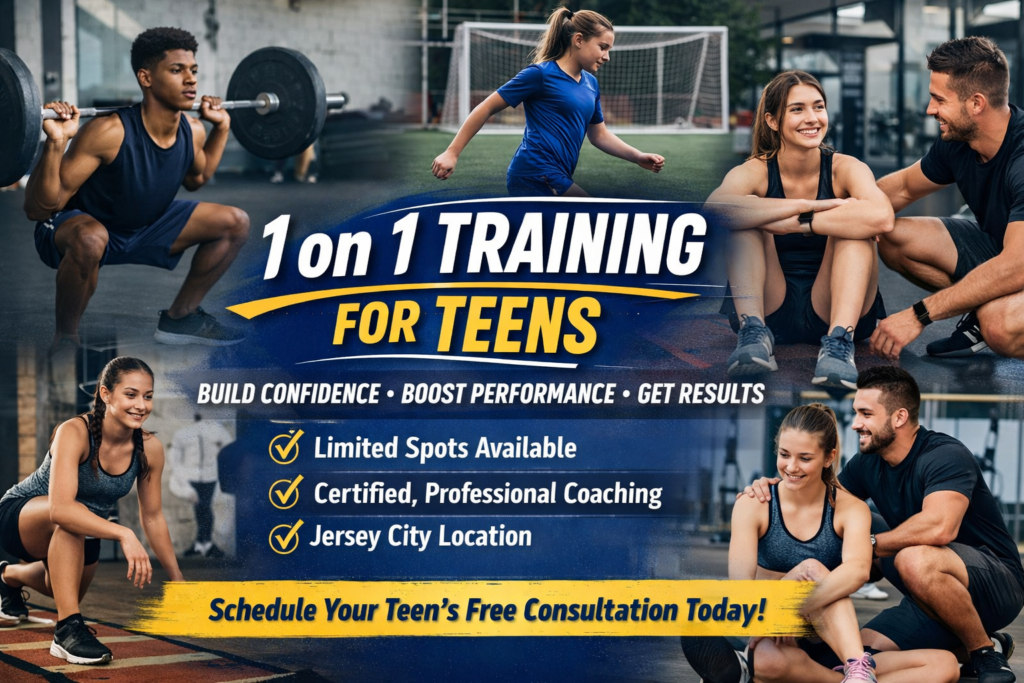
1 on 1 training for teens is designed to provide personalized strength development, sports performance coaching, and confidence-building support in a structured, safe environment. Unlike group programs, 1 on 1 training for teens focuses entirely on the individual’s goals, abilities, and growth stage. Whether improving athletic performance, learning proper weight training techniques, or building self-discipline, 1 on 1 training for teens delivers targeted results. With expert guidance, accountability, and customized planning, 1 on 1 training for teens helps young athletes and students develop physical strength, mental resilience, and lifelong healthy habits.
Introduction
1 on 1 training for teens is a personalized coaching approach designed specifically for adolescents between the ages of 12 and 18. Unlike traditional group fitness classes or team practices, 1 on 1 training for teens focuses entirely on the individual. Every session is structured around the teen’s goals, physical development stage, skill level, and confidence needs. Whether the goal is building strength, improving sports performance, enhancing coordination, or developing mental resilience, this individualized method ensures focused progress.
In recent years, 1 on 1 training for teens has begun outperforming group classes for one major reason: attention. In group environments, coaches must divide time among many participants, often limiting personal feedback and correction. With 1 on 1 training for teens, the coach can immediately correct form, adjust intensity, and tailor instruction to the teen’s learning style. This results in faster improvement, safer technique development, and higher engagement.
The growing demand for 1 on 1 training for teens among parents reflects a shift toward structured, supervised development. Parents are increasingly prioritizing safe strength training, injury prevention, and mentorship over random workouts or unsupervised gym use. With professional guidance, teens learn how to use equipment properly, understand body mechanics, and build a foundation for long-term health.
Safety and structure are central to 1 on 1 training for teens. Sessions typically begin with movement assessments, followed by age-appropriate programming that emphasizes proper form, gradual progression, and recovery. Supervision ensures exercises like squats, lunges, push-ups, and resistance training are performed correctly, reducing injury risk and building confidence.
1 on 1 training for teens benefits a wide range of adolescents. Student-athletes looking to improve speed, strength, or sport-specific skills gain a competitive edge. Teens new to fitness learn foundational movement patterns. Those recovering from injuries receive guided support. Even teens seeking improved focus, discipline, and self-esteem benefit from the mentorship aspect.
Beyond physical strength, 1 on 1 training for teens often includes goal setting, accountability, and life skills development. By combining structured strength training, sports performance coaching, and confidence-building guidance, 1 on 1 training for teens supports both physical growth and mental maturity during these critical developmental years.
What Is 1 on 1 Training for Teens?
1 on 1 training for teens is a structured, personalized coaching model where one certified coach works directly with one teen during each session. Unlike general fitness classes or team practices, 1 on 1 training for teens centers entirely on the individual’s physical development, athletic goals, and mental growth. This format allows the coach to design sessions that match the teen’s current strength level, coordination, maturity, and learning pace.
At its core, 1 on 1 training for teens follows a clear structure. It typically begins with an individualized assessment that evaluates posture, movement quality, flexibility, balance, and baseline strength. This assessment helps identify limitations, muscle imbalances, or injury risks. From there, customized goal planning takes place. Whether the objective is improving sports performance, building foundational strength, gaining confidence, or learning proper gym technique, 1 on 1 training for teens creates a roadmap tailored to that specific teen.
Because it is personalized, 1 on 1 training for teens is never random. Each exercise selection, progression plan, and coaching cue is intentional. The teen learns not only how to train, but why certain movements matter. This education-based approach helps build long-term independence and safe training habits.
How It Differs from Group Training
One of the biggest differences between group classes and 1 on 1 training for teens is attention level. In group settings, coaches must divide their focus among multiple participants. In contrast, 1 on 1 training for teens provides constant feedback, immediate corrections, and individualized pacing.
Injury prevention is another major advantage. With direct supervision, 1 on 1 training for teens ensures proper technique during exercises like squats, lunges, push-ups, and resistance training. Small form corrections made early prevent long-term movement problems. This focused oversight reduces risk while building proper mechanics.
Faster progress is also common with 1 on 1 training for teens. Because sessions are customized and progression is carefully monitored, teens can advance at a pace appropriate for their abilities. Instead of following a generic routine, they follow a plan designed specifically for them.
Age-Specific Programming (12–14 vs 15–18)
Effective 1 on 1 training for teens recognizes that a 12-year-old and a 17-year-old have very different developmental needs. For ages 12–14, programming often emphasizes coordination, bodyweight strength, balance, flexibility, and movement fundamentals. At this stage, 1 on 1 training for teens focuses on mastering technique before adding external resistance.
For ages 15–18, 1 on 1 training for teens may incorporate progressive resistance training, sport-specific conditioning, and structured performance development. Teens in this range can handle more complex programming while still requiring careful supervision and coaching.
In-Person vs Online 1 on 1 Training for Teens
1 on 1 training for teens can be delivered both in person and online. In-person sessions allow hands-on cueing, equipment access, and direct supervision. Online 1 on 1 training for teens offers flexibility, especially for homeschool students or busy families, while still providing personalized programming and live coaching support.
Both formats maintain the same principles: individual attention, structured progression, and mentorship. Ultimately, 1 on 1 training for teens creates a focused environment where physical development, confidence, and life skills grow together.
Benefits of 1 on 1 Training for Teens
1 on 1 training for teens provides far more than basic workouts. It delivers structured physical development, athletic enhancement, mental growth, and long-term lifestyle improvement. Because 1 on 1 training for teens is personalized, every benefit is amplified through focused coaching and intentional progression. Below are the core advantages that make 1 on 1 training for teens a powerful investment during the critical developmental years.
Physical Benefits
One of the most immediate advantages of 1 on 1 training for teens is structured strength development. Instead of random exercises, teens follow a progressive plan designed around proper mechanics and age-appropriate resistance. This leads to improved muscle strength, coordination, and overall body control.
Posture correction is another major outcome of 1 on 1 training for teens. Many adolescents develop rounded shoulders or poor spinal alignment due to long hours sitting in school. Personalized coaching identifies imbalances and incorporates corrective exercises to strengthen the back, core, and stabilizing muscles.
Injury prevention is a critical component of 1 on 1 training for teens. With individual supervision, coaches correct movement patterns early. Exercises like squats, lunges, push-ups, and controlled resistance training are taught with strict attention to form. This reduces strain on joints and minimizes sports-related injuries.
Bone density development is especially important during adolescence. Properly supervised 1 on 1 training for teens that includes progressive resistance training stimulates bone growth and strengthens the skeletal system. This creates a stronger foundation for adulthood.
Mobility and flexibility are also improved through 1 on 1 training for teens. Structured warm-ups, dynamic stretching, and movement drills increase range of motion and joint health. Over time, teens move more efficiently and with greater confidence.
Athletic Performance Benefits
For young athletes, 1 on 1 training for teens directly enhances performance. Speed development becomes more effective when stride mechanics, acceleration technique, and lower-body strength are coached individually.
Agility improves through targeted drills that emphasize change of direction, balance, and reaction time. In 1 on 1 training for teens, these drills are adjusted based on the athlete’s sport and position.
Power development is another major benefit. Through controlled plyometrics and strength progression, 1 on 1 training for teens helps teens generate more explosive force safely.
Sport-specific skills are refined in personalized sessions. Soccer players improve footwork and positioning. Basketball athletes work on vertical jump and lateral movement. Dancers enhance balance, stability, and controlled strength. Because 1 on 1 training for teens is individualized, each athlete receives coaching aligned with their specific performance goals.
Mental & Emotional Benefits
Beyond physical gains, 1 on 1 training for teens plays a powerful role in mental growth. Confidence building is one of the most visible outcomes. As teens master new skills and see measurable progress, self-belief increases.
Discipline naturally develops through structured sessions. 1 on 1 training for teens teaches consistency, effort, and accountability—traits that extend beyond the gym.
Goal setting is embedded into the process. Coaches help teens set realistic, measurable milestones. Through 1 on 1 training for teens, they learn how to track progress and stay committed.
Reduced anxiety is another benefit. Physical activity combined with mentorship creates a safe outlet for stress. The supportive environment of 1 on 1 training for teens encourages open communication and resilience.
Leadership skills often emerge as teens gain confidence and competence. With consistent guidance, 1 on 1 training for teens helps adolescents develop responsibility and self-respect.
Academic & Lifestyle Improvements
The structure of 1 on 1 training for teens often translates into better academic focus. Improved physical health supports brain function, memory, and concentration. Teens who follow a consistent training schedule develop stronger time management habits.
Healthy routines formed through 1 on 1 training for teens—including sleep awareness, hydration, and nutrition guidance—positively influence daily life. Over time, teens begin to see fitness not as a short-term activity, but as a lifelong practice.
Ultimately, 1 on 1 training for teens builds stronger bodies, sharper minds, and more confident young adults. By combining structured physical development, athletic performance coaching, and mentorship, 1 on 1 training for teens supports total growth during one of the most important stages of life.
Strength Training in 1 on 1 Training for Teens
Strength development is one of the most valuable components of 1 on 1 training for teens. When properly structured, strength training builds muscular endurance, coordination, joint stability, and confidence. In 1 on 1 training for teens, strength work is never random or excessive. It follows a clear, age-appropriate progression designed to support healthy growth and athletic performance.
Because 1 on 1 training for teens is individualized, each program matches the teen’s maturity level, movement quality, and goals. This structured approach ensures strength training enhances development rather than overwhelming it.
Is Strength Training Safe for Teens?
One of the most common concerns about 1 on 1 training for teens is whether strength training is safe. A long-standing myth suggests that lifting weights can stunt growth. However, research consistently shows that properly supervised strength training does not negatively impact growth plates. In fact, structured 1 on 1 training for teens can improve bone density and muscular development during critical growth years.
The myth that strength training stunts growth usually stems from outdated beliefs or improper coaching methods. In reality, injuries are more likely to occur in unsupervised environments than in structured 1 on 1 training for teens sessions guided by qualified coaches.
Research-backed safety principles emphasize gradual progression, controlled movement, and correct technique. In 1 on 1 training for teens, coaches monitor every repetition, adjust resistance appropriately, and ensure exercises are performed safely. Proper supervision reduces injury risk and builds long-term strength.
Another advantage of 1 on 1 training for teens is immediate correction. Small form adjustments prevent stress on joints and soft tissues. This individualized attention is what makes strength training both safe and effective for adolescents.
Bodyweight Foundation
Every successful 1 on 1 training for teens program begins with a strong bodyweight foundation. Before adding resistance, teens must master movement control and balance.
Squats teach lower-body strength and proper hip mechanics. Lunges improve stability and coordination. Push-ups develop upper-body strength and core engagement. Planks reinforce posture and spinal alignment. In 1 on 1 training for teens, these exercises are taught step-by-step to ensure proper execution.
By focusing on bodyweight exercises first, 1 on 1 training for teens builds movement literacy. Teens learn how their bodies move, how to control momentum, and how to stabilize joints. This foundation prepares them for more advanced training.
Progressive Resistance Training
Once foundational strength is established, 1 on 1 training for teens introduces progressive resistance training. This progression may include dumbbells, resistance bands, machines, or free weights depending on the teen’s age and readiness.
Dumbbells allow controlled, balanced development. Resistance bands improve joint stability and muscle activation. Machines provide guided movement patterns for beginners. Free weights add complexity and coordination demands. In 1 on 1 training for teens, the coach selects tools based on safety and developmental stage.
Progressive resistance in 1 on 1 training for teens follows a gradual increase in load, volume, or complexity. The goal is steady improvement—not rapid overload. This controlled progression supports muscle growth, joint health, and confidence.
Learning Proper Form & Technique
Technique is the cornerstone of 1 on 1 training for teens. Proper form ensures exercises strengthen the intended muscles without unnecessary strain. Coaches provide verbal cues, visual demonstrations, and repetition feedback during every session.
Because 1 on 1 training for teens allows full attention, teens quickly correct mistakes and build strong habits. Learning correct mechanics early prevents long-term movement dysfunction and builds self-awareness.
Mastering technique also improves performance in sports and daily activities. Through consistent coaching, 1 on 1 training for teens develops efficient, controlled movement patterns that carry over into athletics.
Program Progression Structure
A structured progression model is what separates quality 1 on 1 training for teens from generic gym workouts. Programs typically move through phases: movement mastery, strength foundation, progressive resistance, and performance integration.
Each stage of 1 on 1 training for teens builds upon the previous one. Coaches monitor recovery, track performance metrics, and adjust intensity accordingly. This systematic approach ensures sustainable growth without burnout.
Ultimately, strength training within 1 on 1 training for teens creates a powerful foundation for physical development. By combining safety, supervision, progressive overload, and technical mastery, 1 on 1 training for teens supports healthy growth, athletic success, and long-term fitness confidence.
Sports-Specific 1 on 1 Training for Teens
Sports demand more than general fitness. While basic conditioning builds a foundation, sports performance improves fastest when training matches the athlete’s unique movement patterns, position, and competition level. That is where 1 on 1 training for teens becomes highly effective. Sports-specific 1 on 1 training for teens focuses on individualized drills, biomechanics, and performance metrics tailored to a teen’s chosen sport.
Unlike generic programs, 1 on 1 training for teens for sports identifies weaknesses, enhances strengths, and builds sport-ready athleticism in a structured, safe environment. Whether a teen plays soccer, basketball, participates in dance, or needs speed development, targeted 1 on 1 training for teens accelerates measurable results.
Soccer-Specific 1 on 1 Training for Teens
Soccer requires endurance, agility, coordination, explosive acceleration, and tactical awareness. With 1 on 1 training for teens, coaches design sessions that mirror real match demands.
Footwork Development
Precise foot control and rapid directional changes are critical. Sports-focused 1 on 1 training for teens includes ladder drills, cone patterns, tight-space ball control, and first-touch refinement. Individual correction ensures the athlete improves efficiency and reduces wasted movement.
Acceleration & Sprint Mechanics
Soccer players often sprint 10–30 meters repeatedly. In structured 1 on 1 training for teens, sprint form is analyzed and corrected to improve stride length, turnover rate, and power output.
Position-Specific Training (Goalkeeper vs Forward)
One of the greatest advantages of 1 on 1 training for teens is customization by position:
- Goalkeepers: Reaction drills, lateral explosiveness, diving mechanics, hand-eye coordination.
- Forwards: Quick turns, shooting under pressure, explosive first steps.
- Midfielders: Endurance intervals, spatial awareness drills.
- Defenders: Backpedal speed, recovery runs, tackling mechanics.
Because 1 on 1 training for teens isolates positional demands, athletes improve faster compared to broad team practices.
Basketball-Specific 1 on 1 Training for Teens
Basketball performance depends on power, agility, coordination, and vertical explosiveness. Individualized 1 on 1 training for teens enhances court-specific movement and jump performance.
Vertical Jump Development
Improving vertical leap directly benefits rebounding and shot blocking. In 1 on 1 training for teens, plyometrics, eccentric strength training, and landing mechanics are carefully coached to increase jump height safely.
Court Movement & Agility
Basketball requires rapid transitions from offense to defense. Personalized 1 on 1 training for teens includes:
- Defensive slide mechanics
- Acceleration-deceleration drills
- Crossover and change-of-direction patterns
- Reaction-based drills
With consistent 1 on 1 training for teens, athletes develop smoother transitions and quicker response times.
Dance & Performance Coaching
Dance demands strength, flexibility, balance, rhythm, and control. Sports-focused 1 on 1 training for teens for dancers emphasizes movement precision and injury prevention.
Individualized sessions focus on:
- Core stability for balance
- Ankle and hip strength
- Flexibility progression
- Landing control for jumps
- Posture alignment
Because growth spurts can temporarily affect coordination, 1 on 1 training for teens helps dancers adapt safely and maintain performance quality.
Speed & Agility Development
Speed benefits nearly every sport. Through specialized 1 on 1 training for teens, athletes improve acceleration, top speed mechanics, and multidirectional movement.
Key components include:
- Sprint technique correction
- Resisted sprint training
- Reactive agility drills
- Deceleration control
- Foot placement optimization
When teens receive focused coaching through 1 on 1 training for teens, small technique adjustments often produce noticeable improvements in game speed.
Injury Recovery & Return-to-Play Programs
Injury recovery must be gradual and structured. Rehabilitation-focused 1 on 1 training for teens ensures safe progression back to competition.
A return-to-play 1 on 1 training for teens program includes:
- Mobility restoration
- Controlled strength rebuilding
- Sport-specific movement reintroduction
- Confidence rebuilding
- Full-speed simulation drills
Unlike general rehab, sports-oriented 1 on 1 training for teens integrates strength, neuromuscular control, and confidence development to prevent re-injury.
Why Sports-Specific 1 on 1 Training for Teens Works
The effectiveness of 1 on 1 training for teens in sports lies in its personalization. Every athlete develops at a different rate. Growth spurts, coordination changes, and sport demands vary widely. Personalized 1 on 1 training for teens accounts for:
- Physical maturity level
- Position-specific requirements
- Strength and mobility limitations
- Performance goals
- Competition schedules
Instead of generic drills, 1 on 1 training for teens focuses on measurable performance outcomes—speed improvements, jump height gains, reaction time enhancement, and movement efficiency.
For competitive teens, sports-focused 1 on 1 training for teens bridges the gap between team practice and elite performance development. It ensures proper technique, reduces injury risk, and builds the physical confidence needed to compete at higher levels.
By combining individualized strength training, sport mechanics, agility drills, and recovery planning, 1 on 1 training for teens becomes a powerful performance accelerator across soccer, basketball, dance, and beyond.
Life Coaching & Confidence Building
Why 1 on 1 Training for Teens Goes Beyond Fitness
While physical improvement is often the starting point, 1 on 1 training for teens delivers far more than strength gains or athletic performance. The individualized structure creates a safe space where teens develop confidence, discipline, resilience, and personal responsibility. Because sessions are personalized, 1 on 1 training for teens naturally integrates life coaching principles alongside fitness instruction.
Adolescence is a critical developmental stage. Teens face academic pressure, social challenges, identity formation, and emotional changes. Through consistent mentorship, 1 on 1 training for teens becomes a supportive framework that builds both physical capability and mental strength. A dedicated coach not only guides workouts but also reinforces positive behaviors, mindset growth, and goal-driven habits.
Goal Setting & Accountability
One of the most powerful components of 1 on 1 training for teens is structured goal setting. Instead of vague ambitions like “get fit,” teens learn to create specific, measurable targets—improving sprint time, increasing push-up reps, or enhancing flexibility.
During 1 on 1 training for teens, coaches help teens:
- Set short-term and long-term goals
- Break goals into actionable steps
- Track weekly progress
- Reflect on successes and setbacks
Because progress is reviewed regularly, 1 on 1 training for teens builds accountability. Teens learn that effort leads to results. This connection strengthens self-belief and reinforces the importance of consistency—skills that extend into academics and personal development.
Focus & Time Management Skills
Modern teens often struggle with distractions—social media, gaming, and academic overload. Structured 1 on 1 training for teens introduces routine and time discipline. Scheduled sessions teach punctuality, preparation, and commitment.
Coaches frequently integrate lessons about:
- Prioritizing important tasks
- Managing schoolwork alongside sports
- Planning recovery and sleep
- Reducing procrastination
Through consistent scheduling, 1 on 1 training for teens encourages teens to respect their time and energy. This habit of structured focus often improves academic performance and daily productivity.
Mental Resilience Training
Physical training naturally challenges limits. When teens push through difficult exercises safely, they develop mental toughness. 1 on 1 training for teens uses controlled challenges to teach perseverance and emotional regulation.
During demanding drills, coaches reinforce:
- Positive self-talk
- Emotional control under pressure
- Handling setbacks constructively
- Staying calm during performance stress
Because feedback is immediate and personal, 1 on 1 training for teens helps teens reinterpret failure as learning. Over time, this builds resilience—the ability to recover quickly from disappointment, criticism, or competitive losses.
Leadership & Social Confidence
Confidence grows when teens feel competent. As physical ability improves through 1 on 1 training for teens, self-image strengthens. Teens begin to carry themselves differently—with improved posture, clearer communication, and greater self-assurance.
Leadership development within 1 on 1 training for teens may include:
- Encouraging initiative
- Practicing decision-making
- Speaking clearly about goals
- Taking responsibility for performance
Even though sessions are individual, the confidence gained often translates into better teamwork in school sports and social environments. 1 on 1 training for teens empowers teens to step forward rather than hold back.
Building Healthy Habits for Life
Perhaps the most lasting benefit of 1 on 1 training for teens is habit formation. Adolescence is the ideal time to establish lifelong routines around health, discipline, and mindset.
Through personalized coaching, teens learn:
- Proper nutrition awareness
- Importance of hydration
- Sleep hygiene basics
- Stress management techniques
- Consistency over intensity
Because 1 on 1 training for teens provides direct mentorship, healthy behaviors are reinforced weekly. Over time, these small consistent actions become automatic habits.
Importantly, 1 on 1 training for teens shifts focus from appearance to performance and wellbeing. Teens learn to value strength, mobility, and mental clarity rather than external validation. This mindset reduces comparison pressure and supports long-term emotional balance.
The Bigger Picture
At its core, 1 on 1 training for teens is mentorship disguised as fitness. The coach becomes a role model who demonstrates discipline, encouragement, and constructive feedback. The teen gains not only stronger muscles but stronger character.
When delivered thoughtfully, 1 on 1 training for teens supports physical growth, emotional development, academic focus, and social confidence simultaneously. It equips teens with tools that extend far beyond the gym—preparing them for adulthood with resilience, accountability, and self-belief.
In this way, 1 on 1 training for teens becomes more than a workout program—it becomes a foundation for lifelong success.
Who Needs 1 on 1 Training for Teens?
Not every teen thrives in a group environment. Some need personalized instruction, extra encouragement, or sport-specific refinement. That’s where 1 on 1 training for teens becomes especially valuable. Because it is customized and focused, 1 on 1 training for teens serves a wide range of individuals with different goals, confidence levels, and physical needs.
Homeschool Teens
Homeschooled teens may not always have access to structured physical education programs or team sports. 1 on 1 training for teens provides structured activity, professional coaching, and consistent accountability. It ensures they develop strength, coordination, and social confidence while maintaining a balanced lifestyle. For many homeschool families, 1 on 1 training for teens fills an important gap in physical development.
Athletes Preparing for Tryouts
Tryouts can be competitive and stressful. Athletes often need focused preparation beyond regular team practice. With sports-focused 1 on 1 training for teens, sessions are designed to improve measurable performance markers like speed, agility, endurance, and strength. This targeted preparation gives teens a competitive edge and builds the confidence needed to perform under pressure.
Teens New to the Gym
For beginners, the gym environment can feel intimidating. Machines, free weights, and experienced athletes may create hesitation. 1 on 1 training for teens offers a safe introduction to proper exercise techniques. A coach provides step-by-step instruction, corrects form, and ensures safety. Through structured 1 on 1 training for teens, beginners build familiarity and confidence before transitioning to independent workouts.
Teens Recovering from Injury
After an injury, returning to physical activity requires careful progression. 1 on 1 training for teens allows controlled rehabilitation with proper supervision. Programs are adjusted based on mobility, strength deficits, and medical recommendations. This individualized approach reduces the risk of re-injury while restoring confidence in movement.
Teens Lacking Confidence
Some teens avoid sports or fitness due to low self-esteem or fear of judgment. In a supportive environment, 1 on 1 training for teens removes comparison and performance anxiety. Personalized encouragement, realistic goal setting, and visible progress help rebuild self-belief. Over time, 1 on 1 training for teens strengthens both physical capability and emotional resilience.
Teens Preparing for College Sports
Student-athletes aiming for collegiate competition need advanced preparation. 1 on 1 training for teens can focus on strength benchmarks, speed improvements, and sport-specific development aligned with college standards. Personalized planning ensures training intensity matches long-term athletic goals.
Ultimately, 1 on 1 training for teens is ideal for any teen who benefits from focused attention, structured progression, and individualized support.
Safety, Supervision & Program Structure
Safety is the foundation of effective youth development. When properly designed, 1 on 1 training for teens prioritizes supervision, correct technique, and gradual progression. Unlike unsupervised workouts or generic online programs, structured 1 on 1 training for teens ensures every exercise aligns with the teen’s age, experience level, and physical readiness.
Certified Coaching Matters
Professional qualifications make a significant difference in youth training outcomes. In high-quality 1 on 1 training for teens, coaches understand adolescent growth patterns, injury prevention strategies, and sport-specific biomechanics. Certified coaches are trained to recognize movement imbalances, growth-related coordination changes, and early signs of overtraining.
Because teens are still developing physically, 1 on 1 training for teens must be guided by someone who understands safe loading parameters, recovery needs, and technique progression. Proper supervision reduces injury risk and ensures long-term development rather than short-term intensity.
Movement Assessment Process
Every effective 1 on 1 training for teens program begins with a structured movement assessment. This process evaluates posture, flexibility, joint mobility, balance, and foundational strength.
During assessment, coaches may review:
- Squat and lunge mechanics
- Core stability
- Shoulder mobility
- Running form
- Previous injury history
This initial screening allows 1 on 1 training for teens to be fully customized. Instead of jumping into advanced exercises, programs are built around correcting weaknesses and reinforcing proper movement patterns first.
Structured Progress Tracking
Measurable progress keeps teens motivated. In structured 1 on 1 training for teens, coaches track performance indicators such as strength gains, sprint times, jump height, endurance levels, and mobility improvements.
Tracking serves two purposes. First, it provides objective feedback that reinforces effort. Second, it ensures 1 on 1 training for teens progresses at the right pace. If fatigue or discomfort appears, programs can be adjusted immediately. This level of attention is difficult to achieve in group settings.
Safe Progression Model
Gradual overload is essential for adolescent athletes. Effective 1 on 1 training for teens follows a phased progression model:
- Foundation building (bodyweight mastery)
- Controlled resistance introduction
- Skill refinement and stability training
- Performance enhancement phase
Each stage builds upon the previous one. With proper supervision, 1 on 1 training for teens emphasizes quality of movement before increasing intensity. Rest, recovery, and technique remain priorities throughout the program.
By combining certified coaching, thorough assessments, measurable tracking, and structured progression, 1 on 1 training for teens creates a safe and effective environment where teens can develop strength, skill, and confidence without unnecessary risk.
What a Typical 1 on 1 Training Session Looks Like
A well-structured 1 on 1 training for teens session follows a clear format designed to maximize safety, performance, and confidence. Each session is personalized, but most 1 on 1 training for teens programs follow a consistent framework to ensure balanced development.
Warm-Up
Every 1 on 1 training for teens session begins with a dynamic warm-up. This phase prepares the body for movement and reduces injury risk. It may include light cardio, mobility drills, activation exercises for the core and hips, and movement preparation specific to the teen’s sport or goals. The warm-up also helps improve focus and mentally transition into training mode.
Skill Work
After warming up, 1 on 1 training for teens shifts into skill development. This portion targets sport-specific drills, coordination work, or movement corrections. For athletes, it may involve footwork, agility patterns, or sprint mechanics. For beginners, it may focus on mastering basic movement patterns like squats or push-ups. Because attention is individualized, 1 on 1 training for teens ensures technique is refined with immediate feedback.
Strength Training
The core of most 1 on 1 training for teens sessions is structured strength development. Exercises may include bodyweight movements, resistance bands, dumbbells, or machines depending on the teen’s level. Coaches prioritize proper form, controlled progression, and balanced muscle development. Strength training builds not only muscle but also confidence and resilience.
Cool Down
A guided cool down concludes the physical portion of 1 on 1 training for teens. This includes light stretching, breathing exercises, and mobility work to aid recovery and flexibility.
Review & Goal Check-In
Each 1 on 1 training for teens session ends with a short progress review. Coaches discuss improvements, reinforce effort, and adjust upcoming goals—ensuring continuous motivation and structured growth.
FAQs About 1 on 1 Training for Teens
1. Is 1 on 1 training for teens safe?
Yes, 1 on 1 training for teens is safe when supervised by a qualified coach. Programs are customized based on age, experience, and physical readiness. Proper technique instruction, gradual progression, and close monitoring significantly reduce injury risk while supporting healthy strength and athletic development.
2. At what age can teens start?
Most teens can begin 1 on 1 training for teens between ages 12–13, depending on maturity and coordination. Early sessions focus on bodyweight exercises, movement skills, and proper form. As strength and confidence improve, resistance and intensity are gradually introduced under supervision.
3. Does strength training stunt growth?
No, properly supervised 1 on 1 training for teens does not stunt growth. Research shows strength training is safe for adolescents when technique and progression are carefully managed. In fact, it can improve bone density, posture, and overall musculoskeletal development when performed correctly.
4. How often should teens train?
For most adolescents, 1 on 1 training for teens two to three times per week is effective. Frequency depends on goals, sports participation, and recovery ability. Rest days are essential to allow muscles to recover and adapt, especially during growth phases.
5. Can 1 on 1 training improve school focus?
Yes, structured 1 on 1 training for teens often improves concentration and time management. Physical activity enhances blood flow to the brain and supports mood regulation. The accountability and goal-setting structure also help teens build discipline that translates into academic performance.
6. Is online 1 on 1 training effective?
Online 1 on 1 training for teens can be effective when sessions are interactive and properly supervised via video. Coaches provide live feedback, customized plans, and progress tracking. However, in-person sessions may allow more precise form correction for beginners.
7. How long before results show?
Many teens notice improvements within four to six weeks of consistent 1 on 1 training for teens. Early changes include better coordination, increased confidence, and improved endurance. Strength and performance gains continue to build with steady progression and regular attendance.
8. Is it good for homeschool teens?
Absolutely. 1 on 1 training for teens provides structured physical activity and accountability that homeschool teens may not otherwise receive. It supports fitness development, social confidence, and routine building—helping maintain balance between academics and physical health.
9. Does it help with sports scholarships?
While 1 on 1 training for teens does not guarantee scholarships, it can improve athletic performance and readiness for higher-level competition. Enhanced speed, strength, and sport-specific skills may increase visibility and competitiveness during recruitment opportunities.
10. How is progress measured?
Progress in 1 on 1 training for teens is tracked through measurable benchmarks such as strength increases, sprint times, jump height, mobility improvements, and consistency. Coaches also evaluate confidence, discipline, and goal achievement to ensure well-rounded development.
Why Parents Choose 1 on 1 Training for Teens
Parents want more than just physical activity for their children—they want safe, structured development. That’s why many families invest in 1 on 1 training for teens. The individualized format provides focused instruction, measurable results, and a supportive environment that encourages long-term growth.
Individual Attention
One of the main reasons parents prefer 1 on 1 training for teens is the dedicated attention their child receives. In group settings, it’s easy for teens to get overlooked. With personalized coaching, every movement is monitored, corrected, and refined. This individual focus ensures proper technique and builds confidence.
Faster Progress
Because programs are tailored, 1 on 1 training for teens often leads to quicker improvement. Coaches identify weaknesses and address them directly instead of following a generic plan. Whether the goal is athletic performance, strength, or general fitness, customized sessions accelerate measurable results.
Accountability
Consistency is key to development. 1 on 1 training for teens creates built-in accountability through scheduled sessions and progress tracking. Teens are more likely to stay committed when they know a coach is monitoring their goals and celebrating milestones.
Safe Environment
Safety is a top parental concern. Properly supervised 1 on 1 training for teens minimizes injury risk through structured progression and technique correction. Certified coaches ensure exercises are age-appropriate and aligned with physical maturity.
Mentorship
Beyond fitness, 1 on 1 training for teens offers mentorship. Coaches often become positive role models who reinforce discipline, resilience, and healthy habits. This guidance supports not only physical growth but also emotional and personal development.
For many parents, 1 on 1 training for teens represents an investment in their child’s overall confidence, character, and long-term success.
Take the Next Step Toward Your Teen’s Success
Spots for our 1 on 1 training for teens program are limited to ensure every participant receives the highest level of personalized attention. With structured coaching, measurable progress tracking, and expert supervision, our 1 on 1 training for teens delivers results that go far beyond basic fitness.
If you’re a parent looking for safe, focused development, now is the time to enroll. Our 1 on 1 training for teens helps build strength, confidence, discipline, and long-term healthy habits that benefit your teen in sports, academics, and everyday life.
Families in Jersey City trust our 1 on 1 training for teens because we combine professional coaching with mentorship in a supportive environment. Whether your teen is preparing for sports tryouts, building confidence, or starting their fitness journey, we are here to guide them every step of the way.
Don’t wait until sessions fill up. Contact us today to schedule a consultation and learn how our 1 on 1 training for teens can create lasting impact. Call, message, or visit our Jersey City location to reserve your teen’s spot and begin their transformation.